A DIY raised bed can organize a vegetable or flower garden, improve access and provide a defined area of usable soil. It still needs suitable light, drainage, watering and weed control. Choose the bed’s location and dimensions before buying materials, then build for the weight and depth of the soil it will hold.
Choose between an open-bottom bed and an elevated planter

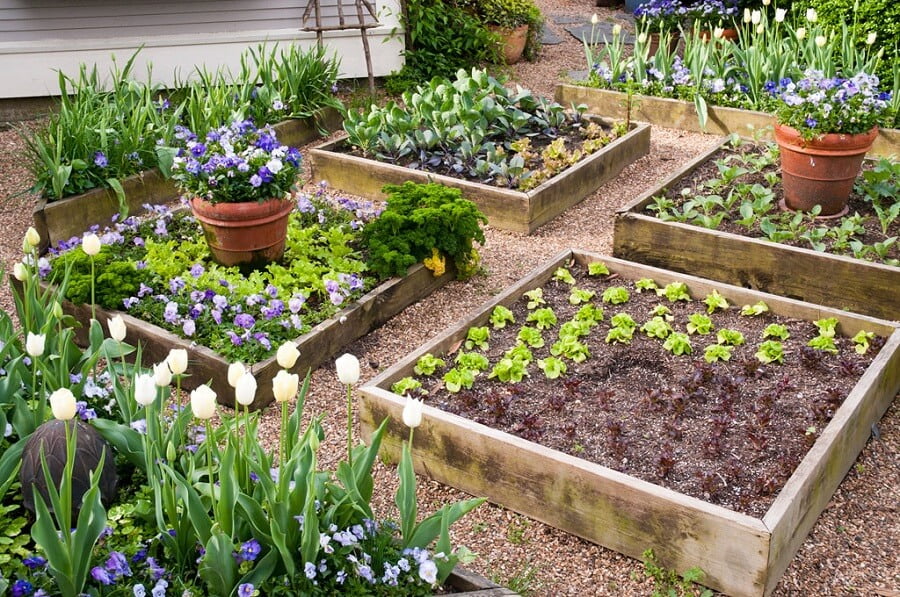
A conventional raised bed sits on the ground and allows roots to grow into the soil beneath. It may have a frame or simply mounded soil with sloping sides. An elevated planter has a supported bottom and behaves more like a large container: the base must carry wet soil safely and provide drainage.
These designs solve different problems. A taller bed may reduce bending, but accessibility also depends on reach, paths and working position. A board intended only to retain soil should not automatically be used as a seat.
Raised beds can warm earlier in spring and make it easier to avoid stepping on the growing area. They may also dry faster in hot weather. They do not exclude slugs, stop all weeds or make every crop productive. Minnesota Extension explains the benefits and limitations.
Plan the site and size
Observe the actual sunlight through the growing season. A location suitable for tomatoes may be unsuitable for shade-loving flowers. Check water access and where rainwater flows. Avoid placing a frame where it blocks drainage or damages an established tree’s roots.
Keep the bed narrow enough to reach its center from the paths. Around four feet wide is a common starting point when you can work from both sides; use a narrower width against a fence or for shorter reach. Test the width on the ground before committing. Leave paths that accommodate your tools, wheelbarrow and anyone who will use the garden.
Choose depth for the plants and the soil below. A shallow frame over good open soil differs from a container over paving. Root vegetables need enough usable depth for their variety, not a universal eight-inch minimum. Long beds may need cross-bracing and more access points.
One manageable bed is a sensible first project. Count the cost of filling it as well as its frame. For example, an internal space four feet by eight feet by one foot holds 32 cubic feet before allowing for settling or a watering margin. Use your actual internal dimensions when estimating material.
Compare seven frame ideas
1. Wooden boards
Boards are straightforward to cut and join. Use known materials and a construction plan suited to the bed’s dimensions. Choose appropriate exterior fasteners and support long sides against outward pressure. Random scraps of different thickness are not interchangeable structural parts.
2. Logs
Logs can provide a rustic low edge. They are heavy, can roll and will eventually decay. Arrange manageable pieces securely; do not build an unstable stack that can move into a path. Allow for replacement rather than treating logs as permanent construction.
3. Concrete blocks, bricks or stone
Masonry can form a durable border, but the base must be level and the assembly stable. Tall retaining structures need an appropriate design, not loose stacking. Block openings can hold small plantings only if there is enough root space and drainage for the chosen plants.
4. Landscape timbers
Check treatment, condition and intended use before buying or reusing timbers. Avoid old railroad ties and unidentified salvaged treated wood. Modern treatment types differ from older arsenic-containing products; do not label all treated wood either harmless or unsuitable. Consult Maryland Extension’s material-safety guidance.
5. Sandbags as a temporary edge
Bagged material is a temporary design option rather than a durable default. Check the bag’s outdoor suitability, weight and stability. Sunlight, handling and weather can damage packaging, so plan for inspection and replacement. Do not rely on a generic bag count: dimensions and shape vary.
6. A framed bed with pest fencing
Choose the barrier for the animal involved. Raising a bed a few extra inches does not keep out squirrels or deer. A removable cover or fence must still let you reach the plants. Check openings, height and anchoring for the target pest and make sure wildlife cannot become trapped.
7. Wattle edging
Flexible branches woven around sturdy stakes can make a decorative low border. Expect gaps, decay and periodic repair. Keep stake ends and cut branches out of circulation areas; do not leave exposed sharp rebar beside a working path. Wattle is not a substitute for an engineered retaining wall.
Build and fill the bed in a practical sequence
- Mark the outline and paths. Confirm access, property boundaries and underground services before driving stakes or digging. Follow the local utility-location process.
- Prepare the site. Address persistent weeds before filling. If contamination is possible, get appropriate soil testing and advice; adding a frame does not automatically isolate contaminated soil.
- Assemble the frame. Work on a level base, follow a suitable plan and check corners and braces before adding weight. Use help for heavy components.
- Preserve drainage. A liner along wooden sides is different from an impermeable sheet across the bottom. An elevated planter needs a designed draining base.
- Add suitable soil. For an open-bottom garden bed, use quality topsoil with a measured amount of mature compost or a reputable raised-bed blend. Pure compost is not a universal growing medium. For an elevated container, choose a container medium and verify the supporting structure’s load capacity.
- Water and inspect. Check settling, drainage and frame stability before planting densely. Top up appropriately without burying plant crowns later.
Maryland Extension’s construction guide provides a useful reference for dimensions, soil and the tradeoffs of raised beds. Test existing soil and use results to guide amendments rather than assuming all native soil is poor or acidic.
Plan flowers for your actual season
For spring, consider locally suitable daffodils or other bulbs, and shade-tolerant selections such as hellebores where conditions fit. Remember that bulb foliage must remain long enough to support the next season; removing faded flowers is not the whole care routine.
For summer, zinnias, cosmos and suitable coreopsis can supply different heights and textures. Choose cultivars and sowing times for your climate instead of expecting a June display everywhere. Taller selections need room and may need support.
For autumn, locally appropriate asters and goldenrods can extend interest. Check mature spread and exact species before buying; neither group is universally compact or maintenance-free. Mix flowering times without crowding the bed.
Choose vegetables you will use
- Leafy greens: lettuce, spinach and kale offer different harvests, but heat tolerance varies. Plan cool-season crops around local weather rather than expecting them all to thrive throughout summer.
- Onions: choose a type suited to local day length and planting season. Provide drainage and steady moisture; “dry soil” is not the objective.
- Potatoes: allow space for growth, soil coverage and harvesting. Our potato-growing guide covers planting through storage.
- Tomatoes: install support early and account for mature size. Add nutrients according to the soil and crop rather than filling the bed with rich compost alone.
- Root crops: carrots, beets and radishes benefit from a suitable loose root zone. Choose varieties that fit the usable depth and leave their recommended spacing.
Draw the planting plan at mature size, not nursery size. Leave room to weed, water and harvest, and record what works. Raised beds make the garden easier to organize; thoughtful care still determines the results.