A plum tree can produce a rewarding backyard harvest, but choosing the right variety and planting it at the correct depth matter more than buying any two trees. Start with a cultivar and rootstock recommended for your climate, and check its pollination needs before ordering.
Choose a tree that suits your region
Plums include European, Japanese and hybrid types, with different cold tolerance, flowering times and fruit characteristics. Winter hardiness alone does not guarantee a crop: a tree that flowers early can lose blossoms to a late frost. Ask your local extension service or a knowledgeable nursery which cultivars perform reliably nearby.
Check the mature size for the combination of cultivar and rootstock. Allow the recommended spacing and room to prune and harvest; not every plum tree needs the same distance from its neighbors. A smaller rootstock does not eliminate the need for care.
Find out whether it needs a pollination partner
Some plum cultivars are self-fertile; others need a compatible second cultivar flowering at the same time. Two trees of the same cultivar may not solve the problem, and an arbitrary pairing of different plum types may not work either.
The University of Minnesota’s stone-fruit guide gives regional examples of compatible hybrid plums. Use a pollination recommendation for the exact cultivar you intend to grow, rather than applying one region’s variety list everywhere.
Plant in sun and well-drained soil
Choose a sunny site where water does not stand after rain. Avoid a low frost pocket when possible. Before digging, check underground utility locations and make sure the mature tree will have adequate clearance from structures and overhead lines.
Keep the roots moist while preparing the site. Make the hole wide enough to accommodate them without bending them into a tight circle. Set the tree with the root flare at the soil surface or slightly above it, keeping the graft union above ground as directed by the nursery. Do not plant several inches deeper to make the tree feel more secure.
University of Maryland’s planting guidance explains how to locate the root flare and avoid a hole that is too deep. Backfill, water thoroughly and keep mulch away from the trunk.
Care for the tree as it establishes
Check moisture in the root area regularly and water when needed, allowing the soil to drain. Rainfall, soil and weather determine frequency; a fixed daily schedule can leave roots either dry or waterlogged. Keep grass and weeds from competing immediately around the young tree.
Prune to build a sound fruit-tree framework, removing damaged or poorly placed growth according to local stone-fruit guidance. Plum pruning timing can depend on regional disease risks, so do not substitute a topiary-trimming routine or a universal winter schedule. The Maryland stone-fruit guide describes training systems and ongoing care.
Harvest by the variety’s ripeness signs

Image Source: Pixabay
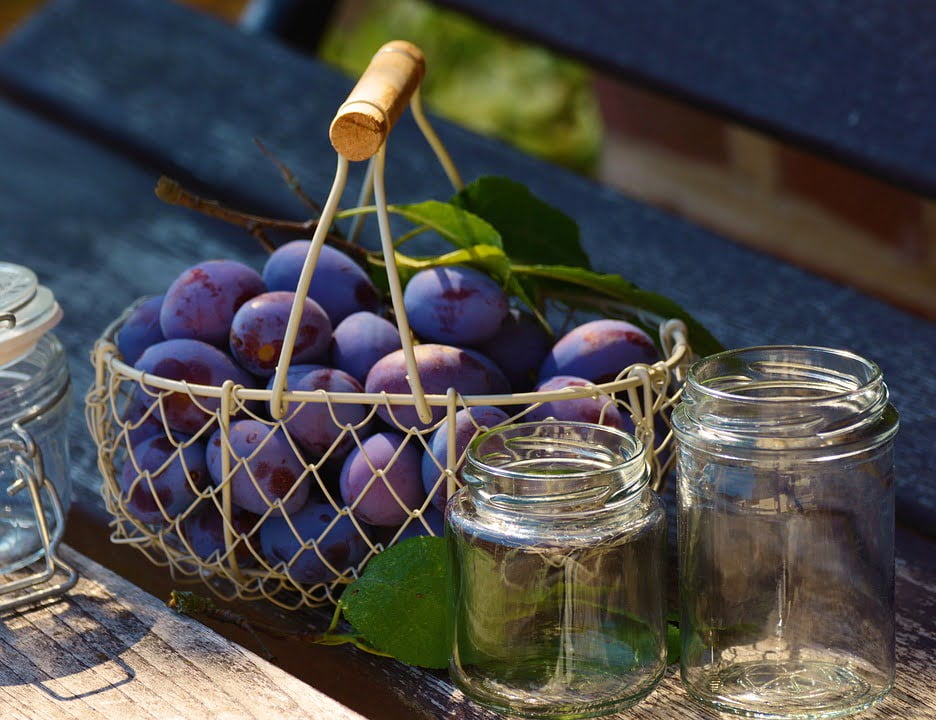
Plums are not all purple: skin color varies by cultivar. Learn the expected ripe color, then assess gentle softness, aroma and flavor on a sample fruit. Pick carefully without pulling off small branches.
Inspect the tree through the season for damaged fruit, pests and disease symptoms, and seek a local diagnosis before treating. A heavily loaded tree may need fruit thinning. Keep notes on flowering and harvest dates so you can understand how your tree responds from year to year.