For a fragrant garden, choose named varieties for scent as well as flowers, then match them to your light, soil and climate. These six options offer different flowering seasons and growing habits. None will perfume an entire yard continuously, and a strong scent is not everyone’s preference.
1. Fragrant roses
Rose fragrance varies greatly between cultivars. Some are strongly scented while others have little scent, so look for a named fragrant variety and, if possible, smell a flowering plant before buying. Choose a shrub or climber that fits the available space, and follow its local growing recommendations.
Place roses where you can approach the blooms without brushing against thorny stems. The RHS guide to scented plants is a useful starting point for planning fragrance across seasons.
2. Sweet peas
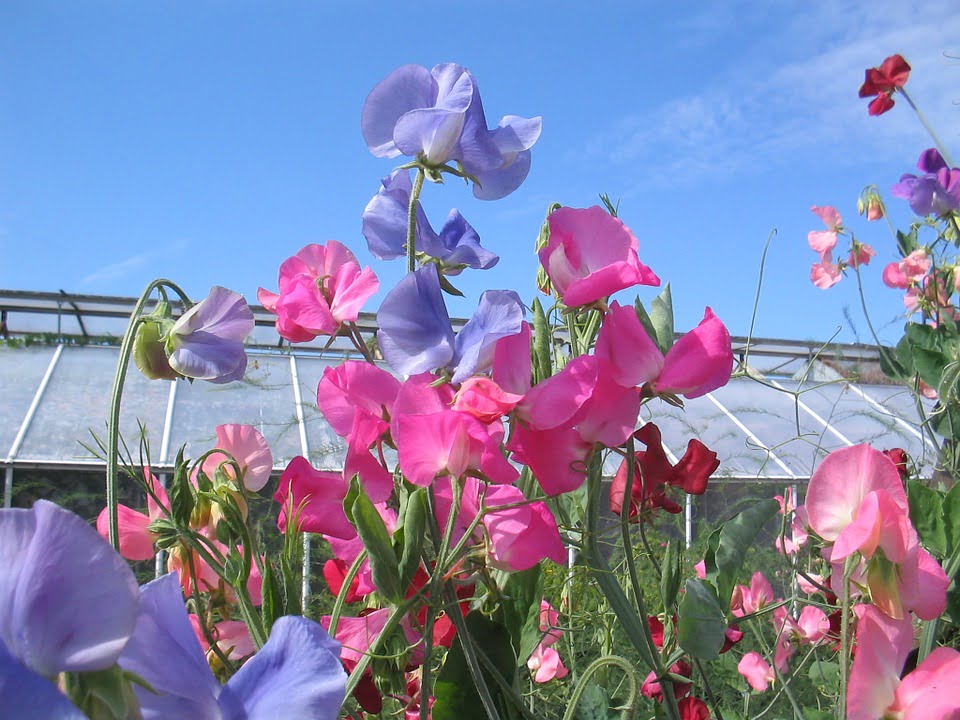
Sweet peas (Lathyrus odoratus) can bring fragrance and color to a sunny support or trellis during suitable cooler growing weather. Choose a scented cultivar; fragrance is not equally strong in every selection. Pick flowers regularly and provide support appropriate to the variety.
These are ornamental sweet peas, not edible garden peas. Their pods and seeds must not be eaten, as the RHS sweet-pea guide emphasizes.
3. Summer-flowering jasmine
Look for a fragrant Jasminum suitable for your climate, with enough room for its mature growth. Many summer-flowering jasmines appreciate a warm, sheltered, sunny position. Tender kinds may need winter protection or container growing where winters are cold.
Do not assume every plant called jasmine has the same scent or care requirements. Winter jasmine has unscented yellow flowers. See the RHS jasmine guide to distinguish the types.
4. Lily of the valley
Lily of the valley (Convallaria majalis) produces small, fragrant spring flowers and suits a different place in the garden from sun-loving climbers. It can spread, so consider whether you can contain it before planting.
It is toxic if eaten. Avoid it where children or pets may nibble plants, and never mistake it for an edible herb. The RHS potentially harmful plants list includes this species.
5. Gardenias
Gardenias offer strongly scented pale flowers, but they are not an easy outdoor shrub in every climate. They need acidic growing conditions and suitable warmth; cold-region gardeners may need a movable container and a protected winter location.
Check the hardiness of the exact cultivar and use a suitable acidic potting mix for container plants. The RHS gardenia guide covers the conditions these plants need.
6. Chocolate cosmos
Chocolate cosmos (Cosmos atrosanguineus) has dark flowers with a chocolate-like scent best appreciated nearby. Give it a sunny position and check winter-protection requirements for your region. It is a tuberous perennial, rather than a plant guaranteed to survive every winter outdoors.
The RHS chocolate-cosmos profile describes its habit and flowering. Grow it as an ornamental, without assuming that a food-like scent makes a flower edible.