


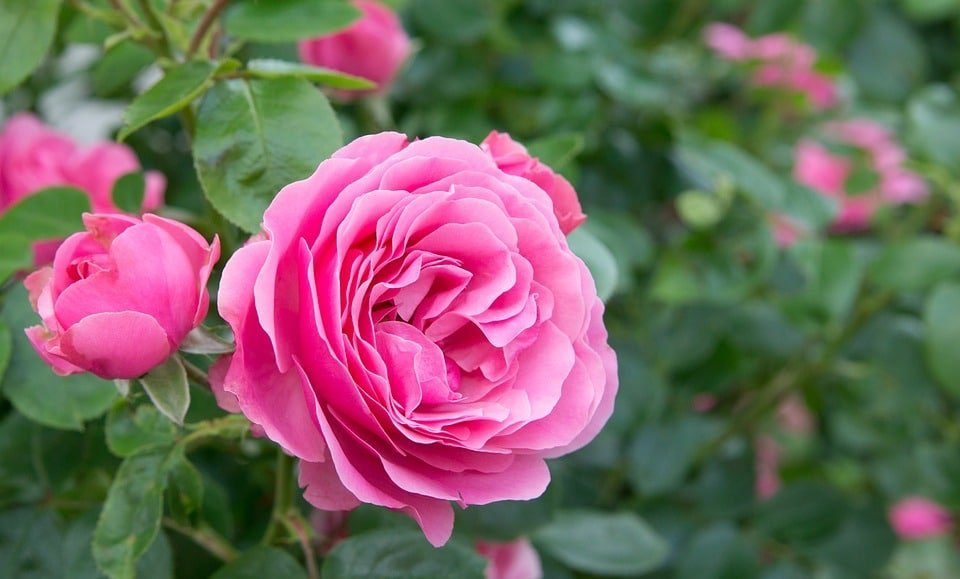
A healthy rose bush starts with the right variety for your climate and growing space. Good light, drainage, and timely care help it perform, but pruning and watering should match the rose and the season. These six checks are a useful starting point when growth or flowering disappoints.
1. Prune for Your Rose’s Flowering Habit
Identify the type before making major cuts. Roses that flower once on older growth are generally pruned after flowering; cutting them back at the wrong time can remove the season’s buds. Repeat-flowering roses often receive their main pruning as growth resumes in spring, with timing adjusted to local conditions.
Remove dead or damaged wood and use clean, sharp tools. Wear gloves and protect your arms from thorns. A climbing rose needs its main framework managed differently from a compact shrub. University of Illinois Extension’s pruning guide explains the distinctions; there is no single aggressive cutback suitable for every rose.
2. Check the Available Sun
Many roses perform best with at least six hours of direct sun. Observe the site over the day and through the growing season, because nearby trees and buildings change the available light. Morning sun is useful, while some afternoon shade can help in hot conditions; a site does not have to receive uninterrupted sun all day.
Choose a locally suitable variety for the light you actually have. Deep shade is unlikely to produce the same flowering as a well-lit position.
3. Improve Drainage and Soil Before Adding More Fertilizer
Roots need air as well as moisture. Avoid a spot where water stands after rain, and assess compacted soil before planting. Sandy soil is not automatically unsuitable, but it may need different watering and soil management from clay.

Image Source: Pixabay
Use a soil test to guide nutrient and pH adjustments. Compost can improve soil structure, but it is not a guarantee that every nutrient requirement is met. The Illinois guide to rose-site preparation covers light and soil considerations.
4. Mulch Without Burying the Stems
A moderate layer of suitable organic mulch helps conserve moisture and reduce weeds. Leave space around the stems and crown rather than piling material against them. Recheck the depth before adding more each year.
Mulch can reduce soil splash, but it does not make a rose disease-proof. Keep the planting area accessible for inspection and remove troublesome weeds before they become established.
5. Water According to the Roots and Weather
Check moisture in the root zone instead of following the rule that roses should rarely be watered. Newly planted roses, container plants, and roses in hot or windy weather may need attention more often than established plants in moisture-retentive soil.
Water the soil thoroughly when needed and allow drainage. A soaker hose can help deliver water near the roots, but check that it actually wets the intended area. Avoid repeatedly soaking already wet ground. Illinois Extension’s rose-care guidance provides further watering and mulching advice.
6. Identify Problems Before Treating Them
Inspect leaves, stems, buds, and flowers regularly. Note spots, distorted growth, pests, or changes in watering and weather. Similar symptoms can have different causes, so do not assume every yellow leaf needs fertilizer or every mark requires a pesticide.
Ask a local extension service or knowledgeable nursery for identification when needed. If a treatment is warranted, use a product labeled for the rose and the identified problem, following its directions. Keep notes on what works for your variety and site; healthy growth is a better target than a promise of perfect flowers every season.


