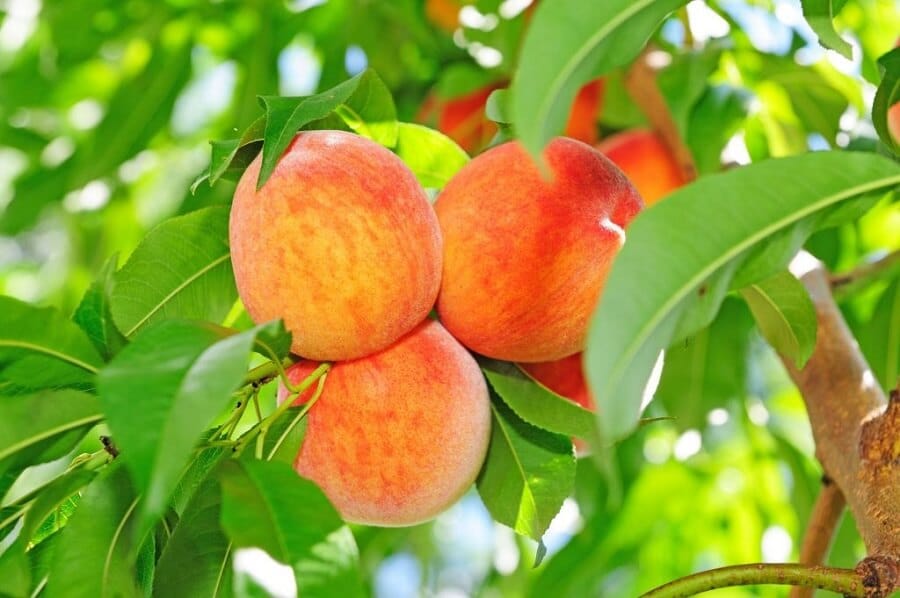
Prune a peach tree to maintain a sound, accessible framework, admit light and renew the young shoots that carry fruit. Peaches bear on wood grown the previous season, so indiscriminately stripping out new growth can remove the next crop. The right approach also depends on whether you are training a young tree or maintaining an established one.
The following six steps describe a common open-center, or vase-shaped, tree. They are not a reason to force every peach into an identical height or branch count. Check local extension guidance for your climate and the nursery’s instructions for a newly planted tree.
1. Choose the timing for your region
Plan the main pruning near the end of dormancy or around the spring growth period recommended locally. Do not assume a February date suits every climate, or that pruning during bloom is always forbidden. Cold injury and disease pressure influence regional recommendations.
Inspect the tree before making decisions. After a damaging winter, the condition of wood and flower buds can affect how much fruiting growth you retain. Avoid using a single percentage of branches to remove as a universal rule. University of Georgia orchard-pruning guidance explains peach training and fruiting wood.
2. Prepare tools and inspect the framework
Use sharp hand pruners for small shoots, loppers within their rated capacity and a pruning saw for suitable larger cuts. Our guide to choosing and using pruning shears covers tool selection. Do not strain small pruners through a branch they cannot cut cleanly.
Work from secure footing and keep other people clear of falling branches. Large, damaged or inaccessible limbs call for experienced help. Walk around the tree and identify the main scaffold branches before cutting: these are the permanent structure, not the small fruiting shoots attached to them.
3. Train a young tree gradually

An open-center tree commonly develops three or four well-spaced main scaffolds spreading outward around the trunk. Favor sound attachments and useful spacing rather than several competing branches crowded into one point. Early training can include heading cuts appropriate to the young nursery tree; a rule never to shorten a young peach is incorrect.
Keep the distinction between scaffolds and the smaller branches they support clear. Three or four scaffolds does not mean only three or four branches may remain on the entire tree. As it develops, inspect new growth and remove competing shoots selectively. The University of Maine peach guide illustrates different training options and emphasizes the importance of the tree’s stage of growth.
4. Open the center without stripping the canopy

Start with dead, broken and clearly diseased wood, then evaluate crossing growth and shoots crowding the center. Where two healthy branches interfere, choose which contributes more to the framework rather than automatically removing both. Strong upright shoots inside the canopy can shade productive growth, but branch direction alone does not decide every cut.
Retain well-positioned one-year-old shoots capable of carrying fruit and replacement growth. Remove or shorten selected shoots to improve spacing and access. Do not cut off all horizontal branches, leave a bare shell around the outside, or remove all new wood in pursuit of a perfectly empty center.
5. Make cuts that suit the branch
When removing a branch, cut just outside its branch collar rather than flush against the trunk or with a long stub. When shortening a shoot, select a suitable bud or lateral branch that continues growth in a useful direction. A universal 45-degree cut does not describe both operations. Minnesota Extension’s pruning guide explains branch collars and the difference between removing and shortening a branch.
Support the weight of larger limbs so bark is not torn as the branch comes away; get help where the size or position makes this unsafe. Step back frequently to check the balance. Reducing an overgrown tree is a different job from routine annual pruning, and severe one-session height reduction can create more problems than it solves.
6. Manage fruit load separately
Pruning is only part of crop management. Once fruit has set, an overloaded branch may need fruit thinning to protect the tree and improve the remaining crop. This is not an instruction to remove a fixed 90 percent of every tree’s fruit.
Maine Extension suggests roughly 6–8 inches between retained peaches in its growing guide. Use locally appropriate timing and consider actual crop load, cultivar and branch strength. A frost-damaged tree with few fruit may need little thinning. Remove damaged fruit first and reassess as the crop develops.
Keep a record for next year
Photograph the framework before and after pruning and note which shoots produced fruit. That makes next year’s renewal choices easier. If a tree repeatedly makes vigorous leafy growth but little fruit, review its light, crop history, cultivar and care before assuming ever-harder pruning is the answer.