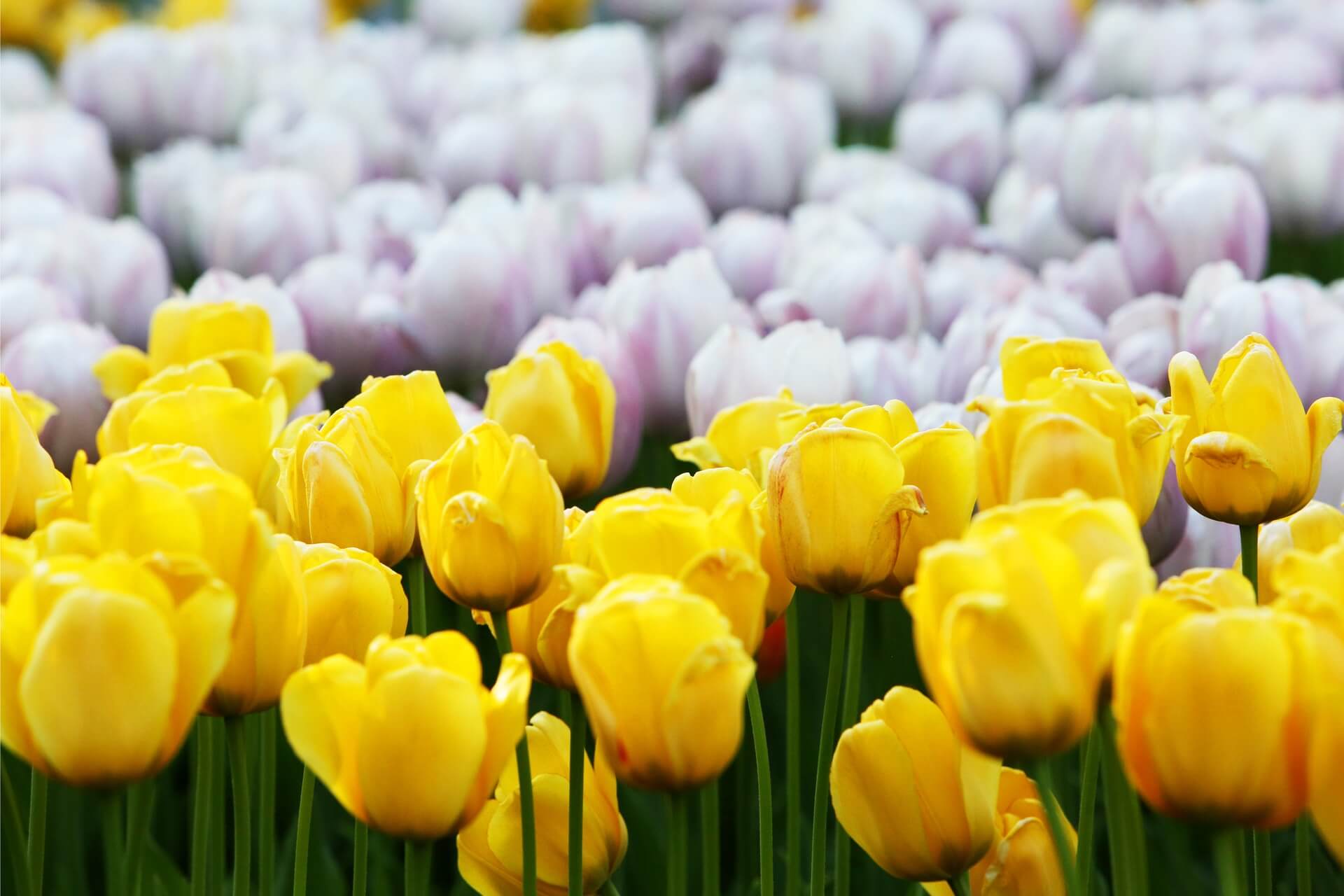
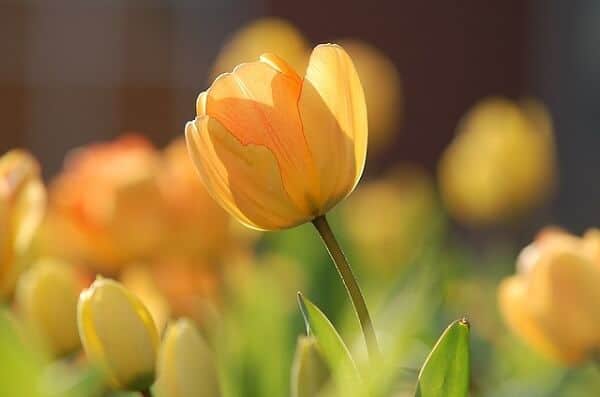
Plant tulip bulbs in autumn in a sunny, well-drained position, then leave their foliage to finish growing after the spring flowers fade. Success depends on the variety, winter chilling and summer conditions. Tulips are perennial bulbs, but some garden hybrids are more reliable as a one-season display than as repeat bloomers.
Choose bulbs for your climate and display
Look for firm, healthy bulbs and a named variety with a suitable flowering time and height. Combining early, middle and late flowering selections can extend the display. Species tulips and some hybrid groups may return more reliably than other bedding selections, but no label guarantees identical flowers every year.
North America does not have one tulip climate. A cold-winter garden, a wet coastal garden and a warm southern garden need different plans. Ask a local extension service or bulb supplier whether the selection needs pre-chilling and whether perennial growth is realistic. The RHS tulip guide also distinguishes repeat performers from bulbs commonly replaced for bedding displays.
Plant when autumn conditions are suitable
Plant in cool autumn soil while the ground remains workable, following local timing. Do not wait for frozen soil or treat a soil temperature of “at least 60°F” as a universal requirement. The aim is establishment under suitable cool conditions, not forcing flowers before winter.
If bulbs must wait, keep them dry, ventilated and cool according to supplier instructions. Refrigeration is a specific chilling treatment for some growing situations, not the default storage method for every purchase. When chilling is advised, keep bulbs separate from ripening fruit and follow the recommended duration. Avoid moving bulbs repeatedly between warm and cold storage.
Prepare a draining site
Choose a sunny position and assess drainage through wet weather, not only on planting day. Bulbs can rot in persistently saturated ground. A suitable container or raised growing area may help where the existing site is unsuitable, but it still needs a way for water to escape.
Remove weeds and prepare the planting area without automatically adding fertilizer, lime or sand. Use a soil test where amendments are needed. Mulch is not a waterproof shield, and even a normally well-drained bed should not be described as immune to prolonged heavy rain.
Set the bulbs at an appropriate depth
Follow the supplier’s depth and spacing for the variety and growing method. A commonly used guide for bulbs is about two to three times the bulb’s height, but check whether the instructions measure to the base or describe soil covering the top. Do not turn that guideline into a ten-inch depth for every large tulip.
Place the pointed end upward, cover with soil and water to settle it where needed. Label the variety and location. For containers, use drainage holes and an appropriate potting mix; do not leave the container standing in a water-filled saucer outdoors.
Care during growth and after flowering
Check moisture while roots and leaves are growing, particularly in containers or a dry spring. Water as conditions require rather than assuming the planting-day watering will always be enough. Apply fertilizer only as suitable directions recommend, accounting for the soil or mix already used.
Remove the spent flower head if you want the bulb to conserve resources rather than develop seed. This does not prevent bulb production; the bulb is what you want to replenish. Leave green foliage attached until it yellows and dies back naturally. Do not tie it into knots or remove it early merely to tidy the bed.
If flowers become sparse in later years, review the cultivar, light, drainage and after-flowering care. Replacing bedding bulbs can be a deliberate display choice, while a more suitable perennial selection may be a better option elsewhere.
Enjoy cut tulips indoors
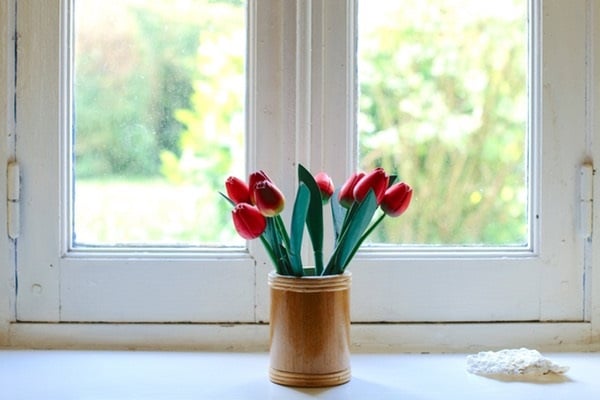
Use a clean vase and clean cutting tools, remove leaves that would sit below the waterline and place stems promptly in water. Keep the arrangement cool and away from direct heat. Check and refresh water regularly. Tulip stems can continue to elongate and bend, so allow space for the arrangement to change.
Use commercial flower food according to its directions if supplied. Pennies, sugar alone and improvised lemon-juice recipes are not a dependable substitute for clean water and sound handling. A fixed vase-water fraction or newspaper treatment cannot guarantee a week of vase life.
If you harvest from bulbs you hope to keep, avoid removing all their leaves. A dedicated cutting patch can be managed differently from a border intended to flower again. Maryland Extension’s cut-tulip guidance explains the separate production context.
Original image credits: yellow tulip; vase arrangement; original featured image.