Prune most repeat-flowering bush roses in late winter or early spring, as growth starts and your local climate allows. Roses that bloom once on older wood generally need their main pruning after flowering. Climbing roses require a different approach because their long main canes form a framework that should usually be retained.
Identify the rose before choosing a date or cutting it back hard. The six groups below are garden classifications, not six botanical species, and cultivar instructions may refine the advice. A calendar written for Britain will not transfer unchanged to a cold continental winter or the Southern Hemisphere.
Before you begin
Find the name on a label or previous planting record. If it is unknown, observe whether it repeats flowering and whether it grows as a bush, arching shrub or supported climber. Remove clearly dead or broken material as needed, but postpone major reshaping until you understand its habit.
Use gloves and sharp tools suited to the stem size. When shortening a cane, make a clean cut just above a healthy bud, sloping away from it. Choose a bud that directs growth into useful space. Avoid crushing stems or leaving long dead stubs. Our pruning-shears guide can help with tool choice, and the RHS general pruning guide covers basic rose cuts.
1. Hybrid tea roses
These repeat-flowering bush roses are commonly pruned as spring growth begins. Remove dead, diseased and badly crossing growth, then shorten retained healthy canes to encourage a productive framework. The amount depends on vigor, winter damage and the growing system; do not apply a random branch count to every plant.
Hybrid teas are generally pruned more strongly than floribundas. The RHS hybrid tea and floribunda guide gives separate instructions for the two groups. In a cold climate, assess living wood after winter rather than keeping dead cane tips simply to reach a predetermined height.
2. Floribunda roses
Floribundas also repeat flower, usually in clusters. Carry out the main pruning in the late-winter or early-spring period suitable locally. Keep more length and buds on their healthy stems than you would under a hard hybrid-tea pruning system, while removing congested or damaged growth.
A newly planted floribunda should not automatically be cut flush to the ground. Follow nursery guidance for its condition and planting form. Routine shaping and renovation of an old, crowded plant are different jobs; the latter may involve selective removal of older canes.
3. Modern shrub roses
Shrub roses vary widely. Many need a lighter approach that preserves their natural outline, rather than being treated like compact hybrid teas. For repeat-flowering cultivars, late-winter pruning can shorten selected growth and gradually renew an overcrowded framework.
Use the cultivar’s recommendations to decide how much to reduce it. Do not identify its pruning needs only from the appearance of the flowers, or remove exactly three old stems every year regardless of size. The RHS shrub-rose guide separates once-flowering from repeat-flowering types.
4. Climbing roses
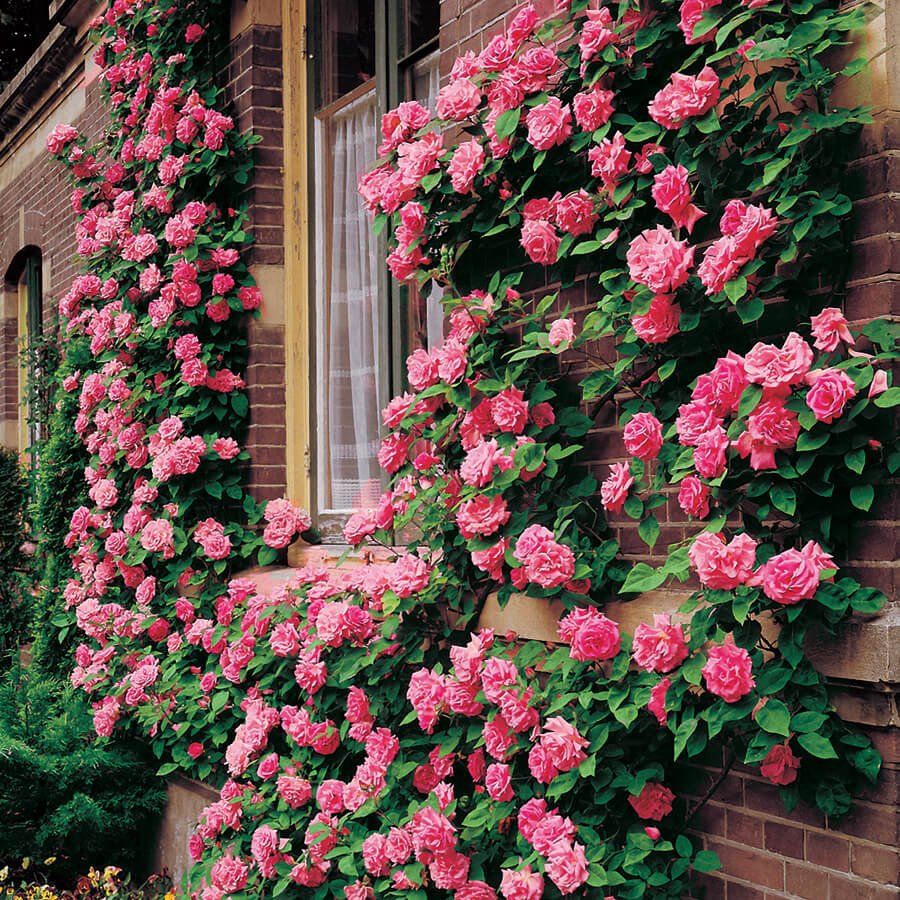
Train a young climbing rose onto a sound support, retaining useful long canes to fill the available space. Arrange them gently and tie them securely without constricting growth. Training does not have to wait until an arbitrary second birthday, and repeatedly shortening every main cane can prevent the plant covering its support.
For an established repeat-flowering climber, routine dormant-season work removes dead or damaged growth, retains useful main canes and shortens flowered side shoots. The RHS climbing-rose guide recommends reducing these side shoots by about two-thirds under its system. Adapt seasonal timing locally. Selectively renew old framework when necessary rather than removing it all in one session.
Do not automatically use this method for a once-flowering rambler. Confirm the cultivar and its flowering habit first. Keep work within safe reach; a tall rose does not justify reaching awkwardly from an unstable ladder.
5. Miniature and patio roses
Scale the tools and the cuts to the plant. A healthy miniature rose can naturally have slender stems, so a rule to remove everything thinner than a pencil is unsuitable.
Miniatures often need only the removal of dead or unproductive twiggy growth and modest shaping. Patio and polyantha roses may be managed more like small floribundas, with care not to prune newly planted dwarf roses too severely. The RHS small-bush rose guide explains these distinctions. Check the plant before deciding that its compact size means it needs cutting harder.
6. Old garden and once-flowering roses
“Old garden rose” is not a single pruning schedule. Many bloom once on older wood, while some groups repeat flower. For a once-flowering shrub, make the main shaping and renewal cuts after its display so you do not remove the coming season’s flowers beforehand.
Preserve the arching habit where that is part of the cultivar’s character. Remove crowded, poorly positioned or unproductive wood selectively rather than shearing every stem to the same height. If the rose has outgrown its space, consider whether the location is the problem before repeatedly forcing it into an unsuitable size.
Deadheading, suckers and follow-up care
Deadheading can encourage further flowering on repeat bloomers, but leave selected spent flowers if you want hips. It is not the same operation as annual framework pruning, and removing flowers does not turn a once-flowering rose into a repeat bloomer.
On a grafted rose, trace suspected rootstock suckers to their origin before removing them. A vigorous new shoot from the desired rose may be valuable replacement growth. Leaflet count alone is not a reliable reason to destroy it.
Check cuts and new growth during the following weeks, and seek local advice if dieback or cane damage persists. There is no need to make sealing every cut with household glue a universal part of pruning. Record flowering and the plant’s response so the next season’s decisions are based on this rose, not a generic calendar.
Original image credits: original featured image; climbing rose image.