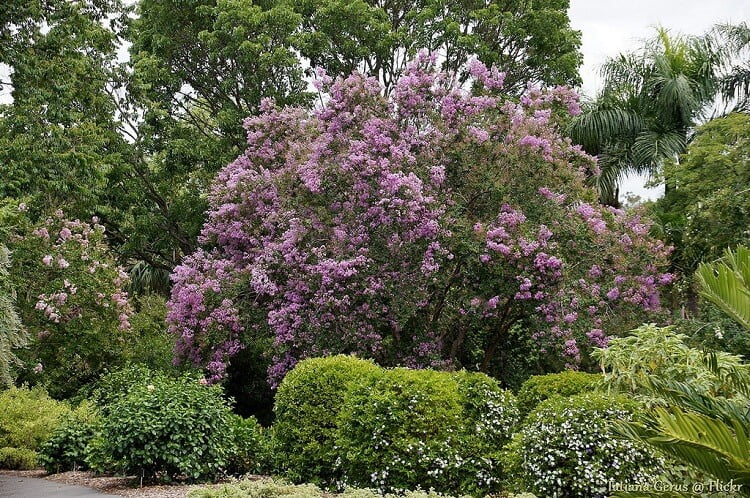
Hawthorns in the genus Crataegus are shrubs or small trees grown for spring flowers, fruit called haws and, in many species, thorny branches. They can suit a wildlife hedge or a specimen-tree planting, but the right choice depends on species, mature size and local conditions.
Indian hawthorn is a different plant: Rhaphiolepis, commonly an evergreen shrub for warmer climates. Do not use an Indian hawthorn care label to choose or identify a deciduous Crataegus tree.
Identify the Plant Before Choosing a Site

A common example is Crataegus monogyna, familiar in British hedgerows. Other hawthorns differ in leaf shape, flower color, fruit and growth habit. A nursery label with the botanical name and cultivar is more useful than the word “hawthorn” alone.
RHS hawthorn guidance describes their ornamental and wildlife roles. In a garden, choose a form that can reach its natural size without blocking a path or window. Thorny branches are useful in some boundaries but poorly placed beside narrow walkways and children’s play areas.
NC State’s Indian hawthorn profile describes an evergreen plant with leathery leaves, spring flowers and dark fruit. It has different cold tolerance and disease concerns. If that is the plant you own, seek species-specific guidance rather than treating it as a hedgerow hawthorn.
Flowers, Haws and Wildlife
Hawthorn flowers can attract pollinators, while the fruit and branching structure offer resources for birds. Flower and fruit performance varies with the selection and how it is pruned. Repeated shearing of a flowering hedge may reduce the display and subsequent haws.

Wildlife eating fruit does not establish that it is suitable for people. Treat garden haws as ornamental unless a knowledgeable food-identification source has confirmed the exact plant and preparation. Do not sample seeds or unidentified hedge fruit.
Meaning and Folklore
In British tradition, hawthorn is associated with May and spring flowering. The Woodland Trust’s common hawthorn profile describes its place in folklore. These are cultural associations, not botanical facts about personality, gender or a person’s future.
For a commemorative planting, choose the meaning that is useful to you: a spring landmark, a family hedge or a tree that supports a garden’s seasonal life. Its eventual size and suitability for the site still matter more than a symbolic label.
Planting a Hawthorn Tree or Hedge
Buy healthy nursery-grown stock of a locally suitable species. Taking a plant from a wild hedge can damage habitat and may require permission. Nursery stock also gives you a clearer identity and a root system prepared for transplanting.
- Check space: use the expected mature spread for a tree and a species-specific spacing plan for a hedge. One wide tree spacing is not a hedge spacing rule.
- Check light and drainage: compare your site with the named plant’s needs before planting. Avoid assuming every hawthorn tolerates every wet or dry position.
- Set the depth correctly: locate the root flare and avoid burying the trunk. Prepare a hole wide enough for the root system rather than planting deeply to make it stable.
- Water during establishment: check the root ball as well as surrounding soil. Rain may not wet a recently planted root ball sufficiently.
- Mulch carefully: cover the surrounding soil while leaving the trunk clear.
The RHS growing guide provides further advice on establishing and maintaining hawthorn. Choose planting time for your climate and stock type, with aftercare available through dry weather.

Pruning, Feeding and Problems
Remove damaged growth and manage crossing or poorly placed branches as needed. Plan the timing and extent of hedge clipping around flowering, fruit and active bird nests. There is no need to deadhead a tree simply because flowers have faded; those flowers may develop into the fruit you wanted.
Do not fertilize or spray on a fixed preventive schedule without a reason. Weak growth, spotted leaves or dieback can have several causes. Photograph symptoms, note watering and recent weather, and obtain a local diagnosis before choosing treatment. Large or structurally compromised branches belong with a qualified arborist.
Propagation and Medicinal Claims
Hawthorn seed can have complex dormancy requirements, and seedlings may not match a named cultivar. Use a propagation protocol for the identified species; repeatedly freezing and thawing berries is not a general shortcut. For a predictable garden tree, buying the named cultivar is usually the more practical option.
Hawthorn supplements should not be presented as proven treatments for heart disease, anxiety or digestive problems. NCCIH’s evidence summary reports limited or insufficient evidence for many promoted uses. Supplements can interact with medicines; discuss use with a healthcare professional rather than making a remedy from a garden plant or replacing prescribed care.
Image source: 1