Passion flowers can cover a trellis with elaborate blooms, but choose the species before deciding how to grow it. Passiflora includes plants with very different winter tolerances. A general label such as “passion flower vine” is not enough to promise success in USDA zones 6–10.
1. Identify the vine you want
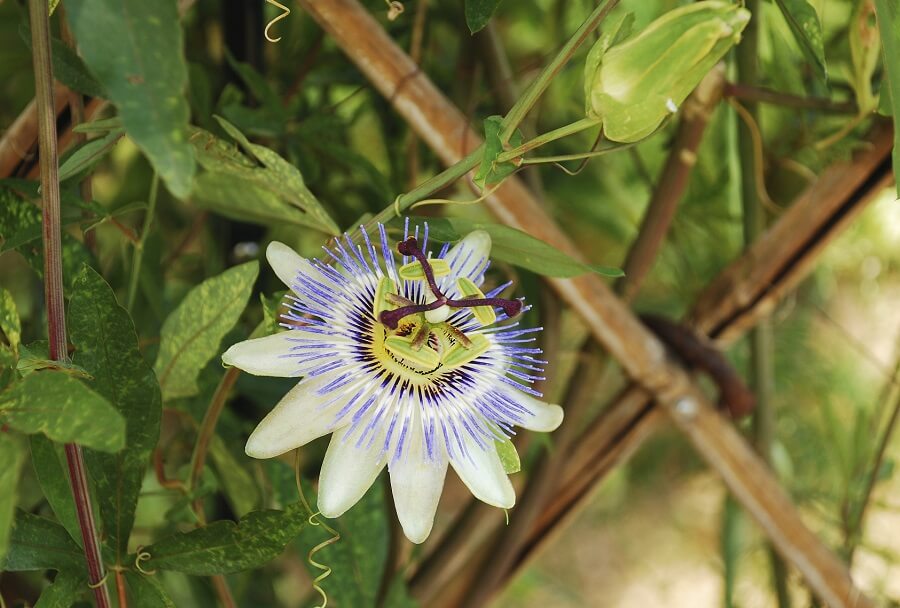
The flowers have a distinctive central arrangement of filaments and reproductive structures, and many last only a short time individually while the vine produces further blooms. Colors, leaf shapes and growth habits vary. Buy a labeled plant if a particular flower color or growth habit matters.
Maypop, Passiflora incarnata, is native to parts of the United States and can die back to the ground in cold winters. It can also spread strongly by root suckers. NC State’s maypop profile describes its site preferences and spreading habit. Tropical P. edulis, grown for passion fruit, is a different choice. Do not assume every ornamental passion flower produces fruit suitable for eating.
Before buying, ask for the botanical name, mature size, local winter expectations and any regional restrictions. These details determine whether the plant belongs permanently outside or in a container you can protect.
2. Prepare its position and support
Choose well-drained soil and light appropriate to the species. A sunny, sheltered position suits many outdoor passion flowers; a hot greenhouse may need light shading. Avoid a site that remains waterlogged through winter.

Install a support before the vine becomes tangled. Tendrils need something suitable to grip. A trellis or wired support is easier to manage than letting vigorous growth smother a neighboring shrub. Leave room to inspect the plant and reach the back of the support.
If using a container, plan where it will go in winter before filling it. Consider the combined size and weight of pot, support and vine. A plant that fits beside a patio chair in spring may block the path later in the season.
3. Choose seed, cuttings or an established plant
An established, correctly labeled plant is the straightforward option when you want predictable flowers. Seed is an experiment: germination can be slow and seedlings may not resemble the parent. Cuttings or layering are alternatives when you want to reproduce a particular plant and propagation is permitted.

For seed, follow instructions for the identified species and seed lot. The RHS passion-flower guide describes soaking seed in tepid water for 24 hours and keeping the sown seed warm. Do not discard every floating seed as certainly dead, and do not apply one surface-sowing rule to the whole genus.
Label the pot with the species and sowing date. Use a suitable seed mix, keep it from drying out or becoming saturated, and inspect covered pots regularly. If using a heat mat, use its temperature controls; the top of a refrigerator is not a reliable germination-temperature setting. Acclimatize seedlings gradually before moving them into stronger outdoor conditions.
4. Water according to growth and weather
Check soil moisture during active growth, particularly for container plants. Water thoroughly when needed and let excess drain. Constantly adding water can damage roots as surely as allowing a small pot to dry out completely.
Container plants generally need less water during slower winter growth. The word “compost” in British growing advice often means potting mix, not a layer of garden compost that you must pile around the stem. Check the growing medium itself before watering.
5. Feed and manage growth without forcing it
Use a fertilizer appropriate to the growing situation at its labeled rate when needed. Keep records so repeated feeding does not become an automatic response to poor flowering. First check light, the plant’s age, root health and whether pruning has removed developing growth.
Guide young shoots across the support with loose ties where necessary. Inspect the ties as stems expand. For a fan-shaped display, distribute shoots rather than allowing all of them to bunch at the top. Remove unwanted root suckers from spreading species before they become established elsewhere.
6. Prune for the plant and the season
Many commonly grown passion flowers are pruned in spring, retaining a sound framework and removing unsuitable or damaged growth. Routine tidying is different from cutting the whole plant hard to renovate it. Follow guidance for your species and climate; do not assume all vines need pruning immediately after flowering or a cut to two feet every year.
In a cold region, distinguish a species that naturally dies back from a tender plant damaged by freezing. Protect or move tender plants before cold arrives rather than relying on mulch to make them winter-hardy.
Keep the display manageable
Walk around the vine periodically to check whether it has reached a gutter, neighboring plant or access route. Look under leaves for pests and identify caterpillars before treating: some passion flowers are butterfly host plants. Keep the botanical label and a photograph with your garden notes so next year’s pruning and winter care fit the vine you actually own.