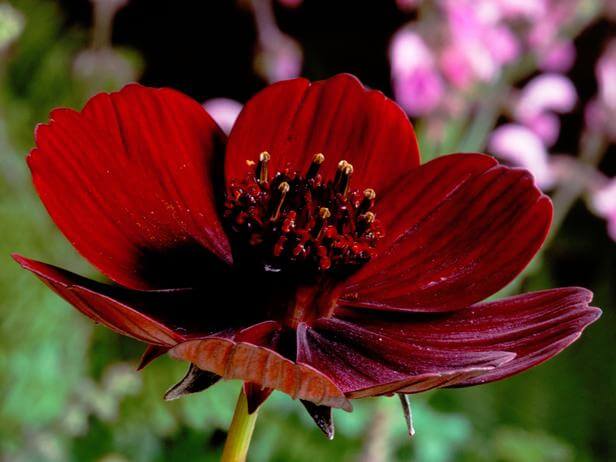
Chocolate cosmos, Cosmos atrosanguineus, is grown for dark, velvety flowers and a chocolate-like scent. It is a tuberous perennial, but many gardeners need to protect it from winter cold. A useful seasonal plan is to establish it in spring, enjoy the flowers through suitable summer and autumn weather, then protect or lift it before damaging cold.
Know which chocolate cosmos you are buying

Chocolate cosmos is different from the annual cosmos commonly raised for tall summer displays. Named selections differ in size, hardiness and propagation. “Chocamocha” is a named selection, not a universal alternative name for the whole species. Check the actual label rather than assuming every chocolate cosmos will grow four feet tall.
Hardiness also varies. The RHS profile for Black Magic describes a plant suited to sun and moist, well-drained soil, with frost-free overwintering in cold areas. The RHS separately describes Cherry Chocolate as hardier than earlier varieties. A UK hardiness rating is not a promise that an exposed container will survive every winter elsewhere.
Spring: establish roots and choose the position
Buy a healthy plant or tuber from a supplier that gives instructions for that selection. In a cold region, begin under suitable protected conditions and wait until the risk of damaging frost has passed before planting out. Acclimatize a greenhouse-grown plant gradually to outdoor light and wind.
Choose a sunny position with drainage that prevents prolonged saturation. Allow the mature spread listed on the label. A container is useful if you expect to move the plant under cover later, but choose one with drainage holes and enough room for the root system.
Prepare a suitable growing medium rather than adding fertilizer indiscriminately. Rich feeding is not a replacement for light and drainage. Follow the supplier’s planting depth for a tuber and keep a potted plant at its established soil level unless its instructions say otherwise.
Summer: water to conditions and keep flowers coming
Check moisture regularly, especially in containers. Water sufficiently to reach the roots, let excess drain, and avoid leaving the pot standing in water. Do not alternate between keeping it saturated and waiting until the entire root ball is completely dry. Weather, pot size and plant growth are more useful guides than a once-a-week rule.
Remove spent flowers if you want to encourage continued flowering. Cut flowering stems for a small arrangement without stripping the plant of all its useful foliage. Place a container where you can enjoy the scent close up; fragrance strength varies with conditions and is not guaranteed to fill a whole garden.
Feed only as needed for the growing medium and product instructions. The words “organic” and “10-10-10” do not establish a universal recipe for this plant. If growth is weak, check light, roots and moisture before assuming more fertilizer is the answer.
Autumn and winter: protect the tubers
Plan protection before the first damaging frost. In a suitably mild, well-drained site, the plant may overwinter outside with protection appropriate to the cultivar and climate. In colder areas, lifting or moving a container into frost-free shelter is the more cautious approach.
Lift carefully to avoid damaging the tuberous roots. Follow the nursery’s storage instructions, using a cool, frost-free location and checking the material periodically. Avoid both wet storage that encourages decay and severe drying that shrivels the tubers. A warm room and permanently wet peat are not a general winter-storage prescription.
Label stored plants and inspect for soft, decaying material. Do not apply a generic “dry fungicide” without identifying a problem and checking that a product is suitable and legally labeled for that use. The RHS cosmos guide distinguishes perennial chocolate cosmos from annual types and discusses winter protection.
Propagation: seed is possible for some selections
The statement that all chocolate-cosmos seed is sterile is outdated. RHS explicitly lists Black Magic as a cultivar that can be raised from seed. Buy correctly identified seed and follow its sowing instructions; do not assume seed from any named plant will reproduce that plant exactly.
Division or other vegetative propagation may be appropriate for particular plants. A detached piece of swollen root is not automatically a complete new plant: usable growing tissue is needed. Follow cultivar-specific guidance, and check any propagation restrictions on a named commercial selection before making copies.
When a plant struggles
Check the root zone and drainage if growth collapses or the base softens. Remove dead debris and avoid crowding that traps moisture. Generally low pest pressure does not mean immunity; the RHS profile lists foot rot and grey mould as possible problems. If you cannot distinguish rot, cold damage or drought, seek a diagnosis before treating.
The goal is healthy growth during the plant’s active season and suitable protection during dormancy. Chocolate cosmos is not a year-round flowering houseplant simply because it can be kept in a pot.