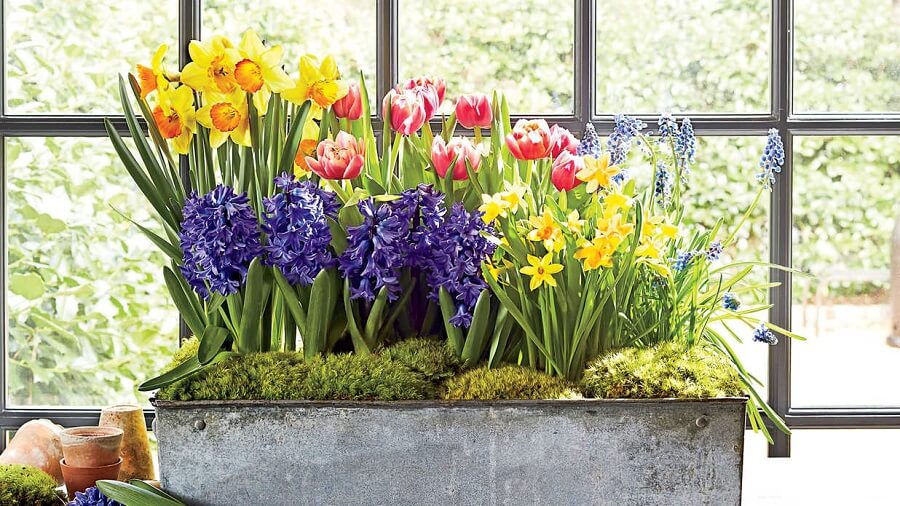
A container garden can grow flowers, herbs or vegetables wherever there is suitable light, space and access for care. Start with a few containers you can water reliably. Pots provide control over the growing mix, but they are not automatically easier than garden beds.
1. Match plants to the site
Observe the hours of sunlight, wind and reflected heat before choosing plants. A bright-looking room may still be too dim for productive vegetables. A balcony can be much windier than the ground below it.
Decide whether you want edible crops, seasonal flowers or long-lived foliage. Choose plants with light and temperature requirements the location can provide rather than expecting any empty corner to work.
2. Choose suitable varieties
Compact vegetables can be useful, but final size still matters. Tomatoes, peppers, leafy greens and some cucumbers can grow in appropriately sized pots. All herbs are not small or equally low-maintenance: mint spreads, rosemary can become large, and basil needs different moisture conditions from thyme.
For ornamental containers, combine compatible plants with different heights or textures if you like. Ferns and grasses are foliage choices rather than examples of flowering plants. You do not need to restrict a pot to one variety, but its occupants should share growing needs.
3. Select containers and supports
Choose a container large enough for the mature root system and with suitable drainage. Pot volume matters as well as depth. Tall plants need enough stability to avoid tipping.
Material affects weight, drying and durability. Terracotta commonly dries faster than plastic; wooden containers vary widely in lifespan. Check load limits and safe placement on balconies and shelves. Our herb window-box project explains using a decorative shell with removable pots.
University of Maryland Extension’s container guide includes crop-specific sizing considerations.

4. Keep drainage working
Check that outlets are open. If needed, use a small piece of mesh that retains mix without obstructing water. Do not fill the bottom with a thick gravel layer expecting it to improve root-zone drainage.
Ordinary saucers protect surfaces but need emptying after watering. A purpose-made reservoir planter follows its own instructions and is different from a pot left in a tray of water. Consider where runoff will go before placing containers above a neighbor or a walkway.
5. Use the right growing mix
Choose a potting mix suited to the plants. Garden soil alone can become dense in a container. Check whether the mix already contains fertilizer before adding more, and do not add lime or wetting agents automatically.
Moisture-loving plants still need oxygen around their roots. “Moist” and “well-drained” are not opposite requirements. Match the mix to the plant, container and watering routine.
6. Plant at the appropriate depth
For seedlings or nursery plants, arrange the pots first, then plant with enough mix beneath and around their roots. Keep crowns at the appropriate level for the species. Seeds need their packet’s sowing depth rather than the same hole as a transplant.
Leave a watering space below the rim, settle the mix gently and water thoroughly. Avoid burying crowns when topping up settled mix. Maryland’s container-planting instructions provide further guidance.
7. Monitor and adjust care
Check moisture frequently, especially in sun and wind. Water according to the plant and root-zone condition rather than using one weekly schedule for every pot. Fertilize according to crop needs, existing nutrients and the product label.
Inspect for pests and restricted roots. Deadhead flowers where that benefits the species, harvest edible crops regularly and replace plants that outgrow the arrangement. Rotate or rearrange containers only when you can lift them safely.

Keep notes on which combinations suit the site. A few successful pots give you better information for expanding than filling the whole space at once.