A useful DIY birdbath can attract birds when it is shallow, stable and easy to empty and scrub. The four ideas below offer different looks, but those practical features matter more than decoration. Start with a basin you can maintain comfortably, then build a support around it.
Set the water depth before decorating
Cornell Lab’s birdbath advice recommends shallow edges, no more than about an inch deep, sloping to a maximum of two inches in the middle. Secure stones can provide footing in a slippery basin. Avoid a deep container that birds must negotiate simply because its outside looks attractive.
Choose a shaded position where birds can see approaching predators, with perches nearby but space between the bath and dense hiding places for cats. Test the support with the full water load before leaving it in service.
1. A salvaged sink with a shallow insert
A sink can provide a distinctive garden feature, but its bowl may be too deep and its weight substantial. Use a sound sink with no sharp chips or unknown deteriorating coatings. Rather than attaching it to a living tree with a few screws, use a support designed for its wet weight.
- Choose a stable, level location and an appropriate freestanding support.
- Fit a removable shallow basin inside the sink. This makes the water depth easier to control and avoids filling the whole sink.
- Check that the insert cannot rock, tip or slide when a bird lands.
- Keep the sink’s drainage working so rain does not leave an unintended deep reservoir around the insert.
If the sink cannot be supported securely or cleaned easily, use it as a decorative planter and put the birdbath beside it. Flowers can soften the arrangement, but leave enough access to lift out and wash the basin.
2. A pot-and-saucer pedestal
A broad terracotta pot turned upside down can support a shallow saucer. Keep the design low and wide rather than stacking a tall, top-heavy tower. Select sound pieces and a basin that remains secure yet can be removed for cleaning.
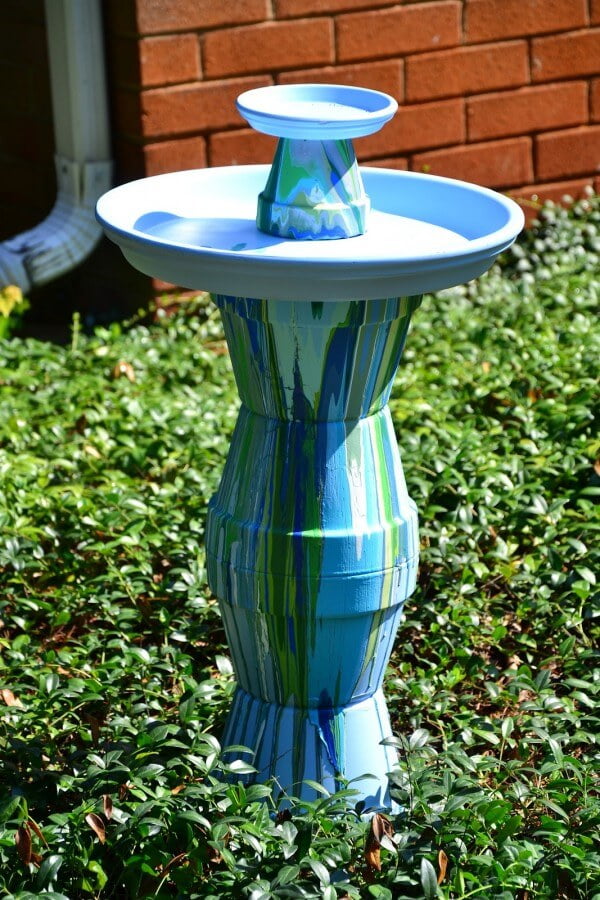
- Place the base on firm, level ground and check that it does not wobble.
- Use a broad top support matched to the saucer. If the design needs adhesive, follow a suitable exterior product’s substrate and curing instructions.
- Decorate the outside of the base if desired, keeping unverified paints, glues and sealants out of the water-contact area.
- Allow finishes and adhesives to cure fully, then test the assembly and water depth.
A painted example is inspiration for the outside, not proof that its paint is suitable inside a birdbath. Do not assume a dry surface means an adhesive has developed its full strength. Bring vulnerable terracotta components in before freezing weather if they are not rated for it.
3. A removable dish on a stand
A shallow dish is the quickest approach. Choose a durable basin with a non-slippery surface or secure footholds. An existing plant stand designed for the load can be easier to assess than three loose rods glued to the bottom of a dish.
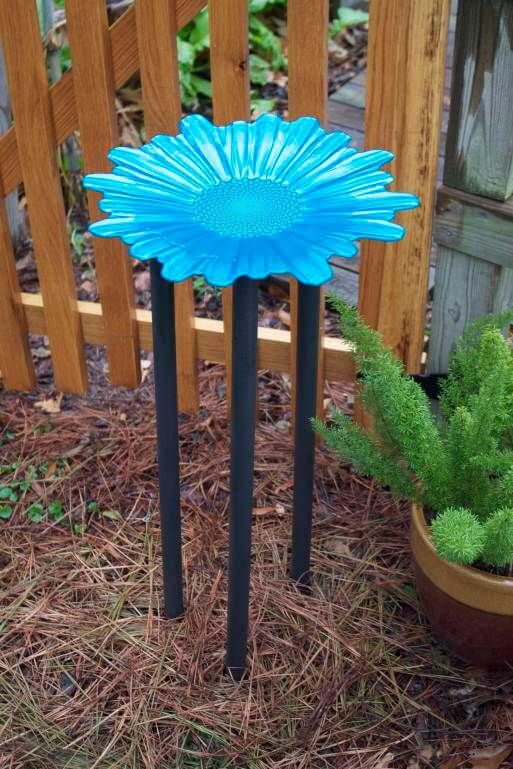
- Match the basin to a stable stand that supports it across enough of its base.
- Place the stand on a level surface and check that the basin cannot be pushed sideways.
- Add water, check depth at the edges and middle, and adjust before birds use it.
- Lift the basin out for cleaning rather than permanently gluing every part together.
A ground-level basin is another option where predator exposure can be managed. Choose the height for stability and maintenance, not just for a dramatic display. Avoid loose decorative objects that make scrubbing difficult or create sharp edges.
4. A leaf-shaped concrete basin
A large leaf can form an attractive impression in a shallow casting. This project needs more preparation than the other three because concrete mix, thickness, curing and any coating must all suit the intended water-contact use.
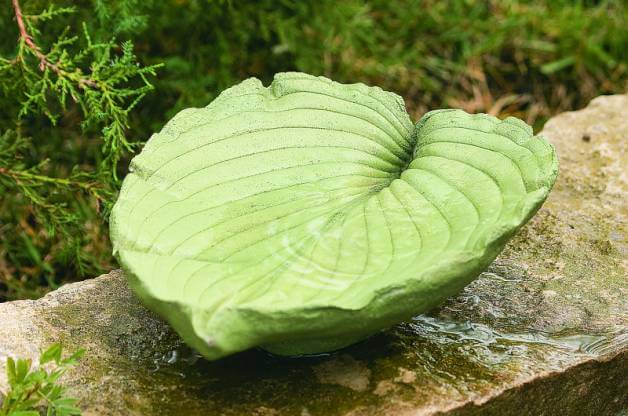
The basic design uses a leaf supported over a shallow mound of sand, with the casting formed over its veined side. Use a tested casting project and a compatible mix rather than an improvised combination of cement, sand and liquid fortifier. QUIKRETE’s small-casting guidance demonstrates why mix choice depends on casting thickness; it is not a certification of a homemade birdbath.
Follow the chosen product’s directions for mixing, handling and curing, including protection from cement dust and wet material. Do not treat a one-day demolding time as the time when a casting is ready for birds. Check the finished piece for cracks and sharp edges.
If you cannot verify the suitability of the cast surface or coating for this use, let the leaf form a decorative support for a removable, known-suitable shallow basin. That also makes cleaning and replacement simpler.
Keep the bath useful after the project is finished
Replace water every day or two, and sooner when fouled. Empty and scrub the basin rather than repeatedly topping up dirty water. Audubon’s routine cleaning guidance describes scrubbing with nine parts water to one part vinegar. Rinse thoroughly before refilling. Never mix cleaning chemicals.
Inspect stands, joints and surfaces while cleaning. Remove a bath from service if a support loosens, a coating flakes or the basin cracks. Follow local wildlife-agency advice if sick birds or a disease outbreak affect your area. A simple clean saucer serves birds better than an elaborate bath that is difficult to maintain.