A useful front-yard design makes the entrance clear, leaves comfortable access and suits the time you want to spend gardening. These seven ideas offer different starting points, from a pair of entrance pots to planted paths and a seating area. Choose the ideas that fit your site rather than trying to fit all seven into one yard.
Before planting, mark paths, door swings, utilities, drainage routes and any required sightlines. Choose plants by mature size and local growing conditions. For a compact plot, the small front yard guide adds space and budget priorities.

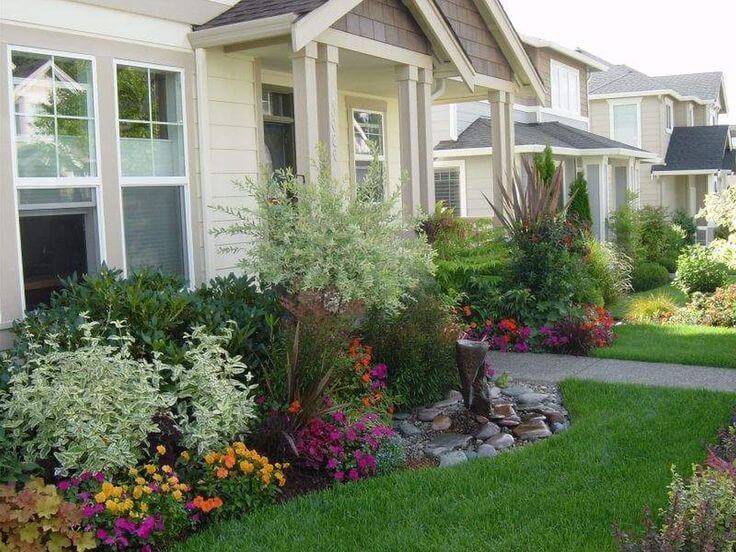
1. Make the entrance a focal point
Use a small group of containers or a planted corner to draw attention to the door. Repeating a pot style or plant color can make the arrangement feel intentional without filling every available surface. Choose plants for the actual light beneath the porch or beside the house.
Leave enough space to enter, carry packages and open doors fully. Place pots where drainage will not create a slippery surface. A climbing plant can add height, but it needs an appropriate support and enough space for maintenance; do not let it cover windows, fittings or access points.

2. Combine shrubs with roses or seasonal flowers
Shrubs can provide structure while flowering plants bring seasonal changes. Use a manageable selection and allow space for the plants’ eventual spread. The design can be formal or relaxed; every shrub does not need to be clipped into the same shape.
Choose roses suited to the climate and your maintenance preferences. Keep thorny growth back from paths and seating. If adding a bench, leave a firm approach and enough room to maintain the bed around it. Match irrigation needs within each planted area rather than relying on extra watering to resolve incompatible choices.

3. Frame a practical stone pathway
A path can organize the front yard and connect the gate, driveway and entrance. Choose a surface appropriate for the people who will use it, including anyone using mobility aids. A rustic appearance should not require loose, rocking or uneven stones.
Plan a stable base, drainage and a usable walking width before adding flowers along the edges. Keep spreading plants from hiding the path surface. A consistent material or repeated planting can connect the path to the house without making the whole garden rigidly symmetrical.

4. Add a shaded seating place
Where space allows, a small seating area can give the front yard a purpose beyond appearance. Observe sun and shade at the hours you would actually sit there. Consider privacy, traffic and whether the location leaves the entrance convenient to use.
A pergola or planted arch needs a structure suited to its load and location. Choose a climber with an appropriate mature size and manageable growth, checking local invasive-plant guidance before planting. Vigorous trumpet vine is not a universal low-maintenance shade solution. Existing tree shade may be useful, but avoid damaging roots when creating a surface beneath it.

5. Create a maintained path through a looser planting
A mown or clearly edged path can contrast with a more natural planting style. Design the surrounding planting intentionally with appropriate grasses and flowers. Do not simply abandon maintenance or introduce unspecified ryegrass and weeds in the hope of creating a meadow.
Check local rules and identify unwanted or invasive plants before they spread. Keep sightlines and access open. A naturalistic planting still needs establishment care, selective weeding and seasonal management; the work is different from a clipped lawn rather than absent.

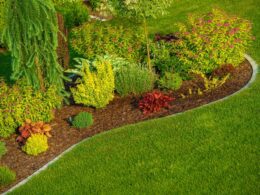
6. Use defined planting beds
Grouping plants in clear beds can make color and form easier to appreciate. Repeating a few suitable plants often gives a calmer result than collecting one of everything. Allow the layout to grow into its space rather than buying enough plants to fill every gap immediately.
Avoid maintaining unnecessarily bare soil between plants. A site-appropriate mulch or suitable living cover can reduce erosion and weed pressure. Keep mulch clear of trunks and sensitive crowns, and account for drainage and local fire guidance. Wide bare gaps are not required to make plants stand out.

7. Plant alongside a decorative fence
A fence can provide a useful backdrop for flowers and foliage. Choose colors and heights that suit the house, and allow room to inspect, repair or paint the fence. Support a climber appropriately instead of assuming the fence can bear its eventual weight.
Keep roses, thorny stems and spreading growth inside the intended boundary rather than encouraging them through gaps onto a public path or neighboring property. Lavender may suit a sunny, well-drained position; it should be selected for those growing needs and its ornamental qualities, not treated as a guaranteed health benefit.
Choose one coherent starting point
Begin with the area that affects everyday use most: a confusing entrance, an awkward path or an overgrown bed. Fix the practical problem, then add planting in stages. Use a short plant list, realistic maintenance expectations and local advice where soil, slope or drainage is difficult.
These ideas can also inform a backyard, but the priorities may differ. A front garden often has more public visibility and access constraints. Adapt the design to the property rather than copying a photograph’s plant identities or layout without checking them.