Unusual garden furniture can start with a familiar shape and an unexpected finish. The six ideas below are design inspiration, not tested construction plans. For anything that supports a person, use a suitable rated frame or a complete design with specified materials and connections; a photograph cannot establish its strength.
1. A grass-look table or seat
Artificial turf can give an outdoor furniture piece a playful green surface. Start with sound furniture suitable for outdoor use, and check whether the covering and adhesive are compatible with it. Keep drainage openings clear and consider how the surface will be cleaned and dried.
Living turf is a different project: soil and water add weight, and regular irrigation can damage an ordinary frame. Treat a living-grass form as a purpose-designed garden feature rather than covering a household sofa with soil. Try a small decorative piece first to decide whether you enjoy the maintenance.

2. A tire-inspired table
A tire can suggest a round, colorful base, but stacked tires and a balanced tabletop do not form a secure table by themselves. Use a design that positively secures the components, provides a stable footprint and prevents trapped rainwater. Inspect salvaged material for exposed wire, damage and contamination.
Choose an outdoor-suitable top with safe edges. Avoid loose glass and do not describe the finished table as seating unless the design is intended for that load. Place it where people will not trip over the base, and consider a manufactured round table if you cannot make the connections reliably.
3. A corner daybed
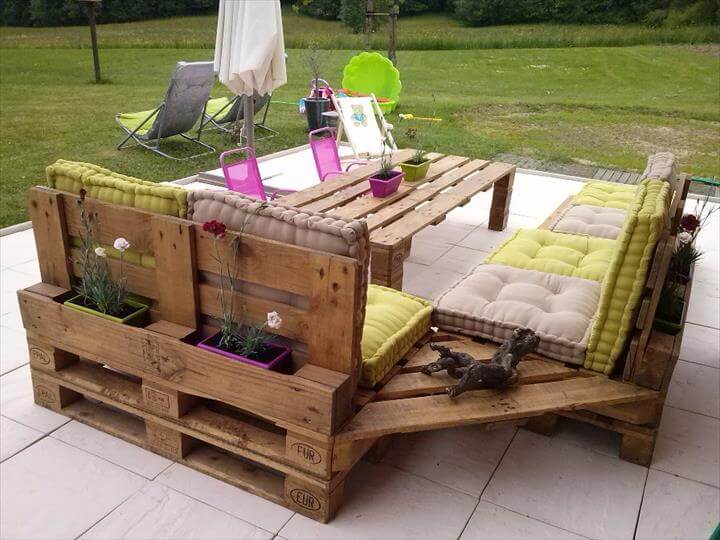
A corner seating area can make an awkward space useful for reading or relaxing. Measure access as well as the footprint, and leave room to clean behind the furniture. Start with a purpose-built outdoor daybed frame or a complete woodworking plan appropriate to your skills.
Use cushions designed for outdoor conditions and provide dry storage. An indoor mattress left outdoors can remain damp. Check that the seating does not block a door, required escape route or access to services. A corner beside the house is not automatically a suitable structural support.

4. A bench with crate storage
Plastic crates can provide an interesting storage pattern beneath a bench. Let a properly designed bench frame carry the seating load; ordinary storage crates should not be assumed to support people. Check clearances so drawers or crates can slide out without weakening the frame.
Color and cushion fabric can supply the unusual look without improvising the load-bearing parts. Keep small tools stored safely, and use containers whose edges will not snag clothing or scratch legs. Inspect plastic that has spent time in sunlight for deterioration.
5. A chair-shaped planter
A chair silhouette made from suitable blocks can be an ornamental planting feature. A stable, low arrangement with drainage is easier to maintain than a tall stack. Follow an appropriate design for the material and height rather than relying on loosely stacked blocks.
Keep this a planter unless it has been designed and built as seating. Adding a cushion does not establish a safe load capacity. Small removable pots can simplify plant replacement and keep soil from spilling into surrounding paving.
6. A hammock-chair corner
Use a manufactured chair and a compatible rated stand or properly assessed support. Follow the chair’s instructions for hardware, clearance, capacity and installation. Fabric, string and a wooden frame chosen by appearance alone are not an adequate suspension specification.
You can personalize the surrounding space with suitable cushions, a side table and planting while keeping the suspension system as designed. Inspect it before use and stop using it if fabric, connections or supports deteriorate. For a family space, consider who will use it and what supervision is needed.
Choose the project around your skills
Write down the intended use, materials, maintenance and structural requirements before buying supplies. A decorative makeover is a different commitment from building seating. Price the complete project, including fasteners, finishes and tools; repurposing does not always cost less than a suitable finished item.