

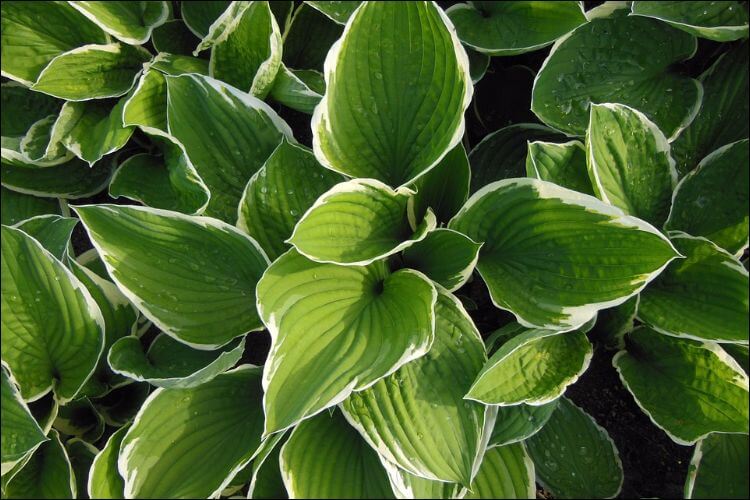
Hostas are herbaceous perennials grown for their foliage and flowers. They belong to the genus Hosta, not a single species. Choose plants for the site’s light, moisture and available space, then use leaf color, size and texture to build the design.
Many hostas suit filtered shade and moist, well-drained soil. Dense tree roots and deep, dry shade can still limit growth. Measure mature spread, keep mulch away from crowns and select cultivars suited to your local climate.
Landscaping Principles
There are a couple of simple rules you should keep in mind when deciding on landscaping with hostas. Though they aren’t that strict, it’s a useful start for those who are not so experienced in gardening.
1. Don’t Get Too Many Colored Hostas
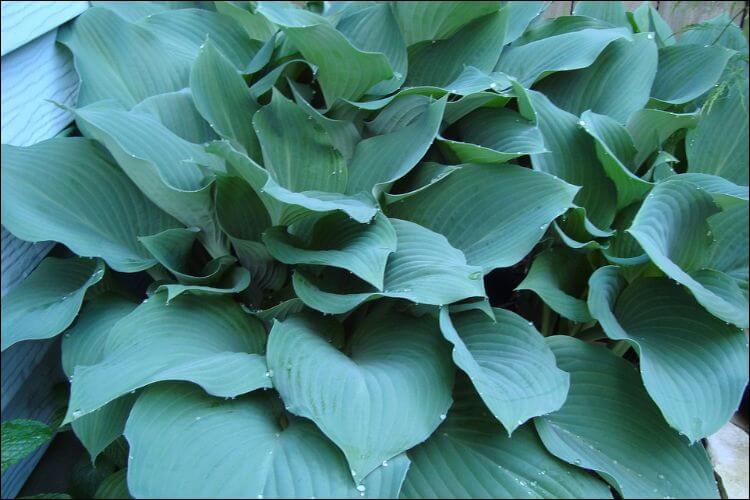
One of the most common mistakes people do when including hostas in their garden or backyard is to combine different colors. Though in itself is not a bad idea, it can ruin the entire aspect of the garden if you don’t know how to mix them. Balance the design by using blue, green or other varieties with subtle shades. Match each cultivar to its light and moisture needs; foliage color does not make a hosta suitable for every site.
2. Use Flowers
Maybe the best thing when designing a garden is working with colors. You have absolute freedom to combine, include or take out different shades to get to the result you want. A great thing you should remember about landscaping with hostas is the fact that they offer a huge variety of leaves.
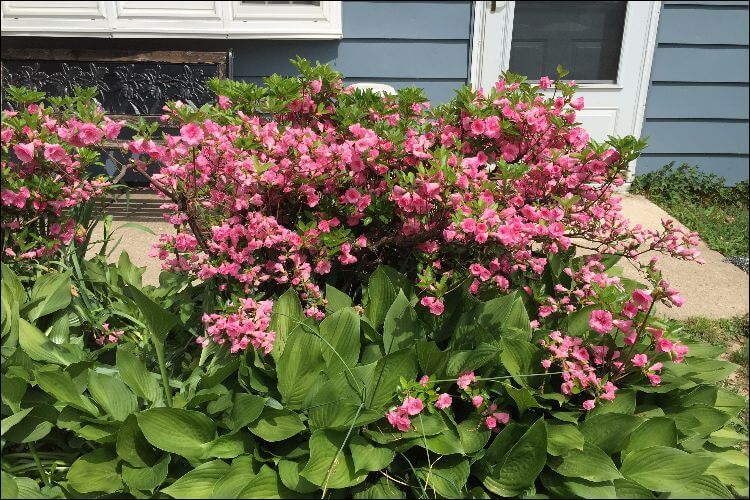
From brilliant yellow to near-black green, sharp white or silvery blue, they’re a great solution for anybody who’s out of ideas. For this reason, they’re the perfect background for a lot of different types of flowers. For example, you can combine a gold hosta with yellow flowers or a blue one with pink and purple colors. But more about plants you can combine with hostas later.
3. Adapt the Hosta to the Location
If you have a large backyard or garden, it’s important to adapt the hosta to the location where you want it to grow. Here you have a couple of useful suggestions if you’re not sure what and where to plant:
- On slopes, next to a pond or a stream
For these areas, it’s ideal to choose a cascading form. This will draw your eye down the hill or the water. At the same time, you can go for hostas that have leaves with white undersides. Check out the following varieties:
- Green Fountain;
- Niagara Falls;
- Permanent Wave;
- Jade Cascade;
- Azure Snow;
- Maekawa.
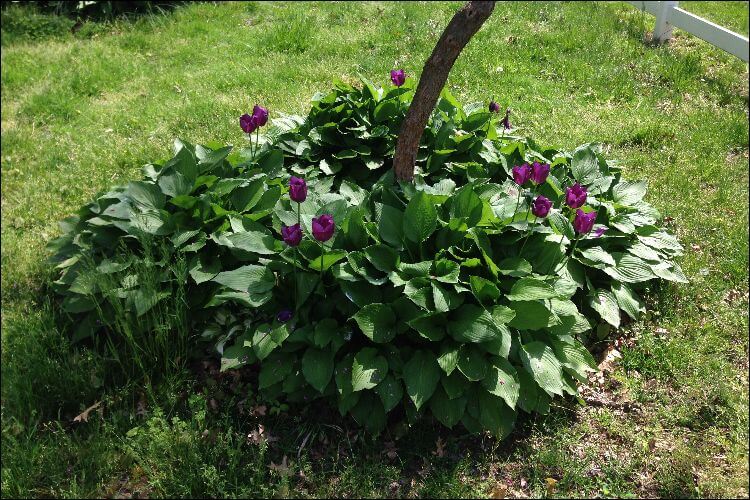
- Near trees or posts
When landscaping with hostas near trees or posts, you should go for ones that have a vase shape. This will help you place an accent on the vertical elements found in your landscape. The upright form is great for making a smooth passage from the lower-growing plants to the tall structure. Choose from:
- Sun Power;
- Hosta nigrescens;
- Sagae;
- Regal Splendor;
- Krossa Regal.
- Areas that are slug-prone
It can happen that you have in your backyard wet areas infested with slugs. However, you shouldn’t quit landscaping with hostas because of this. Some thick-leaved cultivars may suffer less slug damage, but none should be treated as slug-proof. Diagnose leaf damage and improve management rather than choosing a waterlogged site. Try one of the following:
- Sagae;
- Halcyon;
- Inniswood;
- June;
- Sum and Substance;
- Hosta sieboldiana elegans;
- Blue Angel.
- Next to a path or a bench
Take advantage of an area that allows any guest to closely observe your plants and use appropriate varieties. Choose a compact cultivar for close viewing or a verified fragrant-flowered cultivar near seating. The examples below vary in size and fragrance, so confirm nursery descriptions rather than treating the list as interchangeable. Check out the list below:
- So Sweet;
- Fragrant Blue;
- Guacamole;
- Hosta plantaginea;
- Fragrant Bouquet.
4. Complement the Hostas
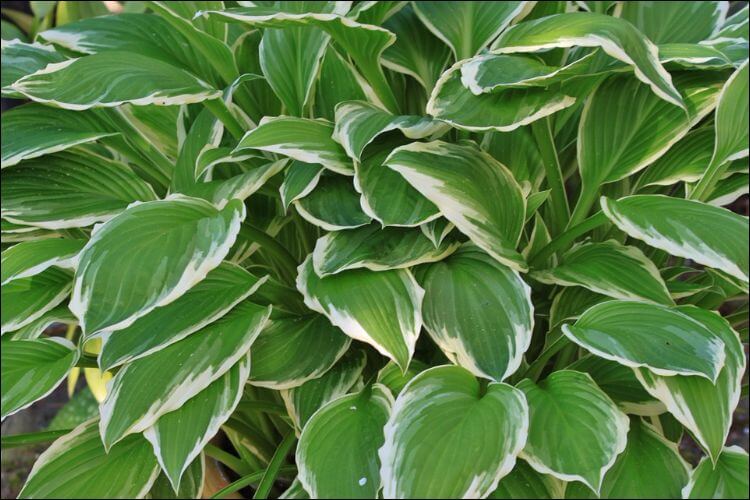
Regardless of the varieties you prefer, it’s important not to overdo it. However, often they can clash with each other, or make up an interesting corner of your garden. If you plant two of them together, you should make sure one complements the other. For example, take advantage of a solid-colored one to mirror the color of a variegated one, such as a combination of gold in both plants or green and green-and-white-variegated plants.
5. Choose Companions Based on Textures
When landscaping with hostas, it’s important to play with fine textures. As we previously mentioned, they provide a dense background, which leaves room for fine-textured companion plants. The resulting interaction is quite interesting for any viewer. Among the companions you can choose under these circumstances there are:
- Ferns;
- Astilbes;
- Goatsbeard;
- Bugbanes.
Choose companions with compatible growing requirements, not texture alone. At the same time, you should keep in mind the medium-textured plants. This help you pass smoothly from the fine-textured plants to the hostas. Feel free to choose from the following:
- Epimediums;
- Solomon’s Seals;
- Bigroot Cranesbills;
- Daylilies;
- Martagon Lilies.
Remember the two essential keywords when landscaping with hostas: balance and accent.
Landscaping with Hostas Design Ideas
Now that you know the basic notions you should follow when landscaping with hostas, we also bring you a couple of ideas for your backyard. Check out the suggestions below and see which ones would match your own plans for decorating your garden.
1. Line Walkways
This is a great idea for a backyard that has plenty of walkways. But even if you only have one, you can take advantage of it and line it with hostas. In this case, it’s a good idea to use a Lemon Lime variety. It’s a mini type that makes for a clean border. Moreover, the best thing about it is that it allows you to use other hosta varieties behind it. Use a taller one, such as the Pineapple Juice, to make it stand out.
2. Put them in Containers
Growing hostas in containers isn’t a bad idea. Use a pot with drainage and plan locally appropriate winter protection for the roots. Hostas need a dormant period; a warm living room is not their default winter home. Choose a cultivar whose mature size suits the container; miniature varieties are especially useful in small pots. Here you can mix any type of hosta you want. Allow each plant enough root and canopy space rather than crowding as many as possible into one pot. The result will be an interesting mosaic of different colors, leaf shapes, and shades. One suggestion is the Alakazaam variety, with tapered and ruffled leaves. It has green centers and yellow margins, while the flowers have a lavender color.
You can also combine this variety with the Gemstone cultivar. The latter can grow to 10 inches high and presents wavy, rippled blue leaves. Moreover, it has lavender flowers placed on stems that reach 22 inches in height.
3. Go for a Silver-Blue Combination
Long way back, people struggled to find a blue hosta variety that would last in the summer. Luckily, now you can find the Silver Bay one. Its silvery-blue appearance depends on growing conditions and the condition of the leaf’s waxy surface. There’s also another option, the Blue Mouse Ears, which lets you play with some blue-gray leaves. Combine these two with silver or purple flowers for a great effect.
4. Repeat the Varieties
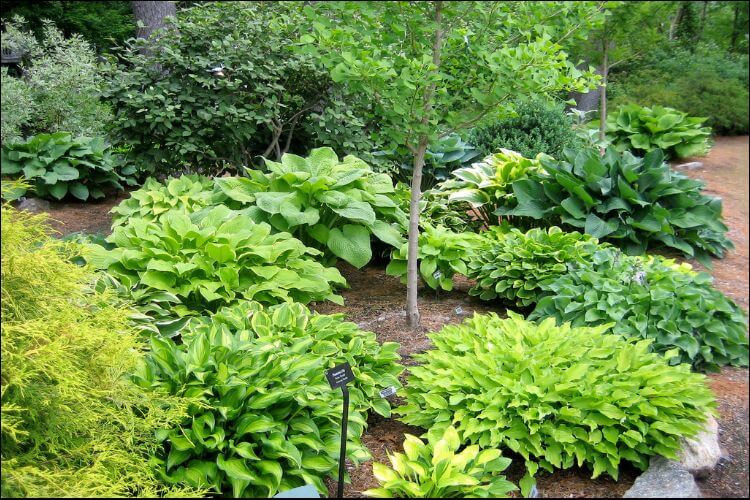
Repeating the same colors and patterns can draw the eye to a certain area if you’re doing it correctly. Don’t limit yourself to planting hostas only in a certain place or just in a row. Repeat named nursery plants or divisions for predictable foliage and size. Seedlings may not retain a cultivar’s characteristics, so scattering seed is not a dependable way to reproduce a design. Don’t forget to let the plants stand on their own by playing with contrast. Choose different sizes, leaf shapes, or sheens.
5. Divide the Lawn
Just like the borders you can create next to walkways, you can also use hostas to divide your lawn. Use a planting bed to suggest separate areas, while leaving clear paths and enough space for mature leaves. Hostas are not a durable traffic barrier and disappear above ground during dormancy.
6. Plant Them Strategically
7. Elegant Designs
One thing we know for sure is that hostas are great for creating elegant designs. The idea here is to choose elegant colors, not only for them but for the companion plants as well. Go for a luscious look of the leaves and a dark green shade. Complete the aspect with some deep purple flowers, for example. The choice of colors depends entirely on you, but make sure you consider the rest of the design as well.
Conclusion
Landscaping with hostas isn’t as hard as it may seem. Given that they have a lush green foliage, they make up the perfect background for plants with big or colorful flowers. Moreover, they are perfect for lining walkways and other paths in your backyard. Remember to be careful with the crazy color combinations, otherwise, the result won’t be the one you expect.
Image source: 1
Care behind the design
Water during establishment and dry periods, checking the soil rather than relying on appearance alone. Use a soil test to guide feeding. Inspect for slug and deer damage, and avoid sharing divisions from plants showing unexplained mottling or distorted growth. Divide healthy plants when you need more stock or space; annual division is unnecessary.
See University of Minnesota Extension’s hosta guidance for planting, care and common problems.