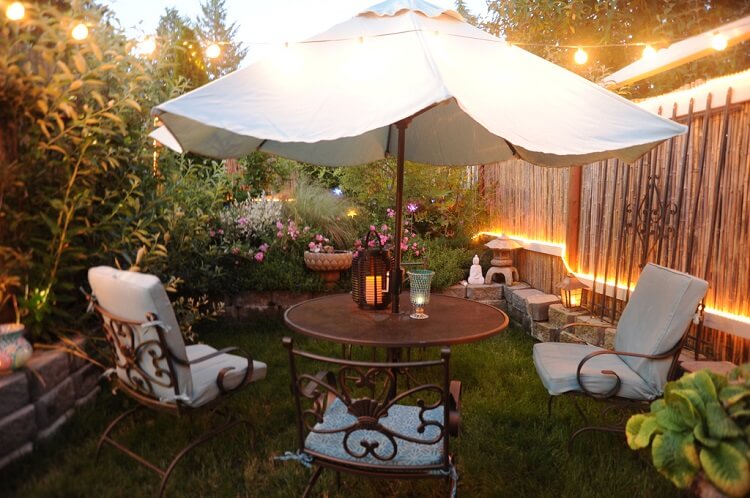
A DIY patio umbrella project needs a base matched to the exact umbrella before it needs decoration. Canopy size, pole type, mounting method and exposure affect the required support. A concrete-filled bucket, loose block stack or plant trolley is not proven adequate merely because it feels heavy.
The four ideas below keep the decorative work separate from the support system. Use a compatible base or a properly specified mounting system, then build a surround that does not interfere with it. These are planning ideas, not universal load-tested base designs.
Start With the Umbrella Instructions
Find the model number and check the required base, ballast, pole diameter and permitted installation. A center-pole umbrella used through a table may have different requirements from a freestanding one. A cantilever umbrella needs its own specified support arrangement; do not adapt a bucket recipe to it.
Treasure Garden’s support guidance emphasizes sufficient base weight, proper placement and not leaving an umbrella open unattended. Use your own manufacturer’s instructions for the actual product, including wind precautions. No generic weight figure covers every umbrella.
1. A Planter Surround for a Suitable Base
Choose and assemble the correct base first. Measure its full footprint and leave access to clamps, adjustment points and any drainage. Make the decorative planter surround large enough to sit independently around it without bearing on the pole.
- Sketch the base, pole and access clearances.
- Choose weather-suitable materials and a stable, ground-level location.
- Use separate removable plant containers so soil and water stay away from moving parts and hardware.
- Check that the surround does not stop the base sitting flat or make inspections difficult.
Do not count wet soil, flowers or decorative pebbles as required ballast. If the base requires a particular filling material or weight, follow its directions and keep that arrangement intact.
2. A Half-Barrel Decorative Enclosure
A half barrel can provide the look of a large planted stand, but it does not establish an umbrella’s stability. Confirm that the base and enclosure can coexist without reducing the base footprint, trapping water or obstructing operation.
A practical approach is a split or removable decorative surround around a compatible base, with plants in separate pots. Leave the support visible enough to inspect. If the barrel would require altering the base or putting the pole through improvised PVC, choose a different enclosure.
Plan how the empty enclosure will be moved and serviced. Do not lift a large assembled planter by its decorative handles unless they are intended for that load.
3. A Mobile Setup Using an Approved Rolling Base
If you need to move the umbrella, choose a rolling base specifically compatible with it. Check the total load, wheel locks, permitted surface and moving instructions. A plant dolly’s vertical weight rating does not show that it can resist an umbrella’s sideways loads.
Close and secure the umbrella before moving it as directed. Use level ground, avoid slopes and keep the route clear. A decorative cover must leave brakes and controls accessible and must not interfere with the wheels.
If the manufacturer does not permit moving the assembled system, follow its dismantling procedure instead of improvising a trolley underneath it.
4. A Block-Style Surround Without an Unsecured Tower
Use blocks as an independent decorative feature beside a correctly installed base, not as an improvised tall pole socket. Loose stacked masonry and a PVC tube can shift or overturn; adding stones does not establish the assembly’s strength.
For a permanent mount, obtain a suitable product specification and any required professional design for the substrate and loads. Do not substitute a random concrete block for a specified footing or anchor. Check utilities and local requirements before drilling or excavating.
Why the Old Bucket Recipe Is Not Enough
“Fill the bucket partway and test whether it wobbles” does not account for uplift, tipping, pole retention or changing wind loads. A screw through an improvised sleeve may damage the pole and does not verify the connection. Concrete curing is also a material process, not simply waiting until the surface looks dry.
If you want to fabricate the structural base itself, obtain a design for the particular umbrella and conditions, including materials, footprint, connections and ballast. Without that information, use a compatible manufactured system and keep the DIY work decorative.
Before Each Use
Check that the base is correctly assembled, secured and undamaged. Follow the manufacturer’s instructions for closing or storing the canopy in wind and when unattended. Keep clear walking routes around the base and do not rely on extra decoration to compensate for missing parts.
A useful project is one you can inspect, maintain and use within its intended limits. Choose the support first; the planter, barrel or surround can then make it fit the patio.