A backyard pond and waterfall needs a sound basin, a continuous watertight route and a pump matched to the height and flow you want. Plan those together before digging. A small ornamental project can be manageable for a capable DIY gardener; unstable ground, substantial retaining work and electrical installation need qualified help.
1. Plan the location, use and safety
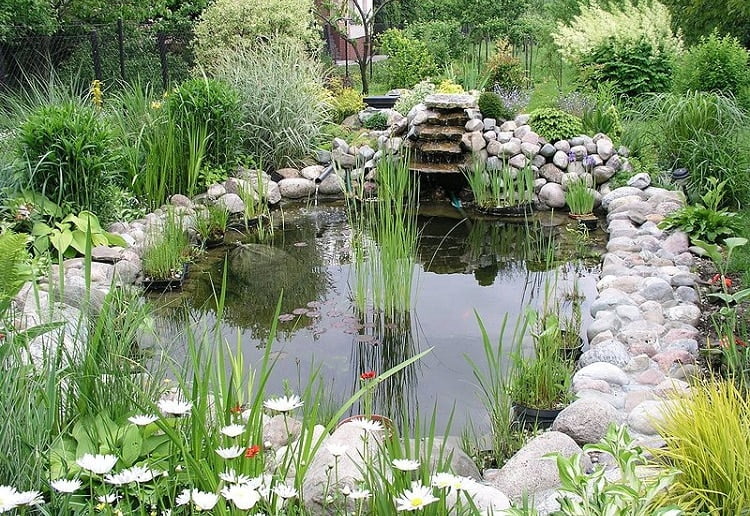
Decide whether you want a wildlife pond, an ornamental water garden or a pond specifically designed for fish. These are different projects. Fish are optional, and a small decorative basin should not automatically become a koi pond.
Mark a possible outline with a hose and view it from the house and seating areas. Leave access to the pump and filters, space to work around the edges and a route for maintenance. Avoid directing roof runoff, lawn chemicals or muddy surface water into the basin.
Check local permits, setbacks and barrier requirements. Arrange utility locating before excavation; in the United States, follow your local 811 service’s notice and clearance process. MISS DIG’s guidance, for example, requires waiting until the authorized start time even if marks are already present. Private services may need separate locating.
Plan to prevent unsupervised child access. Shallow water still presents a drowning hazard, and slippery edges need careful treatment. A planted border is not a substitute for an appropriate barrier or supervision.
2. Choose the system and make a materials list
List the pond liner and protective underlayment, compatible fittings and pipe, pump, filtration equipment, stable edging and waterfall components. Include excavation, soil disposal, electrical work and future running costs in the budget. Buy equipment as a compatible system rather than selecting each piece only by price.
For a waterfall, pump output must be assessed at the actual lifting height and plumbing resistance. Aquascape’s pump-selection guide explains that pond volume, waterfall dimensions, pipe length and friction all affect selection. The largest flow printed on a box is not necessarily the flow at your waterfall.
A skimmer is one possible debris-management component, not a requirement for every pond. Some pumps are designed for skimmers and others for placement in the pond. Match the intake protection and filtration to the chosen system and intended livestock.
3. Excavate a stable basin
Choose depth and shelves for the design, plants, local winter conditions and any planned fish. There is no universal depth that makes every koi pond adequate. Seek species-specific advice before committing to dimensions or stocking.
Use a level to establish the intended waterline and rim. Shelves can support planting baskets and edging, but they are not a cure for unstable soil. If the excavation slumps, groundwater enters or heavy stones need retaining, stop and obtain a suitable design. How difficult soil is to dig does not reliably establish its structural safety.
Plan a stable waterfall base. A loose mound of excavated soil can settle and redirect water outside the liner. Sand at the bottom of a basin does not correct an unstable wall or support a heavy rock structure.
4. Install underlayment and pond liner
Remove sharp material, then install protection and a pond-rated liner according to the selected system’s instructions. Measure across the full excavated contours, including depth, shelves and the required edge allowance. Do not stretch a liner tight across corners or purchase it from surface area alone.
Aquascape’s kit sequence places underlayment beneath the liner and postpones final trimming until the pond is filled. Follow your own kit’s sealing, overlap and attachment requirements. Ordinary glue is not a substitute for compatible sealing components.
5. Fit filtration and plumbing
Place equipment so it can be reached without dismantling the waterfall. If the design has a skimmer, set its opening relative to the prescribed operating waterline and secure the liner to its faceplate exactly as instructed. Improvised plates or unsupported backfill can cause leaks and movement.
Run the specified pipe size and fittings between the pump and waterfall. Avoid unnecessary bends and preserve access to service connections. Use flow-control valves only where the pump and system permit them; do not restrict an intake as an improvised way to regulate the waterfall.
6. Build the waterfall and finish rock placement
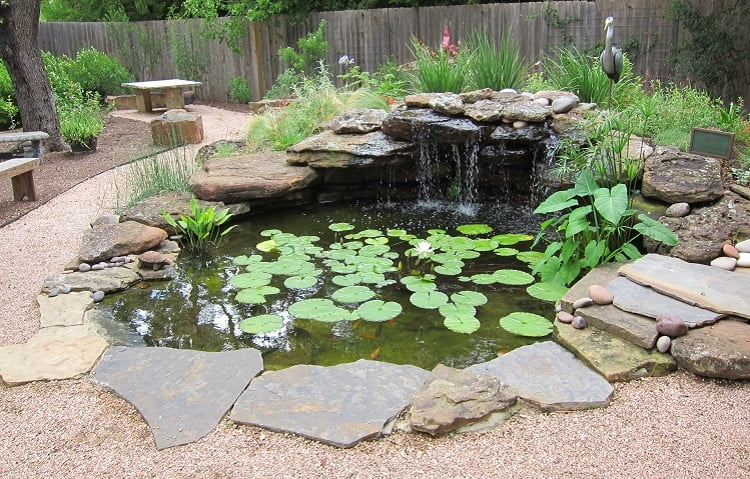
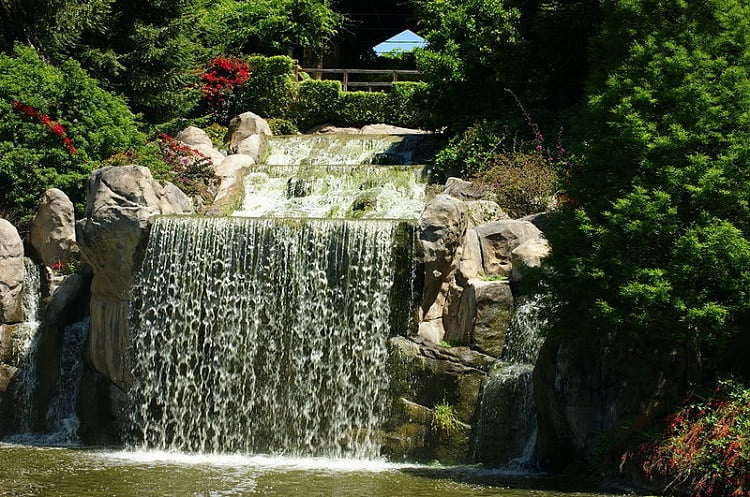
Arrange the spillway and stream so all flowing and splashing water returns inside the lined basin. Support rocks securely without relying on sealant or expanding foam to carry structural loads. Protect the liner from sharp edges and point loads.
Waterfall foam, where specified, directs water through intended gaps; it does not replace the liner. Keep liner edges above the operating water level and consider where splash will land. Large stones and retaining structures may require professional placement.
7. Fill, connect power and test
Have a qualified electrician provide the required outdoor supply and protection. The Aquascape EcoWave instructions require a grounded GFCI-protected outdoor outlet and prohibit extension cords. Follow the electrical requirements of your particular equipment and local rules rather than treating a temporary cord as a permanent installation.
Fill to the specified operating level before starting a pump that requires submersion. Follow startup instructions and watch the whole return path. Check joints, edges and splash losses, and test what happens when the pump stops: returning water must not overflow the basin.
Do not trim away generous liner margins until filling, settling and testing are complete. A quick spray with a hose cannot establish that the complete system is watertight. Correct leaks before concealing equipment and committing to final edging.
8. Add suitable plants and establish a maintenance plan
Choose aquatic plants for their specified water depth and climate; moisture-loving border plants do not necessarily tolerate permanent submersion. Keep invasive species out of the pond and never release plants or fish into natural waterways.
If adding fish, obtain advice on stocking, water treatment, biological filtration and water-quality testing first. Do not release them into newly filled tap water simply because the waterfall runs. Plan seasonal care and winter operation for your climate and equipment.
Keep intake screens clear, monitor water level and inspect the liner perimeter after settling or heavy rain. Disconnect power as instructed before servicing equipment. A successful pond remains accessible for these routine tasks rather than becoming a sealed decorative feature.
Image credits for the retained photographs: garden pond and rock-edged waterfall.