Waterlilies, cattails and plants sold as anacharis occupy different parts of a pond and need different care. None is a universal, maintenance-free choice. Identify the species, check local restrictions and match the plant’s mature size and water-depth requirements to your pond before buying.
1. Waterlilies for floating leaves and flowers

Image Source: Pixabay
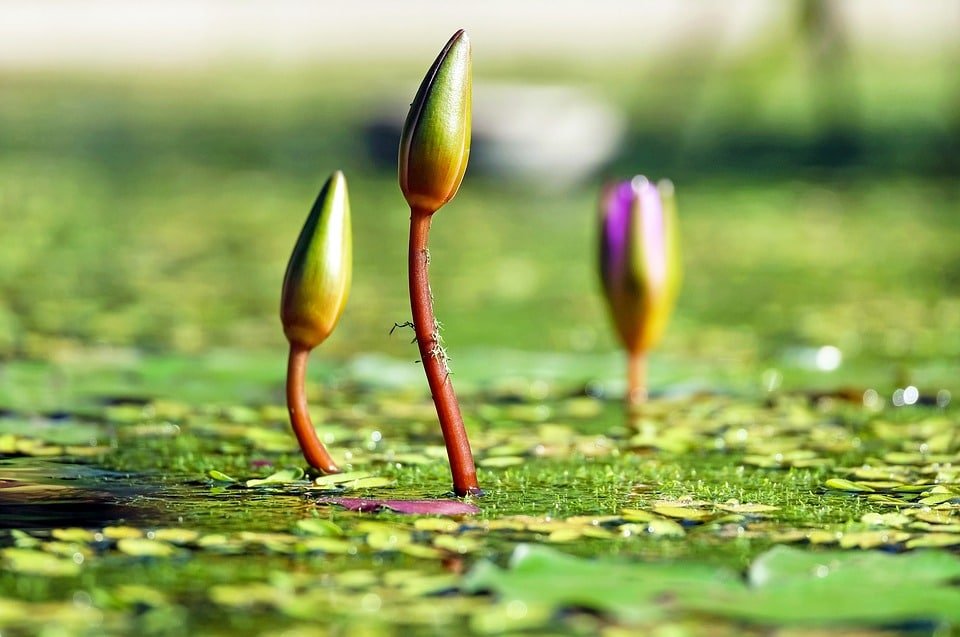
Waterlilies are rooted plants with leaves and flowers reaching the water surface. Choose a cultivar suited to the pond’s size, depth and climate. A vigorous variety can overwhelm a small tub, while tropical and hardy types have different winter requirements.
The RHS waterlily guide covers planting, placement and seasonal care. Position them away from constant fountain splash. Fertilize only as appropriate during active growth, using an aquatic product as directed; an August-to-February schedule makes no sense as a worldwide rule.
Remove deteriorating foliage and reassess crowded containers. Leave access for maintenance rather than arranging the pond so that every plant is beyond reach.
2. Cattails for an upright marginal feature
Cattails grow with their roots in wet ground or shallow water and their shoots above the surface. They are not fully submerged plants. Their height can provide structure, but their spreading habit deserves serious consideration in a small garden pond.
Penn State’s water-garden species guide notes that native cattails can form dense stands and spread through rhizomes and seed. Containment and regular monitoring are necessary; cutting a few visible tops is not a guaranteed way to remove an established colony.
Ask a local aquatic-plant specialist which species is appropriate. For a small pond, another locally suitable marginal plant may be easier to manage. Avoid planting into natural water or wetlands as though they were an ornamental container.
3. Anacharis: identify it before using it
“Anacharis” is a trade name that can obscure the actual species. Brazilian waterweed, Egeria densa, is one plant sold under that name. Minnesota DNR identifies it as a regulated invasive species there; rules differ elsewhere.
Do not buy an unidentified bunch and release it into a pond. Ask for the scientific name, check your local prohibited or regulated species lists, and choose a permitted locally appropriate alternative when needed. Never discard aquarium plants, fragments or pond water into natural waterways.
Submerged plants can take up nutrients, but they do not guarantee clear water or replace maintenance. Dense growth and accumulated decaying material still need attention.
Plan the whole pond
Keep a planting record with species, location and expected spread. Check water depth and seasonal conditions, remove unwanted growth responsibly and review feeding or fertilizer inputs if algae becomes a problem. Use pond-maintenance guidance for the system as a whole instead of relying on a single “cleaning” plant.