

A succulent landscape works best when the plants match the climate, drainage and space. Some succulents tolerate drought, but the group includes plants with very different needs. A rosette that survives a dry summer may still fail in a wet winter or frost.
Use the garden-design ideas below to build a planting that is attractive and manageable, then choose individual species rather than shopping by the word “succulent” alone.
Plan for the conditions you actually have
Observe sun, shade, rain runoff and winter exposure before clearing a bed. Decide whether the planting will stay outside year-round or whether tender specimens will come indoors. The RHS outdoor succulent guide emphasizes sheltered conditions and sharp drainage, with winter protection depending on the plant and location.
A container collection can be a useful trial before converting a large area. Label each plant and keep its care instructions. Move pots gradually into stronger sun rather than placing a shade-grown purchase straight into intense afternoon exposure.
Soil and drainage
There is no universal 12–18-inch soil-depth rule for all succulents. Root space depends on the plant. In a wet clay site, repeatedly adding compost to an isolated hole is not a reliable drainage fix. Consider an appropriately designed raised area, suitable containers or plants better matched to that soil.
Use containers with drainage holes and an appropriate free-draining mix. A decorative gravel topping can keep the surface tidy, but it does not demonstrate that the root zone drains. Check conditions below the surface before watering.
Spacing and watering
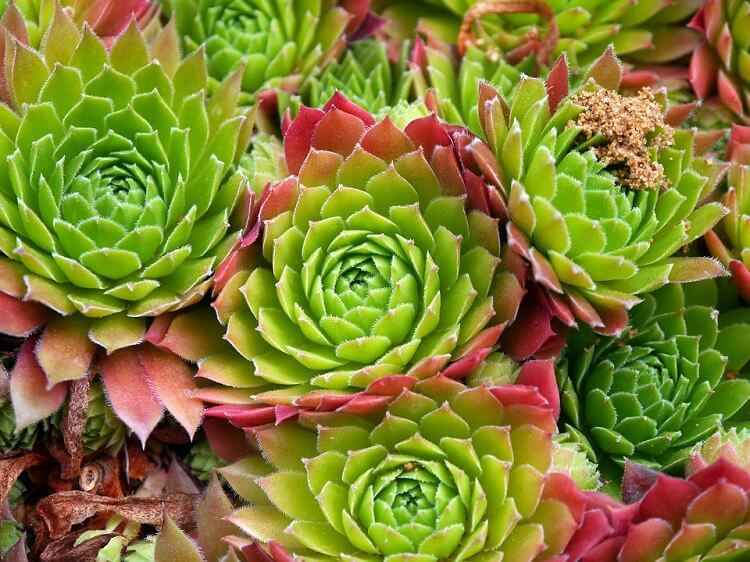
Arrange plants for their mature spread, not just the small nursery-pot size. Leave room to reach weeds and inspect leaves. A tightly packed photograph may be a temporary display rather than a practical long-term planting.
Group plants with compatible moisture needs. Water according to the species, season and root-zone condition rather than using the same schedule for every succulent. The RHS general guide notes that rainforest succulents differ from many sun-loving dryland types.
Design suggestions
Repeat a few shapes and colors
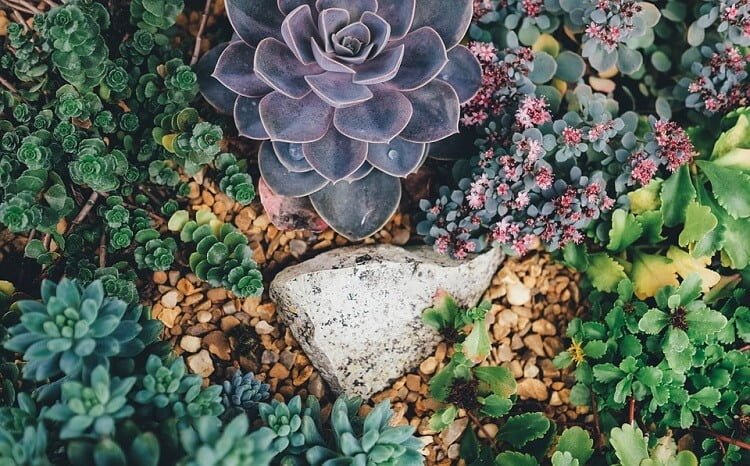
Start with one or two larger focal plants, then repeat smaller rosettes or ground-cover forms. This is easier to read visually than buying one of everything. Leave some open space and choose a gravel color that supports the foliage rather than competing with it.
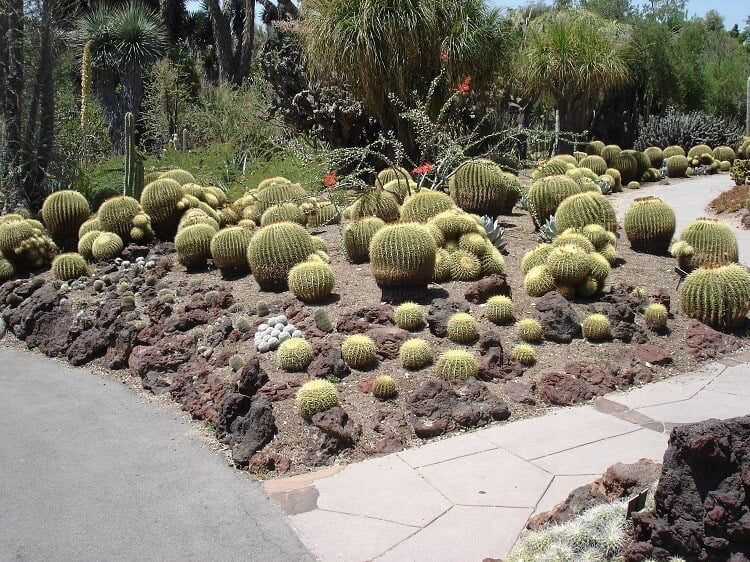
Rocks and boulders can complement the planting, but they are optional. Not all succulents come from deserts, and a sandy desert theme is not a reason to ignore the plants’ actual growing requirements.
Keep walkways usable
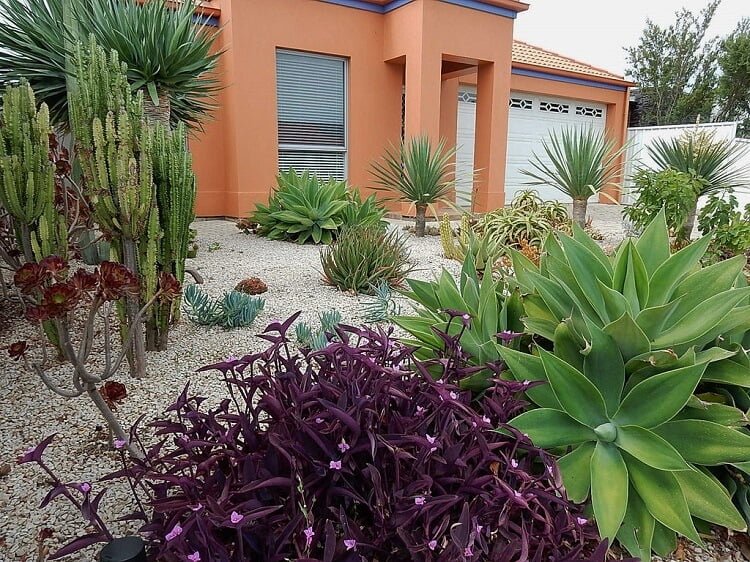
Provide a clear route for watering and maintenance. Keep spines, sharp leaf tips and spreading plants back from the walking space at their mature size. Choose a stable, suitable walking surface; loose decorative pebbles around plants need not become the main path.
Use slopes thoughtfully
A slope may help shed water, but runoff, erosion and the underlying soil still matter. Do not stack large rocks loosely to create planting ledges. Significant earthmoving or retaining structures need proper design. Small containers or an existing stable rock garden are more manageable ways to try the look.
Consider a dry stream or water feature
A band of contrasting stone can suggest a dry stream without circulating water. If adding a pond or fountain, plan safe access, maintenance and drainage separately from the planting. Keep plants needing dry conditions out of splash and overflow zones.
Nine plant groups to investigate
These are design options, not a list of plants that all share one care routine. Confirm the botanical name, mature size and local hardiness before purchase.
1. Aeonium
Aeoniums offer conspicuous rosettes, often on branching stems. Many are tender and suit movable containers in colder climates. Leaf color alone is not a reliable rule for sun tolerance. RHS aeonium guidance illustrates why watering should follow active growth and dormancy rather than a calendar shared with other plants.
2. Agave
Agaves can make strong architectural focal points. Check the adult spread and sharp tips before putting one beside a path. North Carolina Extension describes the agave life cycle: many flowering rosettes die after blooming, with offsets continuing where the species produces them; avoid assuming every agave has the same size or life cycle.
3. Aloe
Aloes vary from smaller rosettes to much larger plants. Choose a species for its form, climate suitability and available space. Flowering season varies by species and region, so a universal February-to-September flowering promise is misleading. Grow correctly identified culinary or medicinal plants only for uses supported by appropriate guidance; ornamental similarity is not proof of suitability.
4. Crassula
Crassula includes familiar branching jade plants and smaller forms. Compare mature habit rather than assuming every plant with fleshy leaves will make ground cover. A container can keep a tender selection movable and give you control over its growing medium.
5. Dasylirion
Dasylirion provides a different, strap-leaved silhouette among rosettes and rocks. It is a useful dry-garden companion to consider, but check the exact species, leaf edges and mature size. Leave space so its outline remains visible and maintenance does not require reaching through sharp foliage.
6. Dudleya
Dudleya rosettes are made of leaves, not flower petals. Flowers rise separately on stems, as described in the RHS genus profile. Choose nursery-propagated plants and species-appropriate conditions. Building a pergola solely to keep powdery foliage untouched is not a general growing requirement.
7. Echeveria
Echeverias contribute compact, colorful rosettes. The RHS plant guide treats them as tender plants needing frost protection. In a cold garden, consider a pot that can be moved rather than relying on a warm summer photograph as evidence of winter survival.
8. Euphorbia
Euphorbia is a diverse genus, not a synonym for cactus. Some members suit ordinary borders and others are tender succulents. Check the plant’s handling warnings and avoid contact with its sap. The RHS garden-euphorbia guide describes the wide variation in site requirements.
9. Graptopetalum
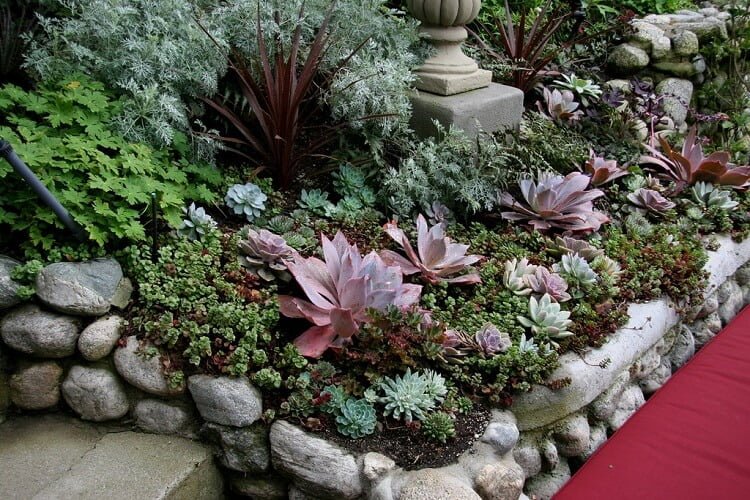
Ghost plant, Graptopetalum paraguayense, can cascade from containers or over rocks. North Carolina Extension gives species-specific growing conditions. Do not rely on the former claim that this whole group can recover from minus 20 degrees; hardiness must be checked for the actual plant and exposure.
Keep the planting manageable
Inspect for pests, damaged growth and crowding, and keep drainage clear. Reassess plants that repeatedly struggle instead of adding more water or fertilizer indiscriminately. A successful succulent garden combines good plant selection with a layout you can maintain comfortably.
Image source: 1