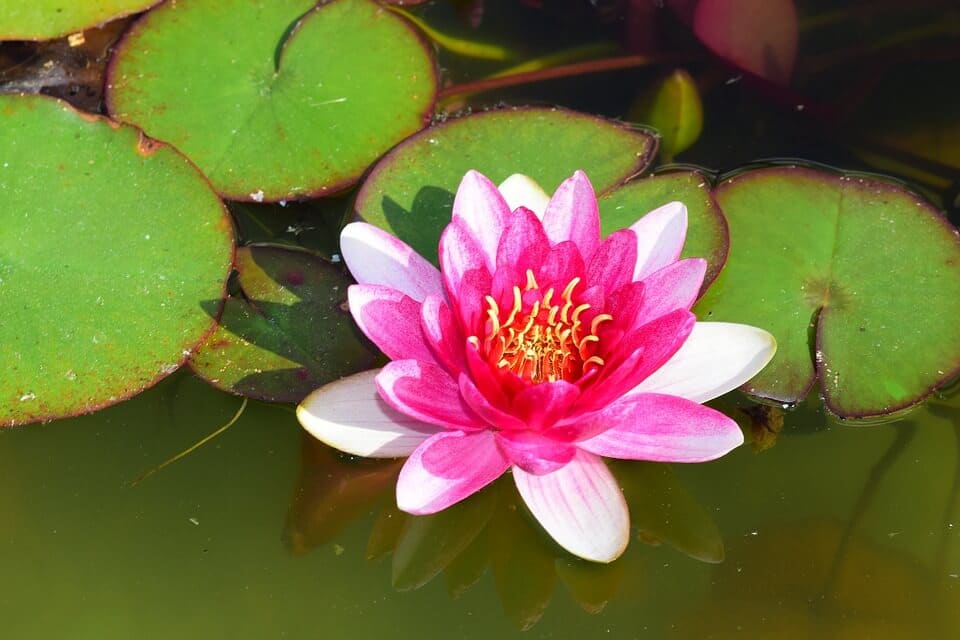
Plant a water lily in a broad aquatic container with suitable heavy loam or aquatic compost, keep its crown at the soil surface, and lower it to the depth recommended for that variety. The critical measurement is the water above the crown, not the distance from the pond bottom to the pot’s base.
First identify whether the plant is a hardy or tropical water lily and check its mature spread. A vigorous lily can overwhelm a small pond, while a dwarf selection may struggle if placed too deep. Choose a sunny position away from splashing fountains.
1. Choose the lily, season and container
Buy a named variety suited to your pond’s depth and available surface area. A wide aquatic basket contains the roots and makes later lifting easier. Its size should suit the plant rather than follow one measurement for every lily.
Plant when conditions support active growth. Hardy lilies can be planted as the pond warms; tropical lilies need reliably warm water and a different winter plan. The RHS water-lily guide gives late spring to late summer as its planting window in the UK. Adjust that seasonal advice to your climate.
2. Prepare the growing medium
Use an aquatic planting compost or suitable heavy loam. Lightweight houseplant mixes containing floating material can escape into the pond, while an unsuitable rich amendment can contribute unwanted nutrients. Avoid soil with pesticide residues or undecomposed manure.
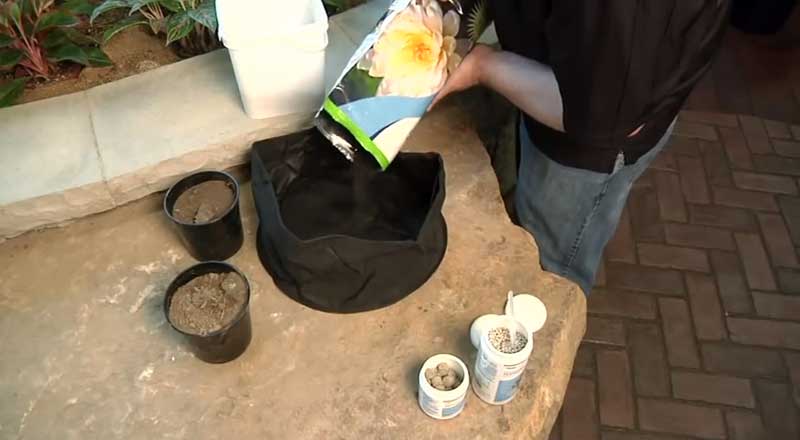
Line an open mesh basket with a suitable liner if needed to hold the soil. Leave room at the top for a thin layer of washed gravel. If using an aquatic fertilizer, use a product intended for the plant and follow its placement and dose instructions; do not scatter ordinary lawn fertilizer into the pond.
3. Inspect and position the plant
Remove damaged or decaying leaves and roots carefully. Preserve sound roots and healthy new growth instead of stripping the plant simply because some parts are older.
Hardy lilies commonly have a spreading rhizome that is positioned with its growing end directed into the available container space. Tropical plants may have a different growth form and planting position. Follow the supplier’s instructions for the actual plant rather than applying a fixed 45-degree angle to every lily.
4. Keep the crown exposed
Set the crown—the growing point where leaves emerge—at the soil surface. Firm the medium around the roots without burying that growing point. If the original potting position is unclear, identify the crown before backfilling rather than covering everything with an arbitrary inch or two of soil.
A securely planted root system helps keep the plant from floating loose when the basket is submerged. Recheck its position after watering the container.
5. Add gravel and wet the basket
A layer of clean pea gravel helps keep soil in place, especially where fish disturb it. Keep gravel away from the crown. Water the planted basket gently and thoroughly before putting it in the pond so loose soil is less likely to wash out.
Lift a heavy container with help when needed and work from a stable edge. Plan how you will retrieve it later for maintenance; an awkward reach over deep water is best avoided at setup.
6. Lower it to the appropriate depth
Young hardy lilies are often started shallower and lowered as growth develops. RHS describes starting with roughly 6–10 inches of water above the crown so young leaves reach the surface. Use a stable support if needed, then lower in stages toward the cultivar’s recommended depth. Tropical lilies may be placed at their permanent depth immediately, according to the same guide.
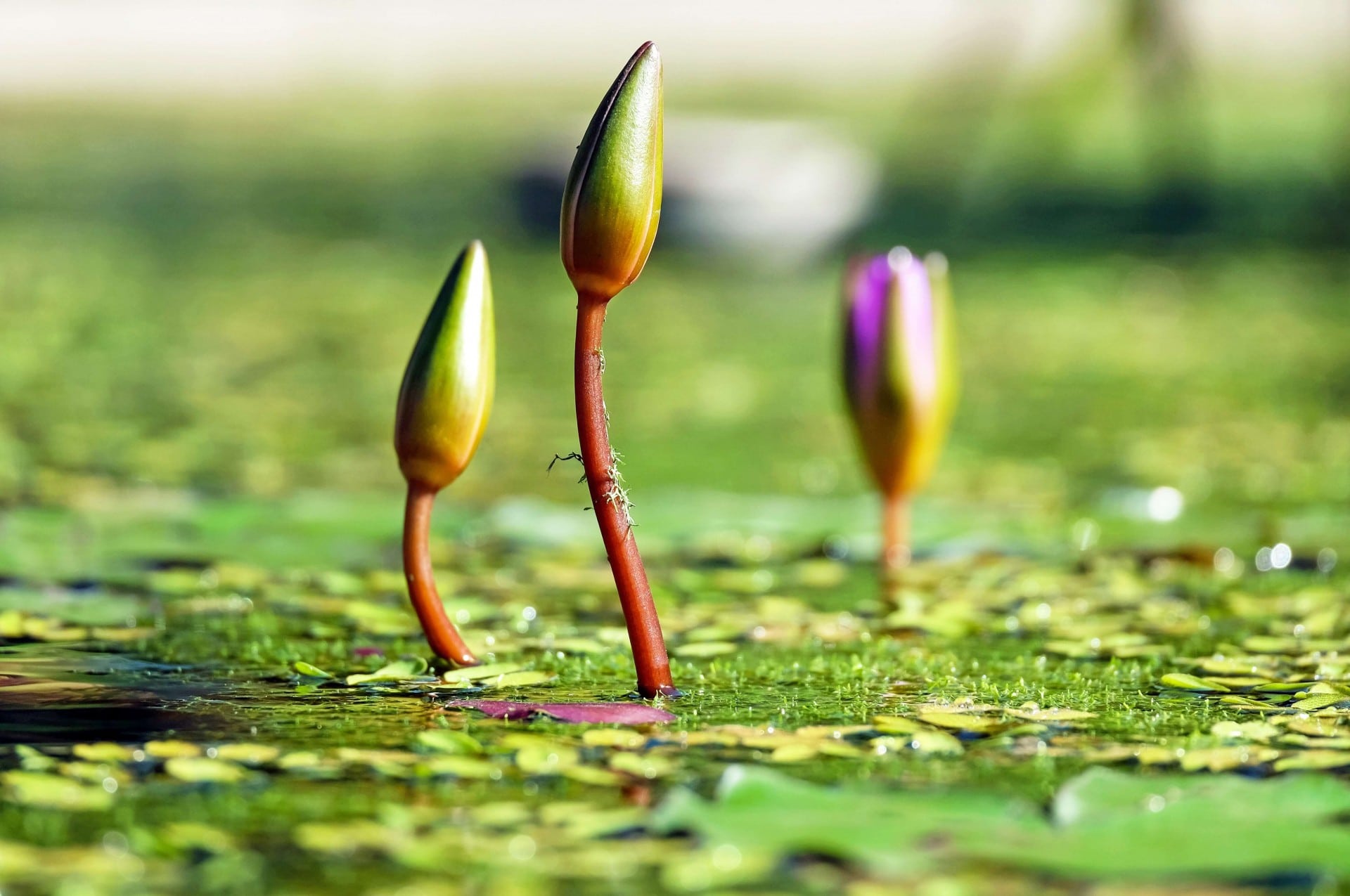
Check the plant label for the final depth. Do not apply the deepest range on a general chart to a dwarf lily. Existing leaves should be able to reach the surface without the basket tipping or the crown being buried.
Care after planting
Remove dying foliage and spent flowers before they decompose in the water. Feed only as directed for the selected aquatic fertilizer and plant. A fixed once- or twice-yearly schedule does not fit every product, container and growing season.
Divide when the plant becomes crowded or flowering and growth indicate that it has outgrown the basket. Lift it during a suitable active-growth period, retain healthy growing divisions and replant at the correct crown depth.
Hardy water lilies can overwinter outdoors where their crowns remain below the freezing zone; a shallow container that freezes solid is different from a deeper pond. Tropical lilies generally require frost-free overwintering suited to their type or replacement as seasonal plants. Confirm the plan before winter rather than assuming all lilies tolerate the same temperature.
If flowers are scarce, review sun, plant maturity, crowding, feeding and depth. Changing all of them at once makes the cause harder to identify. Start by checking the cultivar’s requirements against the actual pond conditions.
For additional guidance on selection and overwintering, see Illinois Extension’s water-garden plant guide and seasonal maintenance advice.
Image Source: 1