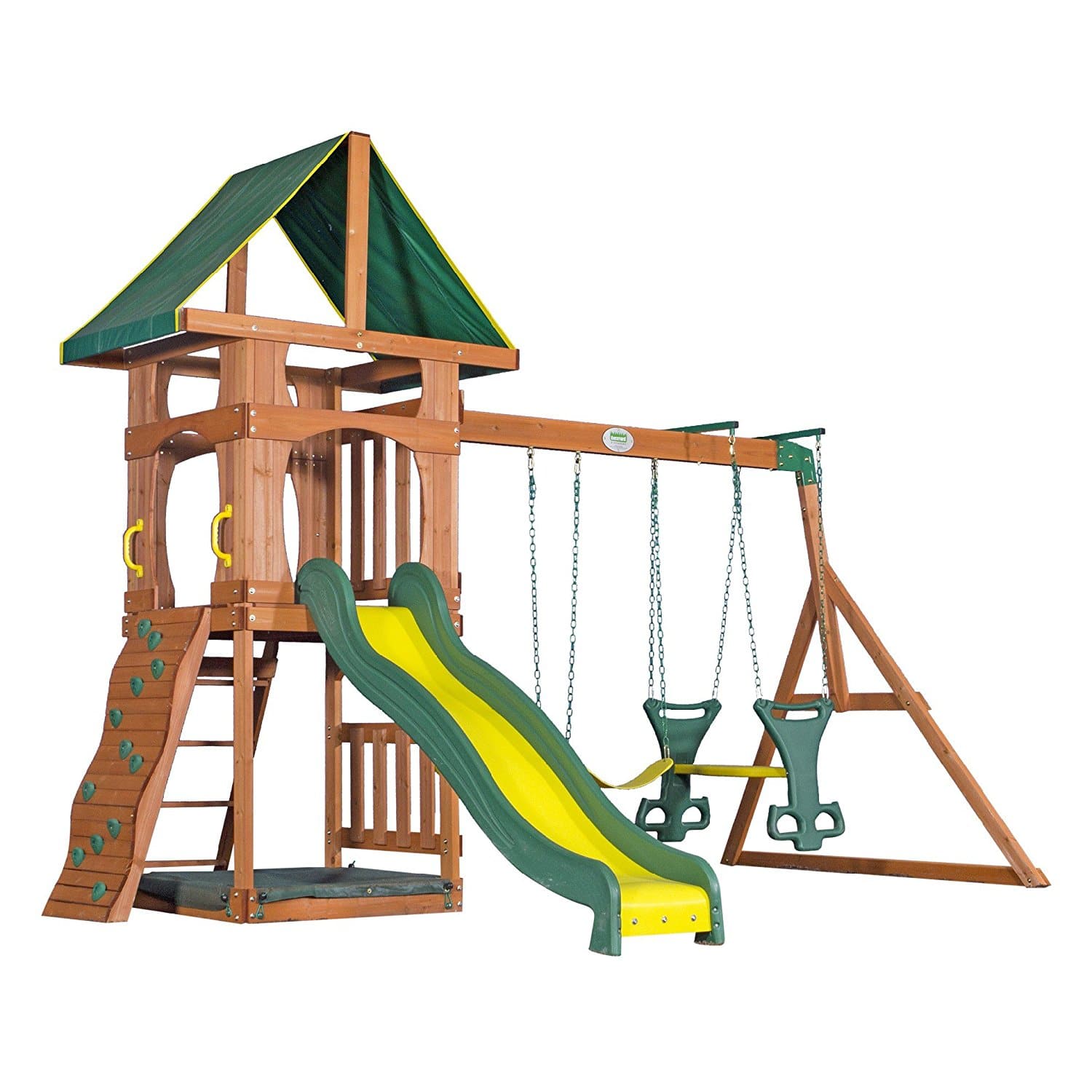
Choose swing-set accessories by the exact playset model, the manufacturer’s approved options and the children who will use them. A seat or climbing feature that physically fits a beam is not automatically compatible. Check age, user capacity, mounting requirements and the space needed around moving equipment before purchasing.
Start with the playset’s documentation
Find the model label, assembly instructions and parts list. Ask the manufacturer whether the proposed attachment is approved for that frame and position. Keep the answer and installation instructions with the equipment records. If you cannot identify an older set or confirm its condition, obtain qualified advice before adding loads or drilling new mounting points.
The CPSC Outdoor Home Playground Safety Handbook covers residential equipment, layout, assembly and upkeep. It is a useful companion to the specific product instructions. A retailer’s general compatibility claim does not resolve a conflict with the playset maker.
Bucket seats and seats for younger children
Full-bucket, half-bucket and other supported seats have different designs. Choose a seat explicitly intended for the child’s age and abilities, and use all required restraints as instructed. Head control alone is not a complete readiness test, and no single age or weight range describes every product.
Do not improvise a different leg opening, seating direction or restraint arrangement as a child grows. Replace the seat with an approved suitable option when necessary. An outdoor hanging seat and an indoor infant swing are different products; neither name establishes that it is suitable for a newborn.
Belt, disc, tire and web swings
A belt seat is a different activity from a disc, tire or platform-style web swing. Consider how each moves through space and whether the frame has an approved position for it. A wider or rotating attachment can affect neighboring equipment even when its static dimensions seem small.
CPSC guidance places disc swings and rotating tire swings in separate bays away from other swinging equipment. Follow the applicable product layout and surfacing instructions rather than hanging a new attachment wherever there is a spare connection.
Do not assume every web swing carries three children or has a 250-pound limit. Verify the user count and load rating of the complete installed system, including the frame and hardware. A seat’s rating alone does not establish the capacity of everything supporting it.

Standing, skateboard and ball-style attachments
These names describe varied products, not a universal upgrade for an older child. Confirm the exact intended activity, age range, installation and supervision requirements. Standing on an ordinary belt swing is not justified by the existence of a separately designed standing accessory.
Choose an attachment because it suits the child and approved system, not because children naturally experiment with the existing equipment. If instructions are missing or the manufacturer cannot confirm compatibility, choose another option rather than improvising.
Wheels, activity panels and climbing features
A steering wheel, telescope or activity panel can add imaginative play without changing the swinging seat. Check where it mounts, whether it obstructs access and whether all supplied hardware is suitable for the identified set. Inspect for loose parts and damage during routine maintenance.
Climbing walls, nets, slides and overhead features require their own age and installation checks. The previous three-, six- and eight-foot age rules were not a sound basis for choosing equipment. Assess the product’s instructions and protective surfacing requirements instead of assigning a climbing height from a child’s birthday.
Keep protective features in place
Do not remove safety handles, guards or restraints merely because a child is older. Any reconfiguration should be one the manufacturer allows. An unwanted activity panel may be replaceable, but that does not make a protective component optional.
Stop use when there is damaged hardware, rot, cracking, loose connections or another unresolved defect. Obtain compatible replacement parts and follow the correct service instructions. Painting over deterioration or tightening an unknown damaged connection is not proof the structure is sound.

Compare the complete purchase
Get a current quote for the accessory, approved mounting parts, delivery and any installation work. Check return terms before opening or fitting parts. An old price range cannot reliably estimate a new setup, and a cheaper attachment can become impractical if it needs unavailable hardware.
Prefer a seller who can supply a model number and clear documentation. Keep photographs of labels and receipts so future replacement orders refer to the actual equipment. Brand name alone is not enough to match parts across different playsets.
Review the setup as children grow
Reassess interests and abilities while continuing to follow the equipment’s limits. Supervise use, maintain the play area and inspect on the schedule specified by the maker. A change in users is a reason to review the setup, not to exceed its intended use.
Make one approved change at a time and check the complete installation before play resumes. The useful accessory is one that adds an appropriate activity while preserving the playset’s required structure, clearances and protective features.