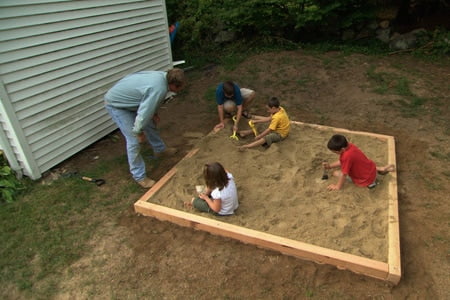
To build a backyard sandbox, begin with a documented sandbox plan or a purpose-made kit, choose a level site with drainage, and assemble the frame before adding suitable play sand. Plan the cover and routine maintenance at the same time as the box. A sandbox needs supervision and upkeep after construction.
Choose the size, site and plan
Measure the available space and allow room for children and an adult to move around the outside. Choose a location where play can be supervised, away from vehicle movement, sharp objects and other hazards. Check how water moves through the site after rain.
Use a plan that specifies the frame dimensions, corner connections, materials and fasteners. A board-and-screw list without connection details is not enough to establish that a structure will stay secure. If the design includes seats or a hinged lid, follow the complete design and hardware instructions.
Before excavating or driving stakes, arrange the appropriate local utility-location check. Do not assume that a shallow project cannot meet buried services.
Gather suitable materials
Choose materials intended for the project and outdoor exposure, with smooth accessible surfaces. Avoid unknown salvaged timbers or boards with protruding nails. The American Academy of Pediatrics’ sandbox guidance specifically advises against railroad ties because of splinters and creosote.
Gather the specified fasteners, measuring tape, square, drill and any tools required by the plan. Follow tool instructions and keep children away from the construction area. Do not substitute miscellaneous scrap braces for a specified connection.
Prepare the ground and assemble the frame
Remove debris and prepare a level base as the plan requires. Resolve a drainage problem before building over it. A watertight plastic sheet beneath an open outdoor box can turn it into a basin; a barrier should not defeat the intended drainage system.
Dry-fit the frame and check dimensions and diagonals before fastening it. Assemble the corners in the stated order and use the specified fastener size and placement. Make sure accessible screw heads are flush and no sharp points project through the wood.
Sand rough edges and inspect every surface a child can touch. Check that the finished frame is stable before filling it. A box that rocks or has loose corners needs correction rather than sand added to conceal the problem.
Calculate and add the sand
Use the inside dimensions and the intended sand depth to estimate volume. With measurements in feet, length multiplied by width multiplied by sand depth gives cubic feet. For example, a four-foot by four-foot interior filled four inches deep requires about 5.3 cubic feet before allowing for the actual design and fill level.
Compare that volume with the volume stated on the bags; bag weight alone is not a universal volume conversion. Leave appropriate room below the rim instead of filling the box to overflowing.
Choose sand supplied for children’s play and review its source and product information. Avoid dusty crushed-stone products and construction materials of uncertain suitability. The pediatric guidance linked above discusses sand selection; a label should not be treated as a guarantee that every product is identical.
Fit the cover and establish a care routine
Use the cover specified for the design and follow its handling instructions. Keep children clear when opening or closing it, and prevent accumulated rainwater from creating a hazard. Do not allow play inside a covered box.
Cover the sandbox when unused to help exclude animals. Let wet sand dry before covering for the night, and rake out debris regularly. Keep pets out. If there is animal waste or another contamination problem, stop play and address it before reuse.
Check for loose hardware, damaged wood and sharp edges regularly. Supervise play, discourage throwing sand, and have children wash their hands afterward. These checks are part of owning a sandbox, not a one-time final construction step.