

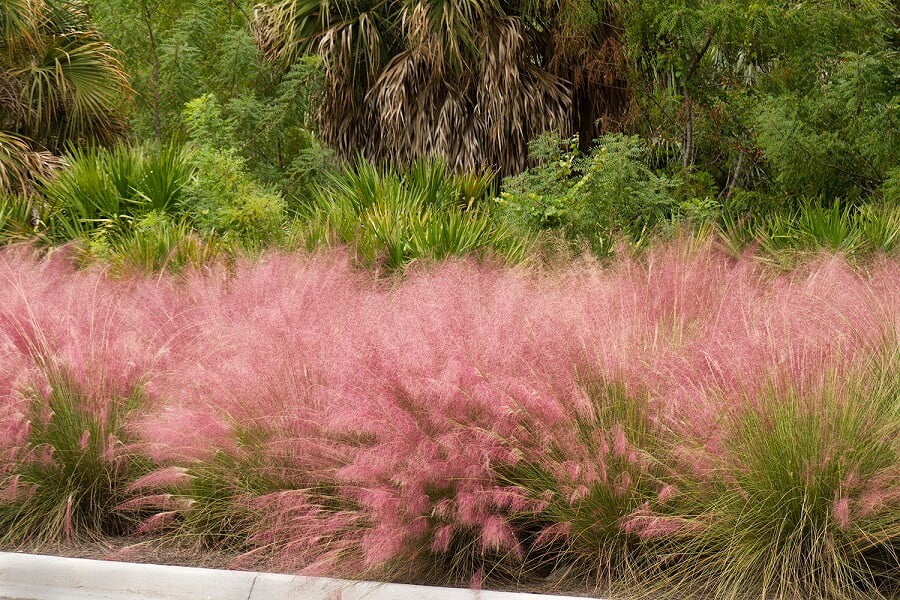
Pink muhly grass (Muhlenbergia capillaris) is a clumping ornamental grass grown for its airy pink flower heads in late summer and fall. Plant it in a sunny, well-drained spot, water while it establishes, and leave room for the mature clump. Its drought tolerance develops after establishment; a newly planted grass still needs attention.
What pink muhly grass looks like
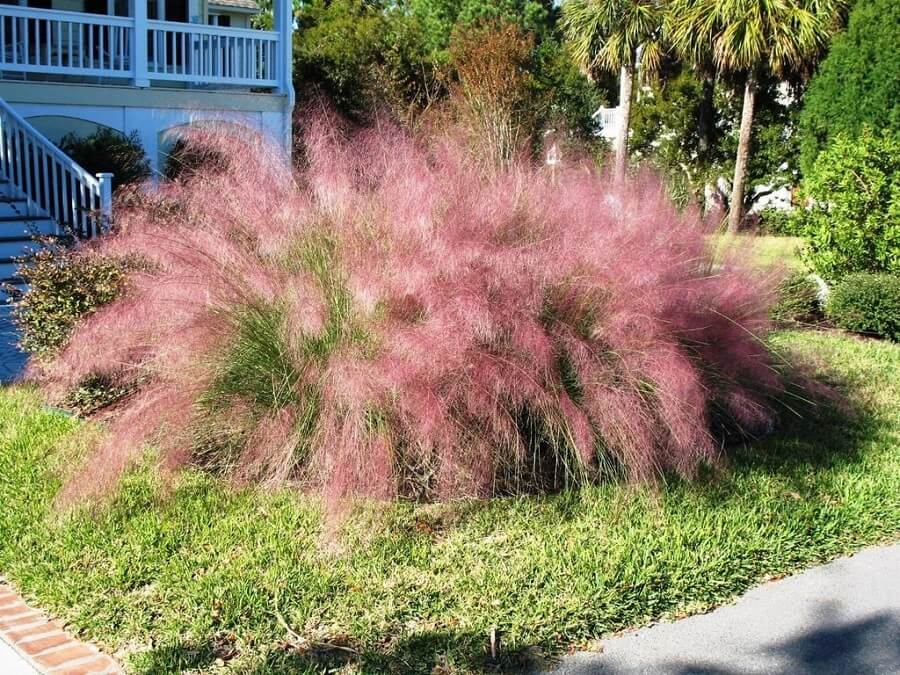
The pink cloud is made of flowers above green foliage, not pink leaf tips. The foliage commonly forms a clump about 2–3 feet tall and wide, with flowering stems rising higher. Exact dimensions depend on the selection and growing conditions. Backlighting makes the flower heads particularly noticeable, so consider a position where afternoon light shines through them.
This species is native to a broad area of the Americas, including the central and eastern United States, rather than originating only in Florida. Check the hardiness information for the particular plant sold locally. A warm-climate planting recommendation does not mean that every winter climate or permanently wet site will suit it.
When and where to plant
Spring is a useful planting season where winter cold makes establishment a concern. In mild climates, other planting windows may also work; avoid planting into frozen soil or during a spell when you cannot keep a new root ball watered. Ask a local nursery or Extension office about timing at the colder edge of its range.
Choose full sun for the best flower display. Muhly grass tolerates several soil textures and relatively poor soil, provided drainage is suitable. Do not automatically enrich the bed with a thick layer of manure or a blanket dose of fertilizer. Improving a genuinely unsuitable site matters more than making every planting hole unusually rich.
How to plant a nursery-grown clump
- Check the label for mature width and arrange the plants before digging. UF/IFAS suggests spacing muhly grass 24–36 inches apart. Allow extra clearance where flower stems would lean into a narrow path.
- Dig a hole wider than the root ball and only deep enough to keep the crown at the surrounding soil surface. Avoid burying the base of the foliage.
- Remove the container carefully. Set the root ball in place, backfill with the excavated soil, and firm gently without compacting it heavily.
- Water the root ball and surrounding soil thoroughly. Check moisture during establishment, including beneath the surface rather than judging by dry-looking leaves alone.
- If mulching the surrounding bed, keep mulch away from the crown. Leave the growing base visible.
Water again when the root zone needs it, adjusting for rainfall, heat and soil. Established plants tolerate dry periods well, but “drought tolerant” is not a promise that watering will never be needed. Persistent saturation should prompt a drainage assessment.
Cutting back, feeding and dividing
The faded flower heads can provide winter interest. If the clump needs tidying, cut back old growth in late winter or early spring before the new flush emerges. Timing follows local growth, not one calendar date everywhere. Wear gloves and avoid cutting through fresh shoots that have already appeared.
Fertilizer is not an automatic annual requirement in every garden. Base feeding on plant performance, soil information and local recommendations; follow the product label if feeding is warranted. More fertilizer is not a substitute for adequate sun.
Older clumps can be lifted and divided in early spring when division is needed. Replant healthy divisions at their original crown depth and water them as new plantings. You do not need to divide a healthy, appropriately sized clump merely because a year has passed.
Using muhly grass in the garden
A single clump can soften the edge of a bed, while a repeated group creates a larger drift of autumn color. White-flowering selections offer a different effect. Check the botanical name and mature dimensions when comparing plants: other muhly species and hybrids are not necessarily interchangeable with pink muhly grass.
For regional planting and care details, see UF/IFAS guidance on muhly grass and the North Carolina Extension plant profile.