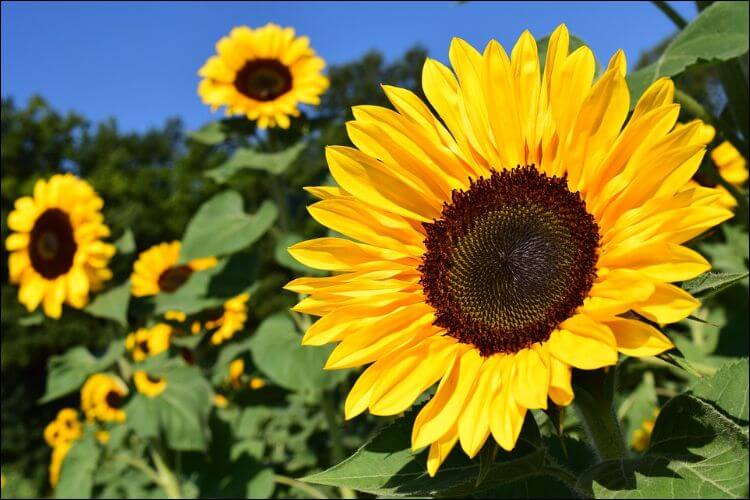
Grow annual sunflowers in a sunny location with well-drained soil, choosing a variety that fits the space and your purpose. A dwarf sunflower for a patio pot needs a different plan from a tall seed-producing plant or a branching variety grown for repeated flowers.

Choose the right sunflower
Read the seed packet for mature height, branching habit, spacing and days to flowering. Names such as ‘Mammoth’ describe a very different garden presence from compact container varieties. Do not assume every sunflower produces one enormous head or that every dwarf cultivar stays the same height under all conditions.
- For small spaces: choose a named dwarf variety recommended for containers.
- For a tall backdrop: allow room for mature plants and consider wind exposure before planting.
- For bouquets: decide whether you want single-stem plants harvested once or branching plants with several flowering stems.
- For edible seeds: choose a seed-producing variety intended for that purpose.
- For pollinators: check whether the cultivar produces pollen; some cut-flower selections are pollenless.
Annual sunflower cultivars are commonly selections of Helianthus annuus. Perennial sunflowers have different growth habits and management needs, so confirm which you are buying.
Prepare the site
Choose full sun rather than a dark corner. Check where tall plants will cast shade on vegetables or shorter flowers, and keep mature stems clear of narrow paths. A sheltered position can reduce wind damage, but avoid putting the plants where a wall or fence leaves them in deep shade.
Remove competing weeds and loosen compacted planting soil where needed. If soil fertility or pH is uncertain, obtain a soil test before adding amendments. Compost is not a dependable way to raise acidic soil pH, and every bed does not need the same thick layer of organic material.
Arrange watering before sowing. A bed that is easy to reach with a hose is simpler to establish than one that depends on occasional rain. Keep the seed packet and label the variety so you can judge its growth against the correct expectations.
Sow after suitable weather arrives
For annual sunflowers, direct sowing after frost risk has passed is usually straightforward. Use your local season and packet guidance rather than a universal April or May date. If starting indoors, avoid holding seedlings until they become crowded and root-bound, and handle roots gently when transplanting.
Follow the packet’s sowing depth and final spacing. Water the planted area gently, maintain moisture while seeds germinate and thin seedlings as directed. Crowding plants to get more flowers can leave them competing for light and water.
For a longer display, consider several small sowings instead of planting the entire packet at once. Check the variety’s time to flowering against the remaining frost-free season before making a late sowing. Photograph or label each group with its sowing date.
Water, feed and support growing plants
Check the soil rather than measuring a tiny fixed amount of water for each seed. Newly planted seeds and young seedlings need consistent access to moisture; larger plants need water to reach their developing root zone. Adjust for rainfall, heat, wind and soil drainage, avoiding both repeated wilting and permanently soggy ground.
Use fertilizer only as needed for the soil or potting mix and according to its label. More fertilizer does not automatically produce stronger stems or better flowers. A lawn product, especially one combined with weed killer, is not a substitute for an appropriate garden fertilizer.
Provide suitable stakes or supports where the cultivar and exposure require them. Install supports with care around roots and use soft ties that can be adjusted as stems thicken. Do not fasten a tall sunflower to a house drainpipe or another fixture not designed as a plant support.
Growing sunflowers in pots

Start with a compact cultivar and choose a stable container large enough for its expected growth. There is no single five-gallon rule that makes every giant sunflower suitable for a pot. Check the supplier’s container recommendation and leave space around the plant for maintenance.
Use container potting mix and drainage holes. Do not add a gravel layer as a supposed cure for poor drainage; water needs an unobstructed route out of the pot. Avoid leaving the container standing in collected water.
Containers need frequent moisture checks because their limited root volume can dry quickly. Water thoroughly when needed, let excess drain and follow the potting mix or fertilizer instructions. Rotate only if needed for a balanced display, and reconsider the position if the pot becomes top-heavy or exposed to strong gusts.
Flowers, insects and problems

A sunflower head contains many small flowers and can attract visiting insects. If supporting pollinators is your goal, leave room to observe them and avoid unnecessary pesticide use. A visiting bee or a small amount of leaf damage is not by itself a reason to spray.

Inspect struggling plants for moisture problems, crowding, broken stems and identifiable pests. Record what is damaged and whether the problem is spreading. Seek a diagnosis for persistent disease symptoms instead of automatically applying fungicide to every marked leaf.
Deadheading decisions depend on the goal. You may remove spent flowers from a branching ornamental plant, but leave selected heads to mature if you want seeds or food for birds. Cutting a single-stem plant for a bouquet ends that stem’s display.
Harvest flowers or mature seeds
For cut flowers, use clean tools, harvest as blooms begin opening and place stems in clean water. Remove leaves that would sit below the waterline. Keep arrangements away from excessive heat and replenish water.
For seeds, wait for maturity rather than using drooping alone as the signal. Look for drying, browning flower-head backs and firm, developed seeds. Cut suitable heads and finish drying them in a dry, ventilated place protected from pests. Discard moldy material and dry seeds thoroughly before storage.
Birds and squirrels may harvest before you do. Decide which heads you will leave for wildlife and which you intend to collect. Save seed with the variety and date, recognizing that hybrid or cross-pollinated plants may not reproduce the original appearance.