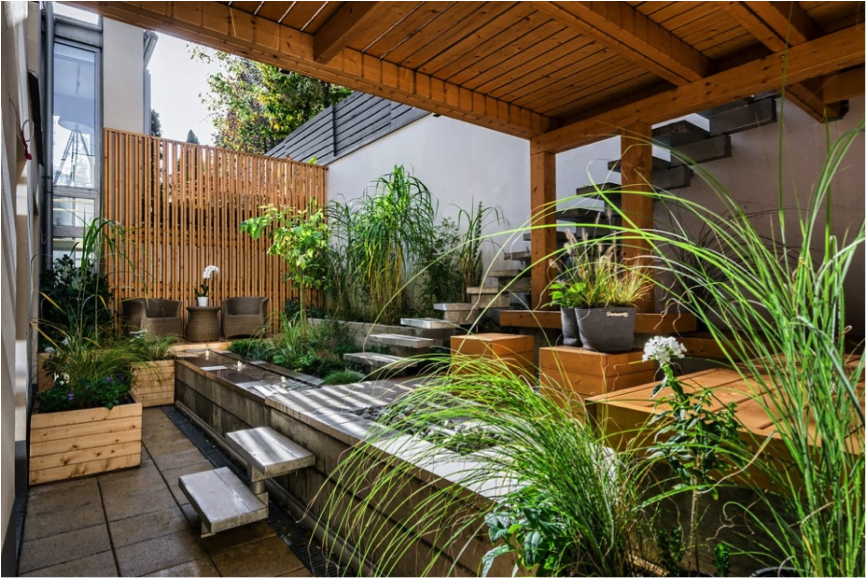
An outdoor fireplace works best when its location, fuel and construction are planned together. Start with the space and the applicable requirements, then choose the appearance. A fireplace that looks right in a photograph may not suit your patio, nearby buildings or local restrictions.
These six considerations help you prepare a useful brief for an installer or designer. They are planning questions, not construction specifications. A built-in masonry fireplace, a listed gas appliance and a portable wood-burning unit have different requirements.
1. Choose a style that fits the setting
Brick and stone can suit a traditional garden; smooth finishes and restrained shapes can complement a modern patio. Rounded stucco forms or decorative tile can provide a different look. Treat these as visual choices rather than assuming every style has a particular chimney shape or construction method.
Consider the fireplace from inside the house as well as from the seating area. A large chimney can dominate a small yard. Bring photographs of the finishes you like to the designer, but let the required firebox, venting and clearances determine what is technically suitable.
2. Establish a permissible location
Ask the local building or fire authority what permits, setbacks and burning restrictions apply. Then check the specific appliance instructions. Keep required separation from buildings, fences, vegetation and other combustible materials, including overhead branches and coverings.
The U.S. Fire Administration’s outdoor-fire guidance is a useful safety starting point. A custom built-in installation also needs its own compliant design; a general fire-pit distance is not permission to attach a fireplace to the house or place it on a deck.
Think about smoke, prevailing wind, nearby windows and neighbors. Leave an unobstructed route around seating and avoid siting the fire where children must pass close to it to reach another part of the yard. Confirm underground services before any excavation.
3. Size the whole gathering area
Measure the hearth or appliance footprint, required clearances, chairs and circulation space together. Firebox width does not translate into a fixed number of comfortable seats. Mark the proposed layout on the ground and test whether people can move around occupied chairs without approaching the hot surface.
Decide what you want the installation to do: provide atmosphere, support a designated cooking appliance or serve as a focal point. Do not assume a decorative fireplace is approved for cooking or that it will heat an open patio like an indoor room. Wind, layout and the chosen unit affect the experience.
4. Separate decorative finishes from fire-rated construction
The visible stone, brick, tile or stucco is only part of the installation. The firebox, base, chimney or vent system, and nearby materials must be appropriate for the heat and the specified design. Decorative veneer is not interchangeable with firebrick or a tested appliance enclosure.
Ask the installer which materials are structural, which are finishes and how rainwater will be managed. Compare maintenance and repair access as well as appearance. A cheaper finish does not necessarily reduce the cost of the required foundation, venting or utility work.
For a prefabricated appliance or kit, retain the manufacturer’s instructions and use approved components. For custom masonry, obtain a complete design from someone qualified for that work rather than building from a photograph.
5. Match the fuel to the installation
Wood involves fuel storage, smoke, embers and ash disposal. Gas offers a different operating routine, but it still requires the proper fuel supply, shutoff arrangements and appliance-specific ventilation. Neither fuel is universally hotter, safer or suitable for every location.
Have qualified professionals handle gas supply and installation as required locally. Do not improvise a line, convert fuels with unapproved parts or assume that any small vent opening is adequate. Confirm that the appliance is intended for the proposed outdoor setting and use only its specified fuel.
Include operating and maintenance costs in the comparison. Ask how the unit is shut down, cleaned, inspected and protected when not in use. Those daily tasks matter as much as the initial purchase.
6. Plan for safe use and maintenance
Keep children supervised and maintain a clear area around the fire. Never leave it unattended. Follow local burn restrictions and avoid use in unsafe wind or other prohibited conditions. Have suitable fire-control equipment available and know how to operate it.
For wood fires, follow safe ash handling and disposal instructions; apparently spent ash can retain heat. Arrange inspection and cleaning appropriate to the fireplace. For gas, follow the manual’s checks and shutoff procedure, and stop using a unit that appears damaged or malfunctions.
Before the first gathering, have the installer explain operation and provide the manuals and required inspection records. Keep those with the model details so future maintenance and replacement parts are based on the actual installation.