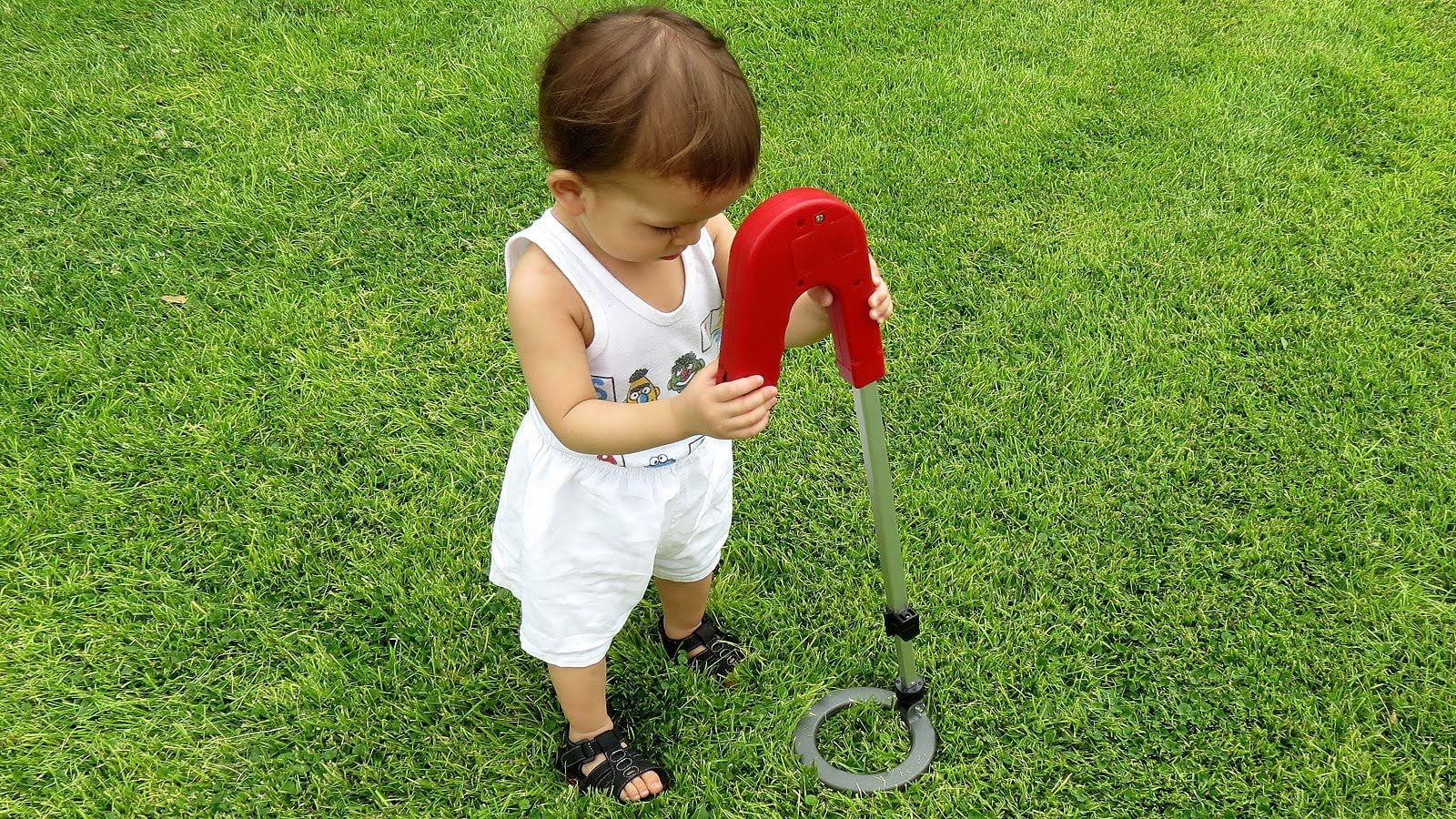
A metal detector can turn a supervised backyard game into a lesson in observation and patience. For children, start with known, safe objects in a controlled area rather than searching abandoned sites or digging for unknown relics.
1. Set up a backyard treasure hunt
Choose an area you own or have permission to use. An adult can place large, smooth metal objects on the surface beneath a cloth or loose leaves, then record where each one is hidden. Avoid sharp objects, ammunition and small items that a young child could swallow. Count the objects back in after the game.
A surface game avoids digging near buried services. Show children how to move slowly and listen for a signal, then let them predict what they will find. Use the detector’s instructions to adjust its fit and settings; performance varies by model and target.
2. Check permission before visiting a beach or park
Public access does not automatically permit detecting, digging or keeping finds. Ask the land manager about the exact location, permitted activities and reporting requirements before taking equipment. Follow local rules and any protected-area restrictions.
The National Park Service’s archaeological-site guidance prohibits metal detecting in national parks. Do not disturb archaeological places or remove artifacts. A beach outing also needs an adult’s assessment of tides, water, weather and other hazards.
Wet salt sand can interfere with some detectors. There is no universal “eliminate iron” setting that solves saltwater interference; consult the manual for the model and use only components rated for the exposure involved.
3. Keep away from mines and abandoned structures
Mine entrances, shafts, old buildings and unstable ground are not suitable treasure-hunting destinations for children. The National Park Service warns of serious hazards at abandoned mineral sites. Stay outside closures and barriers, and choose an established, permitted recreation area instead.
4. Agree on a rule for unknown finds
Children should stop and call the supervising adult when they encounter an unknown object, rather than reaching into the ground or picking it up. Do not touch, move or try to clean anything that could be ammunition or an explosive item. Leave the area and report it to local authorities from a safe location. The Army’s Recognize, Retreat, Report program explains this approach.
5. Keep the outing manageable
Bring water, weather-appropriate clothing and a way to contact help. Choose a detector a child can hold comfortably and keep the session short enough to remain enjoyable. Headphones should not prevent the supervising adult or child from noticing their surroundings.
At the end, collect all game pieces and equipment and leave the area as you found it. A successful children’s hunt is a safe shared activity, whether or not anything valuable is discovered.