Effective privacy landscaping starts with the view you want to block. A small screen beside a seating area may do more than a tall hedge along the entire boundary. Identify whether you need privacy from a sidewalk, an adjoining patio or an upstairs window, then combine plants and structures that fit the available space.
Before buying materials, mark property boundaries, check applicable local and community requirements, and arrange utility location before digging. Backyard plants and structures are not automatically free of height, setback or access restrictions. Plan for mature plant size, drainage, maintenance and the light you want to keep.
1. Use a hedge where there is room for it to mature

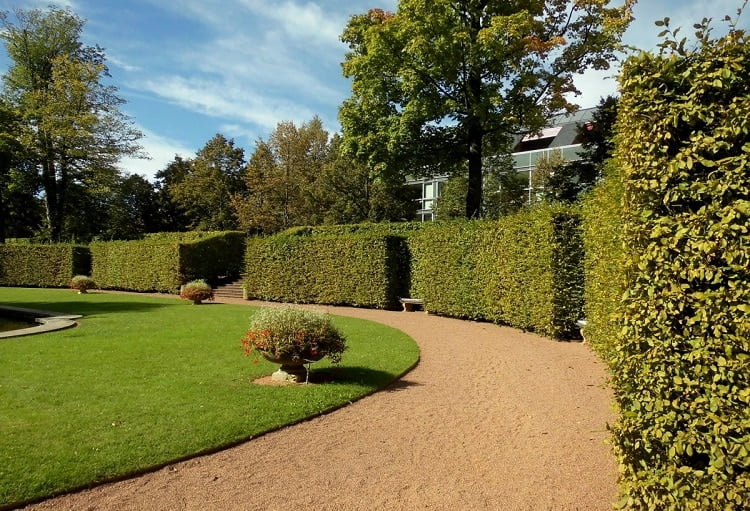
A hedge can create a continuous green screen, but the right species and spacing depend on your climate, soil, sunlight and available width. Do not plant every shrub 12 inches apart or use a fixed two-foot-deep trench. Those dimensions can crowd large plants or bury roots too deeply.
Follow planting guidance for the actual root ball and species. The University of Minnesota’s planting guidance explains the importance of locating the upper roots and planting at the correct depth. Water according to root-zone moisture and establishment needs; “water abundantly” is not a substitute for checking whether the soil is already saturated.
2. Build a mixed screen instead of a single-species wall

A combination of trees, shrubs and lower plants can provide privacy with a less uniform appearance. University of Maryland Extension recommends plant diversity so that one pest, disease or weather problem is less likely to remove the entire screen. Its regional plant lists are useful examples, not universal recommendations for every climate.
Place taller plants toward the background and use smaller plants to fill views at sitting height. Draw their mature outlines on a plan before planting. Several plants that look widely separated in nursery pots may eventually compete for the same narrow strip.
3. Use containers around a small seating area
Containers let you screen a particular chair, dining corner or deck edge without planting a permanent border. Arrange them while sitting in the place you want to shelter, and check whether the foliage actually interrupts the unwanted view. Leave enough space to walk, pull out chairs and reach the plants for watering.
Choose stable containers suited to the mature plant and wind exposure. A tall plant in a very light pot can topple; a large wet container can be too heavy to move casually. Confirm deck or balcony load suitability where relevant, protect drainage routes and use plant choices appropriate to container conditions.
4. Add a fence for immediate screening
A solid or closely spaced fence can provide privacy before plants grow. Decide how much light and air you want through it. A partly open design may feel less enclosed but will also leave sightlines, especially when viewed at an angle.
Check permitted height and placement before installation and use a design appropriate to wind and ground conditions. Decorative planters and climbing plants add loads, so do not assume an existing fence can carry them. Keep inspection and maintenance access available on the side you control.
5. Address upstairs views with carefully placed trees
A boundary hedge that blocks a standing neighbor may not block a second-floor window. Look upward from the seating area and identify the part of the view that needs screening. A suitable tree canopy closer to that area may help, but it will take space and time to develop.
Consider mature spread, root space, overhead services and seasonal leaf loss. Deciduous trees may give summer shelter while allowing winter views. Avoid buying a fast-growing tree solely for quick height if its eventual size will overwhelm the garden.
6. Use trellis panels or a pergola around a patio

A short run of panels can create a sheltered outdoor room without enclosing the entire yard. Angle them to interrupt the relevant view, and test the arrangement before committing. Open lattice alone provides partial screening; foliage or a more opaque panel changes the result.
A pergola or overhead screen may help with elevated views, but it needs an appropriate structural design. Adding a waterproof roof changes wind, rain and loading considerations. Treat that as a construction project, rather than simply attaching a cover to a decorative frame.
7. Combine metalwork with suitable planting
Metal trellis and open ironwork offer structure for a decorative screen. They do not provide full privacy by themselves. Choose plants whose mature weight and climbing habit suit the support, and account for leafless periods if year-round screening matters.
Keep the structure accessible for maintenance. Avoid letting vigorous plants block gates, damage neighboring structures or conceal fixings that need inspection. The most ornate design is not necessarily the easiest to maintain in a tight side yard.
8. Mix low walls with lighter screening above
A low masonry base with timber or another screening material above can create a layered appearance. It can also concentrate wind forces on the wall and connections. Have the combined structure designed for the site rather than resting an improvised panel on a wall cap.
Use material samples and a simple elevation sketch to judge the proportions before building. In a small space, repeating one timber color or plant form can tie the screen to the rest of the garden without adding more visual clutter.
9. Create a courtyard with walls and planting pockets
A masonry enclosure can give a patio a defined courtyard character. Plan doors, drainage, foundations and maintenance access along with privacy. Avoid assuming that paving the entire yard will automatically make it easier to care for; surface cleaning, heat and runoff still need consideration.
Planting pockets or containers can soften the enclosure without covering every wall. Keep enough open space for the intended use, whether that is dining, reading or a small play area. Privacy works best when the room remains comfortable to occupy.
10. Add water sound for atmosphere
A fountain can make a seating area more pleasant, but it should not be presented as soundproofing. Test the proposed water sound near the seat and near the boundary before choosing a large feature. A loud splash that you enjoy may be intrusive elsewhere.
Consider pump maintenance, water use, child access and a suitable electrical installation. Start with the atmosphere you want to create rather than expecting a small fountain to remove persistent traffic noise. Serious noise problems require assessment beyond decorative landscaping.
Check privacy through the seasons
Review the plan from both standing and seated positions, and consider what changes after leaves fall or plants are cut back. Low decorative foliage, including caladiums, can add color beneath a screen but should not be relied on to block adult eye-level views.
Start with the area you use most. One well-positioned screen, with space for its plants and maintenance, is often more practical than enclosing every boundary at once. Recheck the result as the garden grows and adjust the planting without crowding it.
Image credits for retained illustrations: hedge garden, mixed planting, trellis panels.