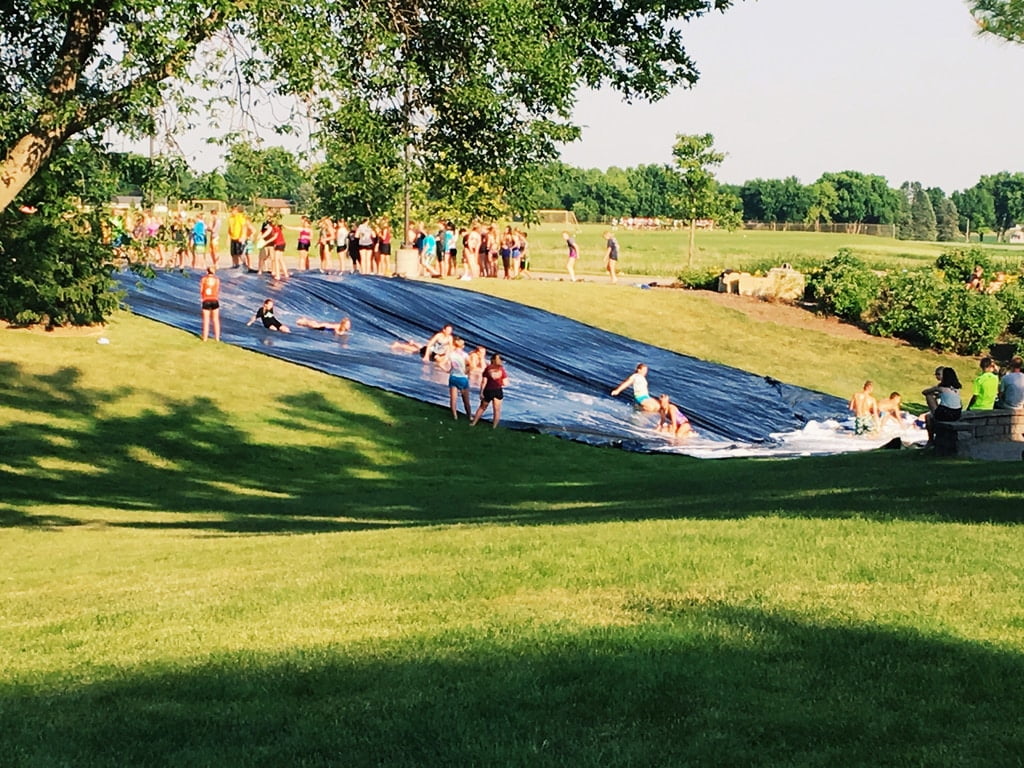
A sheet of builder’s plastic, pool noodles and a hose does not come with tested rider limits, stopping-distance requirements or installation instructions. This makes a homemade slip-and-slide difficult to assess. For sliding play, choose equipment designed for the intended children’s ages and follow its complete instructions. You can still organize a creative backyard water-play day without constructing a high-speed slide.
Why the DIY materials list is not enough
Plastic thickness, grass condition, slope, water flow and rider size affect how a person moves and stops. Pool noodles attached with Velcro are not a verified protective barrier, and a long sheet does not establish a safe runout. A price estimate or a short assembly time says nothing about those limits.
Do not add dish soap to increase speed, place an improvised slide on a hill, or run it toward a fence, tree, pool or hard surface. Extra rafts and inner tubes change how riders move and should only be used when the equipment’s instructions explicitly allow them.
Adult and teenage use needs particular caution
The CPSC warning about WHAM-O backyard water slides describes the risk of neck injury and paralysis for adults and teenagers using those children’s products. It is a product-specific historical warning, not evidence that a homemade version avoids the problem.
Do not assume equipment is suitable because someone is below a particular weight or because an online video shows adults using it. Follow age, size, occupancy and use restrictions for the exact product. Exclude headfirst diving and improvised tricks from the activity plan.
Plan the site before buying a slide
- Measure the entire installation and stopping area required by the manufacturer.
- Check the intended surface and slope against the instructions.
- Inspect for stones, roots, holes, sprinkler heads and other obstacles.
- Keep hoses, waiting children and pets out of the active area.
- Arrange direct adult supervision and a clear way to stop play.
Use only the specified installation and anchoring method. Do not add exposed stakes or substitute hardware because it is available in the garage. Inspect the equipment before each session and stop when it is damaged, moving out of position or no longer working as intended.
Keep games away from the slide path
Do not turn riders into bowling balls, send simultaneous racers into a shared finish, or create slippery running bases for kickball. Those activities add collisions and obstacles to a surface where stopping is already difficult. If using a slide, keep play within its instructions and make sure the landing area is clear before the next permitted rider starts.
DIY water-play ideas without a sliding track
Set up a supervised sponge-transfer game using small containers and a non-slippery walking route. Children can move water with cups, aim soft wet sponges at a drawn target, or paint paving with water and brushes. Keep the activities away from steps and electrical equipment.
For young children, use only a small amount of water, supervise continuously and empty containers immediately afterward. A sprinkler session can also be enjoyable if the ground remains suitable for walking and children avoid the hose and equipment.
Budget for the whole activity
Include suitable equipment, water access, supervision and storage in the plan. Skip accessories that encourage speed or stunts. Have a dry activity ready if the site becomes slippery, weather changes or children tire. The useful measure of a summer activity is whether the setup suits the participants, not how large or fast it can be made.