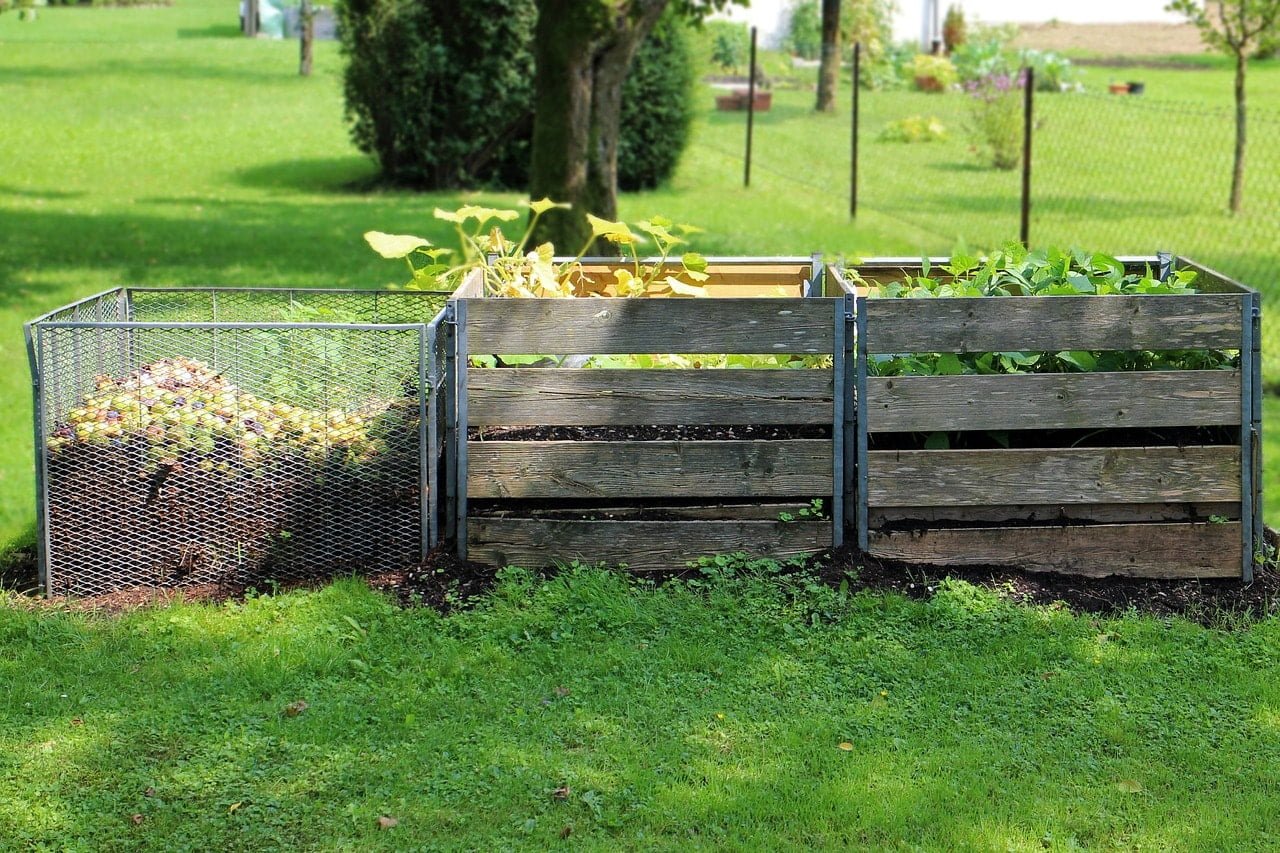
To make backyard compost, combine plant-based kitchen scraps with dry leaves or other carbon-rich material, keep the mixture damp and provide air. Microorganisms break it down into a soil amendment. A sealed tote full of scraps and soil is likely to become a smelly storage bin rather than a well-managed compost system.
Choose a manageable setup
Use a compost bin, tumbler or contained pile in an accessible, well-drained location. Think about how you will add material, turn it and remove finished compost. Choose a pest-resistant design if rodents are a local concern. Follow a purchased bin’s instructions for ventilation and loading.
You do not need to fill the container halfway with garden soil. A little finished compost can be mixed in, but your main ingredients are organic material, water and air.

Image Source: Pixabay
Gather greens and browns
“Greens” include fruit and vegetable scraps, coffee grounds and fresh plant trimmings. “Browns” include dry leaves, shredded plain cardboard and small untreated woody pieces. Remove packaging, stickers and tape.
For a basic backyard pile, EPA recommends starting with at least two to three volumes of browns for each volume of greens. This is a practical starting mix, not a guarantee: finely shredded leaves and bulky twigs behave differently. See its home composting guide.
Leave out meat, dairy, grease, pet waste, dryer lint, treated wood and compostable packaging unless your collection service specifically accepts them. A “biodegradable” label does not mean an item belongs in a home pile. Small quantities of citrus scraps are not automatically prohibited.
Build and maintain the pile
Break bulky plant scraps into smaller pieces. Combine greens with browns and cover fresh food scraps with carbon-rich material. Add water as needed so the mixture is damp without being waterlogged. Loosen and mix it periodically to restore air spaces.
Keep a dry-leaf supply beside the bin so every kitchen-scrap addition can be balanced. If you continually add fresh ingredients, separate a portion to finish rather than expecting the entire bin to mature at once.
Troubleshoot what you see and smell
- Sour or rotten odor: check for excessive moisture and compaction. Mix in dry, bulky material and improve aeration.
- Very little change: check whether the pile is too dry, cold or dominated by coarse woody material. Smaller pieces and appropriate moisture help; a small cool pile will still work more slowly.
- Visible food and pest activity: bury new scraps within the pile, check excluded ingredients and improve containment.
Illinois Extension’s explanation of composting is useful for understanding why temperature, air and ingredient balance affect progress.
Know when it is ready
Judge compost by its condition, not a promised two-month deadline. Finished material is dark, crumbly and earthy smelling, with most original scraps no longer recognizable. Coarse twigs may need screening out and returning to the active pile. Illinois EPA’s composting guide describes these signs.
Use mature compost as a soil amendment in an amount appropriate to the bed and soil test. It contributes organic matter and some nutrients, but it is not a universal replacement for every fertilizer or a complete container-growing medium.