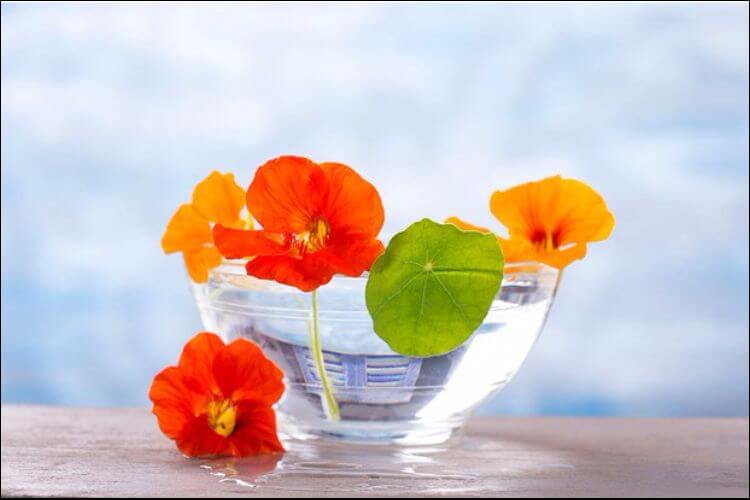
Garden nasturtiums bring bright flowers and rounded leaves to beds, pots and baskets. Start most annual varieties from seed after frost, or indoors shortly before the outdoor growing season. Choose a compact or trailing variety for the space you have. This guide covers common garden Tropaeolum nasturtiums, including T. majus; do not confuse their name with watercress or assume every unfamiliar flower is edible.
Choose a variety and a place to grow it
Read the seed packet for growth habit as well as flower color. A compact variety is easier to fit beside a path; a trailing one needs room to spill over a pot or grow along support. “Indian cress” is a common name, not a guarantee of one particular habit. The RHS annual nasturtium guide recommends sun and moist, well-drained soil, and notes that excessively rich soil favors leaves over flowers. 
Sow seed outdoors after frost
Prepare a weed-free patch and sow where the plants will grow. Follow the packet’s depth and spacing for the variety; the RHS beginner sowing example uses drills about 20 mm deep and thins plants to about 30 cm apart. Water gently and label the row. Check moisture while waiting for seedlings rather than letting the seedbed bake dry or remain waterlogged.
Start indoors only as early as you can manage
For an earlier start, Wisconsin Extension suggests sowing four to six weeks before the expected last spring frost. Use individual pots and handle the roots gently when planting out. Give seedlings good light, keep the mix lightly moist and avoid holding crowded plants indoors for weeks after they are ready. Germination speed varies with warmth, moisture and seed condition.
Harden off and transplant carefully
Gradually introduce indoor-grown seedlings to outdoor conditions once weather is suitable. Start in a sheltered position and increase exposure, bringing plants back under protection if cold threatens. Water before moving them, keep the root ball together and plant at its existing depth. A small, sturdy seedling is easier to establish than a tangled, overgrown plant.
Try cuttings as an alternative
Seed is the straightforward route for most annual nasturtiums. If you want to experiment with a cutting from a healthy plant, use a young, non-flowering shoot and clean tools. Following the RHS softwood-cutting method, cut below a leaf joint, remove lower leaves and insert the base into moist propagation mix. Keep it in bright, indirect light and a humid environment without leaving the mix sodden. Ventilate any cover and remove failing cuttings. Rooting hormone is not an automatic requirement, and a fixed two-week result is not guaranteed. Pot on after roots develop, then acclimate gradually before planting out.
Water according to the soil and weather
Check the root zone, especially in containers and hanging baskets. Water when the mix begins to dry and allow excess to drain; do not rely on a twice-weekly calendar. Containers need usable drainage holes and enough root space. Nasturtiums tolerate relatively modest fertility, but that does not mean they thrive indefinitely in a tiny pot without water.
Feed conservatively
Avoid heavy nitrogen applications when flowers are the goal. If growth in a container suggests a nutrient problem, first check watering, drainage and root crowding. Use an appropriate feed according to its label if needed. Yellow leaves alone do not identify a fertilizer deficiency, and more feed will not correct persistently wet roots.
Guide trailing plants and remove spent flowers
Give trailing plants a suitable support and guide stems gently rather than pulling them tight. Keep growth off a narrow path. Pinching shoot tips can encourage branching, and removing spent flowers helps maintain the display. If you want to save seed, leave some flowers to develop seed instead. The RHS growing guide also explains support and deadheading. 
Inspect pests before treating
Look beneath leaves and at shoot tips for aphids or caterpillars. Identify the problem before acting; leaf damage does not automatically justify a spray. Hand removal or removing a heavily affected tip may be sufficient, while beneficial insects also help. Avoid improvised dish-detergent mixtures. If a pesticide is needed, use only a product labeled for the plant, pest and edible use when applicable, following all restrictions and harvest intervals. Nasturtiums are not a guaranteed pest shield for neighboring vegetables.
Harvest edible leaves and flowers carefully
Only harvest positively identified edible garden nasturtiums grown for food. Do not use florist flowers, unknown plants or flowers with unsuitable treatment histories. Pick clean, healthy young leaves and flowers, rinse appropriately and use them promptly as a peppery salad accent. Keep decorative arrangements separate from ingredients. See Minnesota Extension’s edible-flower guidance. 
Save seed and plan the next season
Collect mature seed from healthy plants and let it dry before storing it labeled in a dry place. Saved seed from hybrids or named cultivars may produce different plants. Remove unwanted seedlings where self-seeding becomes a problem. At season’s end, note which variety fitted the site and whether light, watering or crowding limited the display.
Image source: depositphotos.com