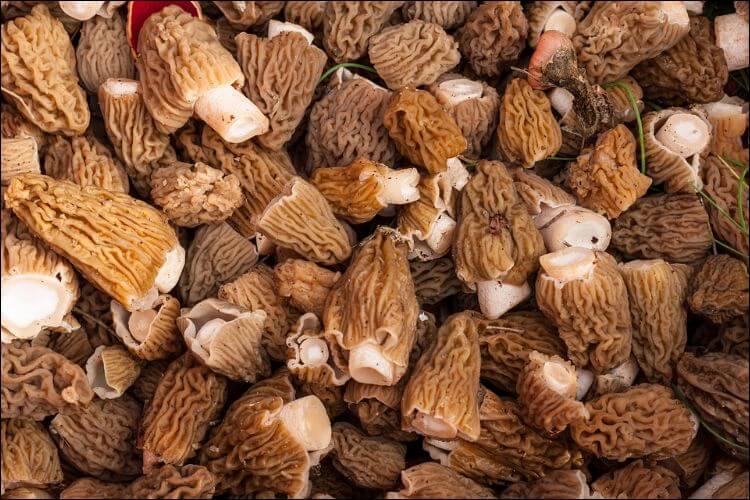
Morels can be cultivated, but growing them at home is an experimental project with an uncertain harvest. A bag of spawn, a spore slurry or visible fungal growth does not guarantee mushrooms. Start with a small trial and a supplier’s instructions for the exact species and strain rather than treating every morel as the same crop.

Morels belong to the genus Morchella; they are fungi, not plants. Their underground growth and their edible-looking fruiting bodies are different stages. Establishing mycelium is only part of the challenge: the conditions needed for fruiting are another.
What to check before buying a kit
Ask the seller to identify the species or strain, explain the intended climate and growing season, and provide a complete cultivation protocol. Find out whether the product contains viable spawn or only spores, whether additional materials are needed, and what evidence supports its harvest claims.
Look for clear instructions about storage, planting promptly, bed preparation, moisture and follow-up care. A photograph of wild morels is not evidence that the supplied product reliably produces them. Include any recommended nutrient materials and irrigation supplies in your budget, and buy only an amount you are comfortable experimenting with.
Four approaches and what they can realistically offer
1. A purpose-designed outdoor spawn bed
This is the most practical place for a home grower to start when a reputable supplier offers a strain-specific system. For example, Field & Forest describes a landscape-morel method using prepared beds and supplemental nutrition. Its requirements are instructions for that system, not a universal recipe for all morels.
Read the entire protocol before preparing the bed. Match the recommended site, seasonal window and materials, then keep a record of what you actually used. Do not substitute fireplace ash, garden soil, sawdust or fertilizer on the assumption that anything associated with a forest will work.
2. A spore slurry
Blending or soaking mushroom material and spreading the liquid is often presented as an inexpensive shortcut. The problem is that dispersing spores is not the same as completing a successful cultivation cycle. A homemade slurry also gives you little control over what organisms are present.
Do not treat salt or molasses as a way to make an uncontrolled mixture sterile. If you try a slurry as an experiment, keep its results separate from those of purchased spawn and do not count on a harvest. Never use unidentified mushrooms or interpret later mushrooms in that area as automatically edible.
3. Planting near trees

Finding wild morels near particular trees does not establish a dependable tree-inoculation method for your yard. Different morels have different ecologies, and a tree association does not mean any packet can be spread around any apple, elm or ash tree with predictable results.
Avoid digging into important tree roots or changing the soil around a mature tree to imitate a mushroom bed. Choose a supplier-supported bed location instead of risking a healthy tree on a speculative method.
4. Indoor culture and controlled cultivation
Indoor culture is a specialist undertaking. Clean handling, suitable cultures and controlled growing conditions are separate requirements; transferring tissue to agar or seeing mycelium on grain does not demonstrate that a fruiting process has succeeded.
A short household recipe that ends with colonized material is incomplete as a mushroom-production guide. If controlled cultivation interests you, use a documented protocol and appropriate training or equipment. For a first mushroom-growing project, an established commercial kit for an easier species may provide a more useful introduction before investing in morels.
Planning an outdoor trial
- Choose one system. Record the supplier, species, strain and instructions so results can be interpreted later.
- Choose a manageable site. Follow that system’s light and soil requirements and make sure you can check it regularly.
- Prepare before opening spawn. Have the specified materials, water supply and labels ready.
- Follow the protocol consistently. Changing several ingredients or timings at once makes a failed trial hard to diagnose.
- Record conditions. Note planting date, weather, irrigation, disturbances and any visible growth.
- Assess the outcome honestly. Count identified fruiting bodies, not white growth alone, as evidence of mushroom production.
Use moisture checks rather than a rigid daily watering amount. Avoid letting an experimental bed become a puddle, and do not assume extra feeding will compensate for unsuitable conditions. If nothing fruits, ask the supplier about the recorded conditions before buying another kit or adding untested amendments.
Harvest identification and food safety
Never eat a mushroom solely because it appeared in an inoculated bed or resembles a photograph. Other fungi can grow in the same area. Have any uncertain specimen assessed in person by a qualified local mushroom expert; do not rely on a single cap feature or an online image match.
Even true morels have caused illness. The CDC’s investigation of a Montana outbreak linked illness to morel exposure, with raw or inadequately cooked preparations a particular concern. Do not eat morels raw or undercooked, and do not assume cooking guarantees that every serving will be safe. Discard questionable mushrooms and seek medical advice promptly if illness follows eating them.
The useful goal for a first morel bed is a documented trial, not a promised food supply. A small, carefully managed experiment gives you better information than a large bed assembled from incompatible recipes.