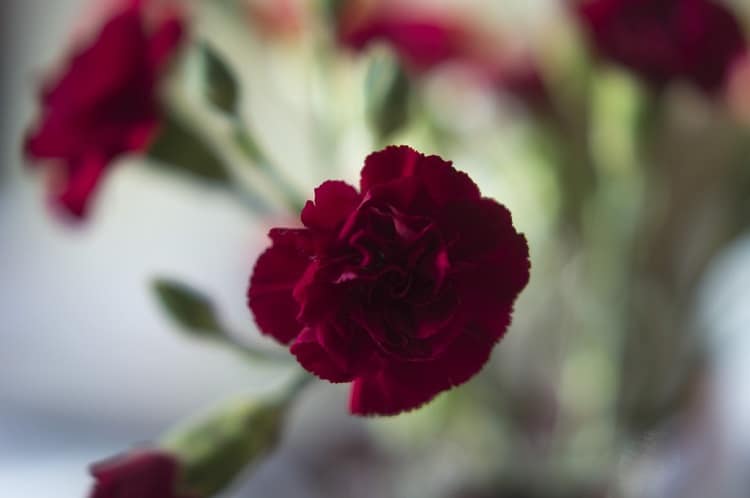
Carnations need a sunny position and soil that drains freely. Start with a named garden variety suited to your climate, then give it room to grow, steady moisture while establishing and support if its flowering stems are tall. The care of a florist’s cut stem is different from growing a rooted carnation plant.
Choose the right carnation

True carnations are Dianthus caryophyllus and its cultivated forms. Other flowers sold as pinks or sweet Williams belong to the wider Dianthus group and may have different growth habits. Read the botanical name and variety label before choosing seed or plants.
For a small container, look for a compact variety with a stated mature size. For cutting flowers, choose a taller type and plan its support before the stems start leaning. Check local winter suitability rather than assuming every carnation returns reliably each year. A nursery-grown plant is the simplest starting point when you want a particular flower color and habit.
Prepare a sunny, well-drained place
The Royal Horticultural Society’s carnation profile recommends a sunny position and well-drained soil. Avoid a low spot where rainwater remains around the crown. A container with drainage holes is an alternative when the garden soil stays wet.
Clear weeds and check the soil before adding amendments. Do not add sand on the assumption that it will turn heavy soil into loam. If you suspect a soil problem, use a soil test and advice appropriate to your site; lime and sulfur are not interchangeable general-purpose additions. For containers, use a potting mix intended for container plants rather than compacted soil dug from the yard.
Set a rooted plant at the depth it grew in its nursery pot, leaving its crown uncovered. Space plants using the variety’s mature width, not a single spacing rule for every carnation. Water after planting and check the root ball as it establishes.
Starting carnations from seed
Seed is useful when you want several plants and are comfortable with some variation. Follow the seed supplier’s sowing depth, temperature and timing instructions for that variety. Work backward from your local planting season; a universal May planting date or fixed number of indoor weeks will not suit every climate.
Use clean trays and seed-starting mix. Label each variety, water gently and keep the mix moist without leaving it saturated. Once seedlings emerge, provide adequate light and avoid crowding. Move them into larger cells or pots when necessary, handling the root ball gently.
Acclimate indoor-grown seedlings gradually to outdoor light and conditions before planting them out. Do not move soft growth directly from a protected room into exposed sun and wind. Check the variety’s expected flowering schedule before promising flowers in the first season.
Propagating from cuttings
For carnations, the RHS recommends softwood cuttings from non-flowering shoots in summer. Choose healthy growing shoots rather than treating an individual flower head as a cutting. A purchased bouquet is not a dependable substitute for healthy propagation material from a growing plant.
Use clean tools and a free-draining propagation mix. Remove leaves that would sit below the mix, keep the cutting supported and provide a protected place while roots develop. Check moisture rather than misting automatically every day. A permanently wet, poorly ventilated pot can create problems instead of helping rooting.
Division is not a universal replacement for cuttings. Only consider it where the particular plant forms separable rooted sections and its variety guidance supports the method. Do not split a woody crown simply to obtain more plants.
Watering, feeding and flowering

Check moisture near the roots, especially in pots. Water the growing medium when needed and allow excess water to drain. A plant in a small pot can dry faster than one established in a bed, so the same daily schedule will not suit both.
Use fertilizer according to the product label and the needs of the growing medium. Do not bury fresh manure or miscellaneous decomposing material next to seeds or roots. More fertilizer is not a reliable cure for poor light, wet soil or damaged roots.
Support tall flowering stems before they collapse, using ties that do not pinch them. Remove spent flowers regularly to encourage continued flowering, as the RHS advises. If you want to collect seed, leave selected flowers to develop seed instead; that is a different aim from continuous deadheading.
When a plant struggles
Inspect leaves, stems and the crown before treating a problem. Carnations can be affected by aphids, slugs and several diseases, including rust and wilt. Good spacing helps access and airflow but does not guarantee disease prevention.
Check watering and drainage first when growth declines. Identify a pest or disease before choosing treatment, and use only a product labeled for that plant and problem. Remove badly affected material as advised for the diagnosis, and avoid taking cuttings from unhealthy plants.