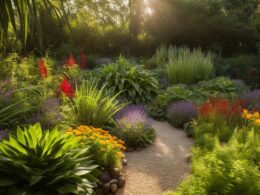
Vanilla is a tropical climbing orchid that can be grown at home where warmth, filtered light, humidity and space are available. Growing a healthy vine is a different achievement from producing usable vanilla beans: flowering can take years, pollination needs attention and harvested pods require curing. A harvest is not guaranteed in an ordinary room.
Choosing the Right Environment for Growing Vanilla
Vanilla (Vanilla planifolia) is a tropical climbing orchid. Give it warmth, good air movement, bright filtered or mottled shade, and a sturdy support such as a trellis or tree. Gardeners outside a warm tropical or subtropical climate usually need a greenhouse, sunroom, or similarly protected environment.
UF/IFAS notes that nursery-produced plants or cuttings are the appropriate source; wild vanilla species should not be collected. Large cuttings can flower sooner than small cuttings, but patience is required—vanilla vines typically need substantial growth before they begin blooming.
Rather than targeting one exact humidity percentage or a fixed number of hours of light, focus on maintaining a warm, humid, well-ventilated environment without scorching direct sun.
Source: UF/IFAS Gardening Solutions — Vanilla.
Planting and Caring for Vanilla Orchids
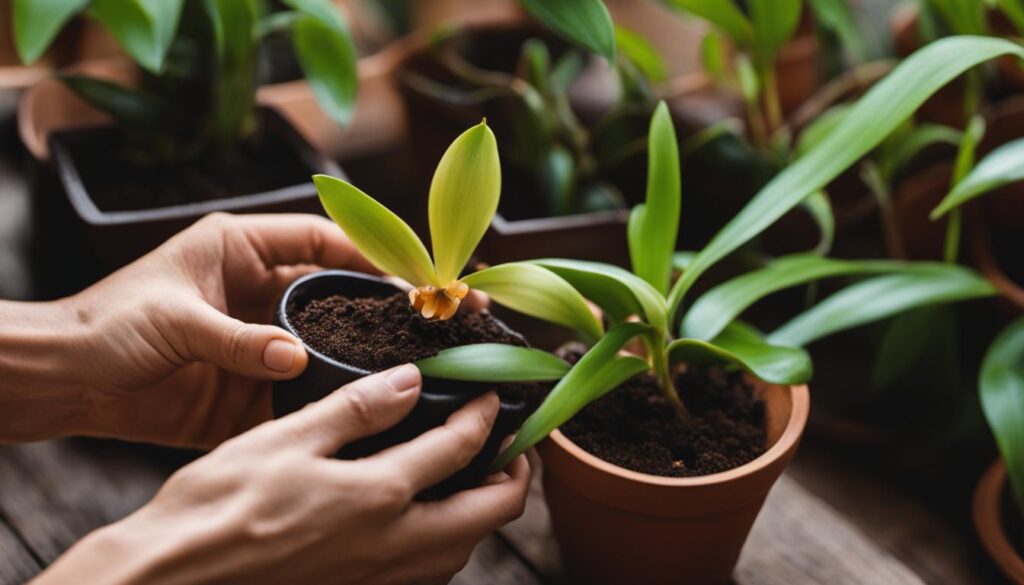
Start with an identified nursery plant or healthy cutting. Confirm whether it is already rooted and ask the supplier for establishment instructions. For a fresh cutting, UF/IFAS recommends allowing the cut to heal before planting; there is no general need for a five-day water soak.
Use an airy, well-drained rooting substrate and provide support from the start. Keep leaves out of the substrate and secure the vine gently without constricting it. Do not assume every bag labeled orchid mix behaves alike. Roots need moisture and oxygen; a dense, persistently wet pot is a poor substitute for a humid growing environment.
Check moisture and growth regularly. Water as conditions require, allowing drainage, and adapt misting to establishment and humidity rather than treating daily leaf spraying as an absolute rule. Avoid stagnant, wet conditions and inspect roots and stems if growth declines.
Follow an appropriate fertilizer’s directions and local growing advice, accounting for nutrients already supplied by the growing medium. A fixed high-nitrogen weekly routine is not a universal requirement. The UF/IFAS cultivation overview discusses management in south Florida; adjust that outdoor production context carefully for a home container.
Pollinating, Harvesting, and Curing Vanilla Beans
Vanilla flowers are short-lived. UF/IFAS reports that flowers may be receptive for only about six to seven hours, which is why commercial vanilla production relies on timely hand pollination. A slender tool such as a toothpick can be used to lift the rostellum so the pollen-bearing and receptive flower parts make contact.
After successful pollination, the ovary develops into the long capsule commonly called a vanilla bean or pod. Allow the fruit to mature fully before harvest; curing is what develops the familiar vanilla aroma and flavor.
Curing is a multi-stage process rather than a single fixed recipe. It typically involves killing or blanching, sweating, drying, and conditioning the mature capsules while carefully managing moisture and temperature. Home growers should follow a proven curing method rather than relying on a short calendar alone.
Sources: UF/IFAS — Vanilla Growing in South Florida; UF/IFAS — Natural Vanilla Extract Production.