A backyard greenhouse can extend the growing season, shelter seedlings and make some winter crops possible. It does not automatically provide year-round warmth or enough winter light for every crop. Decide what you want to grow before choosing the structure, heating budget and glazing.
Five planning decisions before building
1. Size it for plants and access
Measure the usable site and sketch benches, beds, door clearance and a working aisle. Include room to water, carry trays and reach vents without leaning over plants. A 6-by-12-foot greenhouse is one possible footprint, not a universally best size. Consider maintenance and replacement panels as well as the initial purchase.
Check local requirements, boundaries, utilities and the proposed foundation before ordering materials. A greenhouse that fits the yard still needs to withstand that site’s wind and snow conditions.
2. Study seasonal light and drainage
Observe shadows from trees and buildings, particularly when the winter sun is low. In northern locations, southern exposure can be useful, but orientation depends on latitude, obstructions and intended season. Do not assume west is always the next-best choice. UGA’s hobby-greenhouse guide discusses site selection, access and drainage for planning.
A nearby fence or building may offer some shelter but can also cast shade, concentrate runoff or complicate maintenance. Leave access to the structure and avoid a low spot where water collects.
3. Plan ventilation, heating and monitoring
Sunny days can overheat an enclosure even when nights are cold. Provide vents and suitable opening hardware, and monitor temperature at plant height. A loose log is not a secure prop for a heavy cover. Automatic equipment also needs inspection and a plan for power failures.
Use heating equipment intended for the environment and follow installation requirements. Never run a portable fuel-powered generator inside a greenhouse or use its exhaust for heat. The CDC advises placing generators outdoors at least 20 feet from doors, windows and vents. Open doors do not make indoor operation safe.
4. Compare glazing as part of a complete system
Glass, rigid plastic panels and greenhouse film have different costs, weights, light transmission and replacement needs. Choose the grade and thickness specified for the structure. Thinner plastic is not automatically better, and a material name alone does not establish hail or wind resistance.
Use glazing, fasteners, framing and anchorage designed to work together. Reused materials require inspection; appearance does not prove that old glass or a salvaged frame is suitable overhead or beside a walkway.
5. Make watering and daily care practical
Provide accessible water and drainage. A small collection may be manageable by hand; a larger one may benefit from irrigation that can be adjusted by crop and checked for blockages. Test an automatic system before relying on it while away.
Store supplies where they remain dry and do not block paths. Rainwater collection requires a suitable covered storage system and assessment of water quality for its intended use. Heating, watering and maintenance costs belong in the budget from the start.
Five design ideas to evaluate
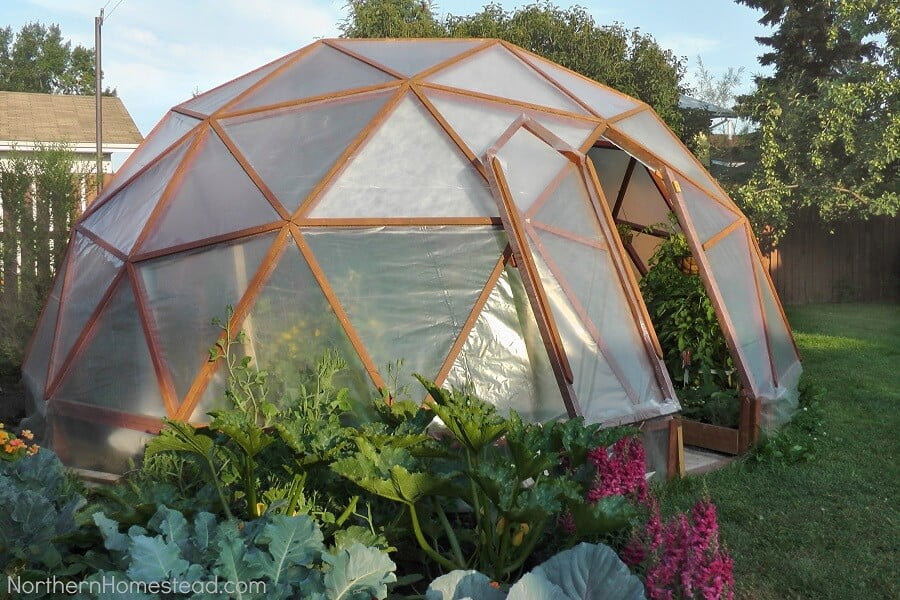
1. Geodesic dome
A dome makes a distinctive garden feature and uses many repeated panels. Its performance depends on the engineering, connections and anchorage; the shape alone does not guarantee superior wind resistance. Work from a design suited to your site rather than estimating the joints from a photograph.
2. Reclaimed-window greenhouse
Old windows can give a greenhouse character, but their sizes, condition and glazing vary. Account for safe handling, old coatings, frame decay and suitable glass placement. Reusing windows may reduce some material costs while increasing fitting and repair work.

3. Plastic-bottle enclosure
A bottle-wall project can be an interesting reuse exercise. It still needs a stable frame and a way to manage gaps, cleaning and weathering. Treat it as a design concept rather than assuming its insulation or weather protection matches a purpose-built greenhouse.

4. CD-case mini enclosure
A small craft enclosure is different from a walk-in greenhouse. Evaluate brittle edges, stability and ventilation, and keep it where it cannot fall or overheat unnoticed. It is not a substitute for rated structural glazing.

5. Lean-to or fold-down enclosure
An enclosure beside a garage or house can save space. Its attachment, flashing, opening mechanism and anchorage must suit the building and weather. PVC hoops and plastic alone do not guarantee that wind cannot move it. Keep exits and service access clear.

Choose a design you can maintain
Compare complete plans or a manufacturer’s installation information before buying. For unusual recycled structures, obtain qualified help where load or attachment details are uncertain. Start with crops suited to the conditions you can actually maintain; the separate winter greenhouse crop guide distinguishes cool-season choices from crops needing more heat and light.