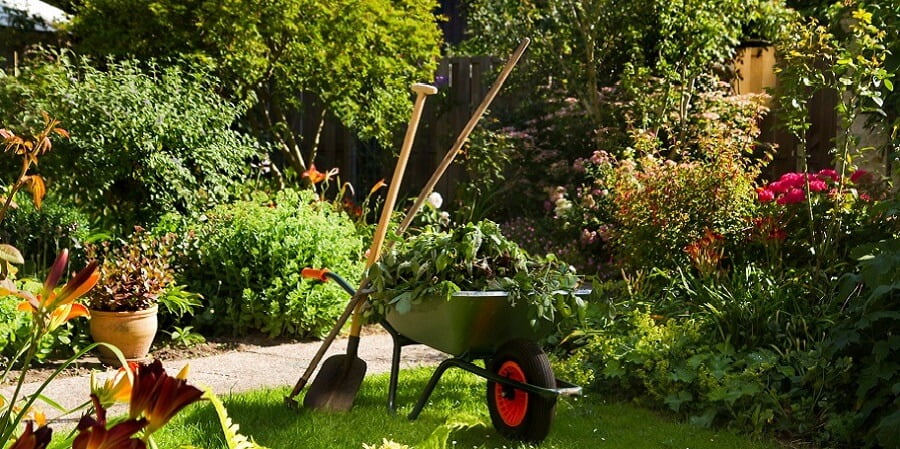
Start spring cleanup when the ground is firm enough to work without leaving ruts. Clear hazards and inspect winter damage first, then schedule lawn treatments for your grass type and climate. Aerating, dethatching, seeding and fertilizing are not jobs every yard needs on the first warm weekend.
1. Walk the paths and check damage
Look for loose paving, raised edges, slippery algae and places where water collects. Clear the route before moving tools and furniture through it. A small surface crack is different from a path that is settling or shifting; investigate drainage or structural problems before covering them with a cosmetic repair.
2. Collect litter and fallen debris
Remove sharp objects, damaged decorations and branches from areas you use. Handle broken glass with suitable tools and protection. Keep useful organic material separate from rubbish, but avoid transporting diseased plant material or invasive seeds into another part of the garden.
3. Organize the shed
Return tools to accessible storage and check handles, blades and electrical leads. Keep garden chemicals in their original labeled containers, away from children, pets and food. Ask your local waste service how to dispose of unwanted chemicals; do not pour them onto soil or into drains.
4. Clean the lawn gently
Wait until the soil is no longer soggy, then lightly remove matted leaves and debris. Avoid scalping the grass or aggressively raking soft turf. University of Minnesota Extension’s spring guidance emphasizes patience and gentle cleanup for northern lawns, with major renovation generally better left until later in the growing year.
Set the mower height for your actual grass species and remove no more than about one-third of the blade at one mowing. A healthy lawn does not need to be cut extremely short to “wake it up.”
5. Decide whether renovation is needed

Compacted soil, bare patches and excessive thatch are different problems. Identify the problem before renting a machine. Maryland Extension distinguishes cool-season and warm-season care: work that helps actively growing zoysia may be badly timed for a cool-season lawn approaching summer heat.
Check your local Extension calendar for seeding, core aeration or dethatching. Thin thatch is not automatically harmful, and many lawns do not need annual dethatching. Plan watering and follow-up care before disturbing a large area.
6. Base fertilizer on need
Use a soil test and locally appropriate lawn recommendations rather than applying a fixed dose after every cleanup. Grass type, season, product concentration and local nutrient rules all matter. Avoid applying to frozen ground or where rain will carry it into drains, and sweep stray granules off paving.
Our lawn fertilizer guide can help with the basic terminology; the product label and local recommendations should determine the actual application.
7. Clean and inspect outdoor furniture
Check joints, fasteners, fabric and surfaces before putting furniture back into service. Follow the material and manufacturer’s cleaning guidance, testing a gentle method first. Pressure washing, soaking or an abrasive cleaner can damage some finishes and cushions. Let cleaned pieces dry thoroughly before covering or storing them.
See our guide to cleaning outdoor furniture for material-specific starting points.
8. Tidy beds selectively
Clear litter and material smothering emerging plants, but do not strip every bed down to bare soil. Assess what is growing before pulling or cutting, particularly where bulbs and perennials have not yet emerged. Keep mulch away from trunks and plant crowns, and avoid piling new mulch over an already thick layer.
Choose a small working area at a time so you can distinguish new shoots from weeds. Leave undisturbed habitat where it is compatible with the bed and its maintenance needs.
9. Check outdoor lighting
Inspect fixtures for damage and obvious moisture entry. Switch off the appropriate power before maintenance, follow the fixture instructions and use replacement lamps of the specified type. Damaged wiring, repeated tripping or water inside electrical equipment calls for a qualified electrician. Keep cables out of paths and mower routes.
10. Prepare the grill

Follow your grill’s manual for cleaning, fuel-system checks and replacement parts. Remove grease and loose debris from the cooking area, and inspect grates and utensils for damage. Do not assume a household abrasive or improvised foil scrubber is suitable for every coating. Check the cooking surface for loose cleaning fragments before use.
Operate the grill only in its intended outdoor location with the required clearances, away from furniture and combustible material.
11. Service tools and make a seasonal list
Clean soil from hand tools, dry them and address loose handles or damaged cutting edges. Follow the equipment manual before servicing powered tools, including isolating their power source. Put unsafe equipment aside until repaired.
Finish with three short lists: hazards to fix now, ordinary maintenance for the next few weeks, and lawn or planting jobs that need a different season. This keeps spring cleanup manageable without turning every possible treatment into a mandatory task.