Garden sculptures can create a focal point without filling every empty space. Choose a scale and style that suits the planting, then check the exact product’s material, mounting and outdoor-care requirements. These eleven design ideas preserve the original selection’s themes; they are not verified current product specifications.
1. Heron sculpture

A tall bird silhouette can complement grasses or a pond-side planting. Position it where its legs and beak do not project into a route. Check the base and anchoring instructions so the narrow shape stays stable. A decorative bird does not replace habitat for living wildlife.
2. Abstract metal form

A ribbon or flame-like outline can be read differently from different angles. Try its proposed position before fixing it down, considering the background and reflected light. Verify the actual metal and finish, and follow the artist’s care instructions instead of assuming year-round exposure is harmless.
3. Solar lighthouse

A miniature lighthouse can add a coastal theme and a decorative light effect. Confirm charging, operating modes and weather limits on the exact product. Treat its glow as decoration rather than dependable path or pool lighting. Keep it clear of standing water unless expressly rated for that exposure.
4. Mary statue

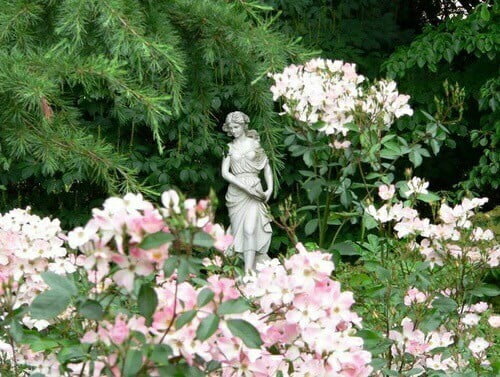
A religious figure can form the focus of a quiet garden corner. Choose a stable base and a size that leaves room around the planting. Stone-look resin and solid stone have different weights and care requirements; appearance alone does not establish frost resistance.
5. Sentinel lion

A lion can frame an entrance, either singly or as a pair. Check weight, base dimensions and any securing requirements before placing it on a pedestal. Do not describe a resin figure as capable of withstanding every extreme-weather event simply because it resembles stone.
6. Cherub and cat

A small narrative scene suits a spot where visitors can see its details close up. Keep it outside the walking line and make maintenance access easy. Inspect fine projections for damage and follow storage guidance if the material is vulnerable to freezing weather.
7. Cat and butterfly

An animal scene can create a playful focal point among low plants. Match the scale to the surrounding growth so it remains visible as the bed fills out. Verify the material and finish rather than repeating an unconfirmed metal or weight specification.
8. Kinetic metal sculpture

Movement can provide interest when flowers are out of season. Allow clearance around moving parts and secure the support as instructed. Choose a location away from people, branches and windows. Wind-powered movement does not mean the sculpture is safe in unlimited wind.
9. Spherical wind ornament

A rounded spinner offers a different silhouette from a flat kinetic piece. Check how its moving sections are assembled and maintained. Keep fasteners accessible for inspection. A weather-resistant description is not a promise that bearings, paint or metal never need attention.
10. Turtle ornament

A low turtle shape can sit beside a bed without dominating the view. Place it where it will not become a trip hazard or be hidden from someone mowing. Treat it as an ornament, not a toy or stepping stone unless it is specifically designed for that use.
11. Abstract frog pair

Cartoon-like frogs can suit an informal garden or container grouping. Compare the finish with the colors around them and leave enough space to clean the display. Avoid assuming a moss-like or stone-like surface makes the underlying material immune to weather damage.
Before you choose
Start with one focal piece and let the planting provide its setting. Check drainage around the base, secure placement and the maker’s seasonal-storage advice. Retain access for cleaning and inspection. For other approaches, see our DIY garden projects and outdoor solar-light formats.