Choose outdoor solar lights by the job they must do: mark an edge, illuminate a walking route, respond to motion or decorate a seating area. A light that looks attractive in a product photograph may not provide enough usable illumination for a step or entrance. Test the proposed arrangement after dark before relying on it.
The twelve ideas below compare lighting formats. Runtime, brightness, weather rating and mounting method depend on the exact current product. Check its manufacturer documentation rather than applying the specifications of an old listing to every light in that category.
1. Garden step lights
Low-mounted lights can help reveal a change in level when their beam reaches the tread appropriately. Check coverage from the direction people approach, avoiding glare that hides the edge. Decorative glow alone is insufficient where safe footing depends on reliable lighting; plan a dependable alternative if charging is inconsistent.
2. Wall lights with motion sensors
A motion-activated wall light can illuminate an entrance when needed. Compare detection coverage, mounting height, delay settings and how the light behaves when the battery is low. A sensor light is one part of a lighting plan, not a complete security system or a guarantee against intrusion.
3. Solar pathway stakes
Stake lights can mark a path or border. Keep them out of the walking surface and mowing route, and choose spacing by actual beam coverage rather than the number supplied in a package. Check whether the panel will be shaded by the plants as they grow.
4. Lighted wind spinners
A lighted spinner creates movement and decoration. Its mounting point must support the product and anticipated wind exposure. Keep moving parts clear of branches and people. Colored effects are for atmosphere; they should not be confused with illumination for finding obstacles.
5. Adjustable spotlights
A directional light can highlight a selected feature. Aim carefully so the beam does not enter windows or create glare for neighbors. Compare the brightness and runtime in the mode you intend to use. A long quoted runtime at a dim setting does not establish the same duration at full output.
6. Low landscape discs
Low-profile lights can outline beds or other edges. Check the allowed mounting surface, drainage and exposure before installation. A ground-level product is not automatically rated to be stepped on, driven over or submerged. Leave access for cleaning and battery service where the design permits it.
7. Decorative tube lights
Tube-shaped lights can add a repeated visual pattern beside a seating area. Decide whether you want a subtle marker or useful task lighting; the two serve different needs. Check the finished height and stability so a decorative feature does not become a trip hazard.
8. Fence-mounted downlights
Small downlights can illuminate a fence line or nearby surface. Use the approved fixings and mounting orientation, and ensure the panel receives light. Sheltering the fixture beneath a deep overhang may protect it from rain while also preventing adequate charging.
9. Portable solar lanterns
A portable lantern can move between a table and another permitted use location. Check charging options, brightness modes and the actual outdoor rating. An inflatable or lightweight design is not automatically waterproof, maintenance-free or suitable as the only emergency light.
10. Separate-panel motion lighting
A unit with a separate solar panel may let you place the panel in sun while locating the light where it is needed. Check supplied cable length, permitted routing and mounting instructions. Keep cables away from sharp edges and walking routes; do not assume every cable extension is compatible.
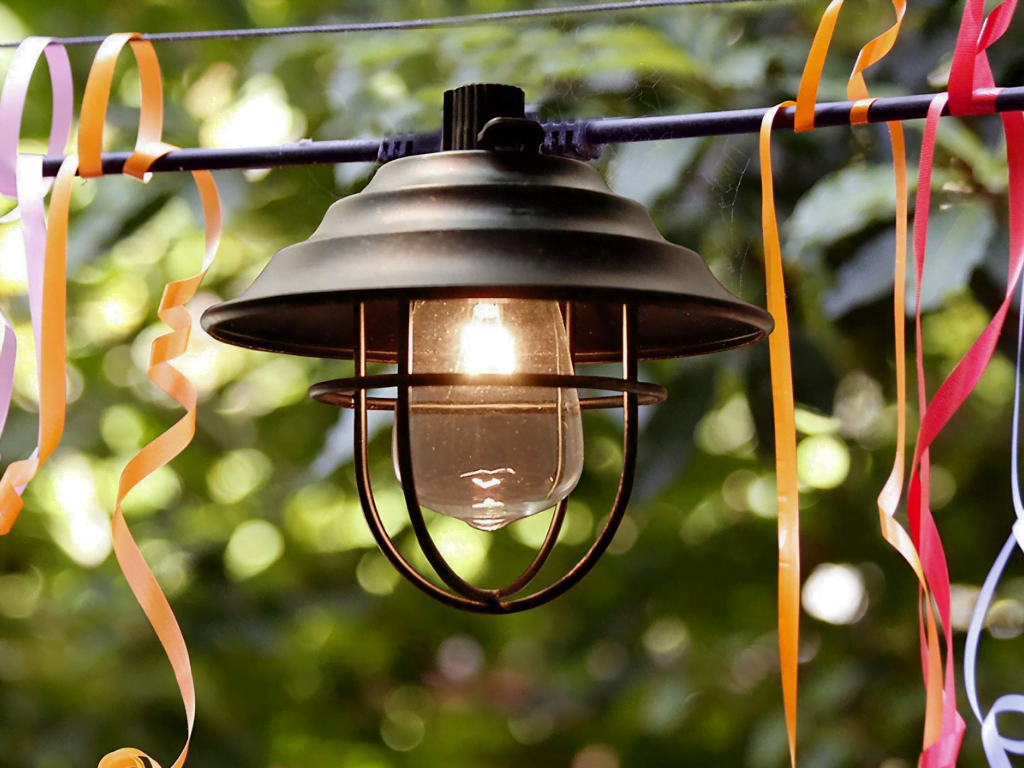
11. Solar string lights
String lights can define a patio or pergola. Use suitable supports without tensioning the wiring beyond the product instructions. Check outdoor suitability, approved replacement parts and whether the panel location works throughout the season. Do not promise that all remaining lamps stay lit if one fails; circuit designs differ.
12. Multiple motion lights around a route
Several fixtures may cover turns or separate entrances better than one bright source. Test the sensor transitions while walking the route and check for dark gaps. Avoid unnecessary repeated triggering from branches or activity outside the area you intend to light.
Check charging, service and light spill
Solar photovoltaic cells turn incoming sunlight into electricity, as the Department of Energy explains. Assess panel exposure before purchase and after seasonal changes. Weather, shading, operating mode and battery condition affect practical results; an all-night claim is not a guarantee for every yard.
Follow the manufacturer’s cleaning, storage and battery-replacement instructions. Use only the specified battery type and charging method. Stop using a damaged unit, and do not interpret weather resistance as permission to immerse it or leave it in standing water.
DarkSky and the Illuminating Engineering Society’s lighting principles favor useful, targeted, restrained lighting with appropriate controls. Aim light where needed and turn decorative lighting off when it serves no purpose. For craft projects around suitable complete lighting units, see our separate DIY solar decoration ideas.