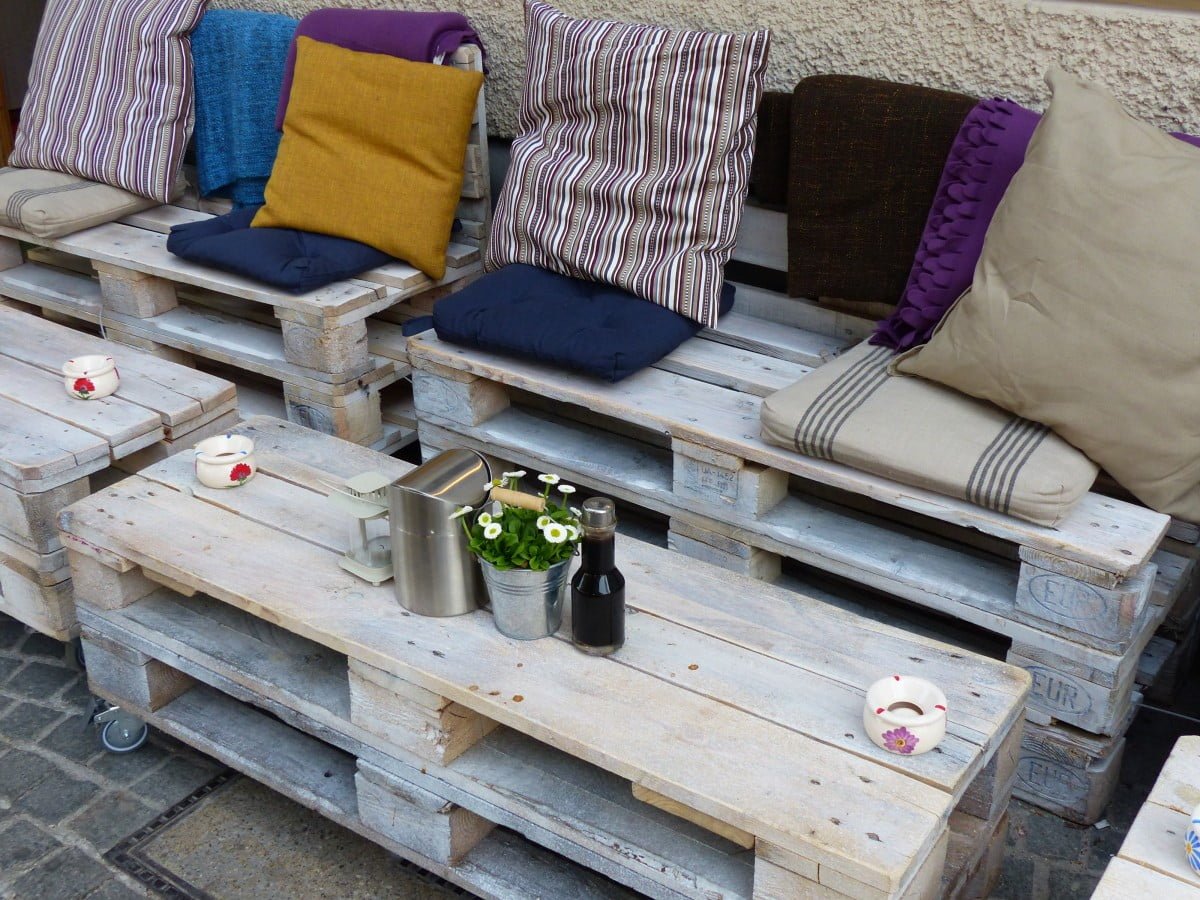
DIY backyard furniture can refresh an outdoor space, but the project needs to match your materials, tools and experience. Reusing a finish or adding a cushion is different from designing a chair that must safely support a person. These 14 ideas preserve the appeal of reclaimed materials while separating decorative work from load-bearing construction.
1. A painted reclaimed-wood table
Use sound wood with a known history and a suitable table design. Choose a color scheme that connects otherwise mismatched pieces. Pallet markings do not establish the wood’s previous cargo or structural strength, so do not assume any discarded pallet is suitable furniture stock. Remove exposed fasteners and damaged material before finishing.
2. A surround for an insulated cooler
Build the decorative surround around a proper insulated cooler, keeping its lid, drain and cleaning access usable. Plan the support for the weight when full, not just the empty box. A wooden container alone will not keep drinks cold, and meltwater should not collect inside inaccessible timber joints.
3. A farmhouse-style side table
A reclaimed milk can can inspire the appearance, but a tabletop must be securely supported and resistant to tipping. Do not rest a broad top loosely on a narrow container or rely on unspecified glue. A conventional table frame with a decorative can beneath it can create a similar effect without making the ornament the support.
4. A rustic chair built from an appropriate plan
Log and branch furniture requires suitable timber, joinery and attention to stability. Tying branches together is not a dependable chair design. Use a proven plan and competent woodworking help, or refinish an existing sound chair to get the rustic look with less structural work.

5. A reclining lounge chair
Use a design intended for reclining loads, including the backrest mechanism and arm connections. Compare the full footprint with the available space before cutting material. Our pallet patio furniture ideas discuss planning and material selection; a photograph alone is not a construction specification.

6. A restored rocking chair
Repairing a sound rocker is often more manageable than inventing one from cable-reel ends and bent pipe. Inspect the runners, joints and seat, and choose a finish for its actual exposure. Rocker geometry affects balance, so use a suitable tested design if building from scratch.
7. A weather-suitable ottoman
Match a sturdy footstool frame with a removable outdoor cushion. Use filling intended for the conditions rather than tightly packed old rags that remain damp. Painting an old tire does not establish that a tire-based seat is durable, stable or suitable for the intended users.
8. A crate-style storage unit
A sound crate can organize lightweight garden items when protected appropriately. Keep it as storage unless it is actually designed to support sitting loads. Cutting one side out of a plastic crate weakens it; adding a cushion does not turn it into a safe chair.
9. A movable serving cart
Use a stable frame and casters specified for the loaded cart and surface, including suitable brakes. Keep it off slopes and steps, and avoid making a tall narrow unit top-heavy. Movable tables can be useful for serving, while seats on improvised wheels present different stability concerns.
10. A narrow outdoor console
A shallow freestanding table can fit beside a wall without taking much room. If wall-mounted, use supports and fixings appropriate to the structure and load. Cutting an old table in half and tying it to a fence does not provide a dependable attachment.
11. A coordinated conversation set
Bring unrelated sound chairs and a table together with compatible finishes and a repeated cushion color. Check seat heights and clearances before committing to the arrangement. This achieves a reused-material look without constructing chairs from tires, sticks and netting of unknown strength.

12. A ventilated cushion-storage box
Choose weather-suitable materials and a design that controls rain entry while allowing dampness to escape. Store cushions only when dry. Use appropriate lid hardware and consider pinch and entrapment risks where children have access. A storage lid is not a bench unless the box is designed for that load.
13. A freestanding reading nook
A comfortable chair, small table and shade can create a nook without a suspended seat. If a hanging chair is essential, use a compatible rated stand or professionally assessed support and follow the installation instructions. Drilling holes in an improvised round frame and hanging it from a tree is not enough.
14. An outdoor daybed
Use a frame designed for the intended occupancy, with appropriate support beneath the cushion. An indoor bed frame may not tolerate rain or outdoor humidity. Choose cushions and covers for the location and make storage part of the plan. Keep any canopy separate from unsupported assumptions about the bed’s frame.

Finish the project for its location
Use compatible fasteners and coatings, follow curing and ventilation instructions, and inspect old paint before sanding. Smooth sharp edges, but remember that sanding and staining do not fix weak joints. Check furniture periodically for movement, corrosion and water damage. Start with a modest project you can complete properly rather than treating every reclaimed object as ready-made seating.