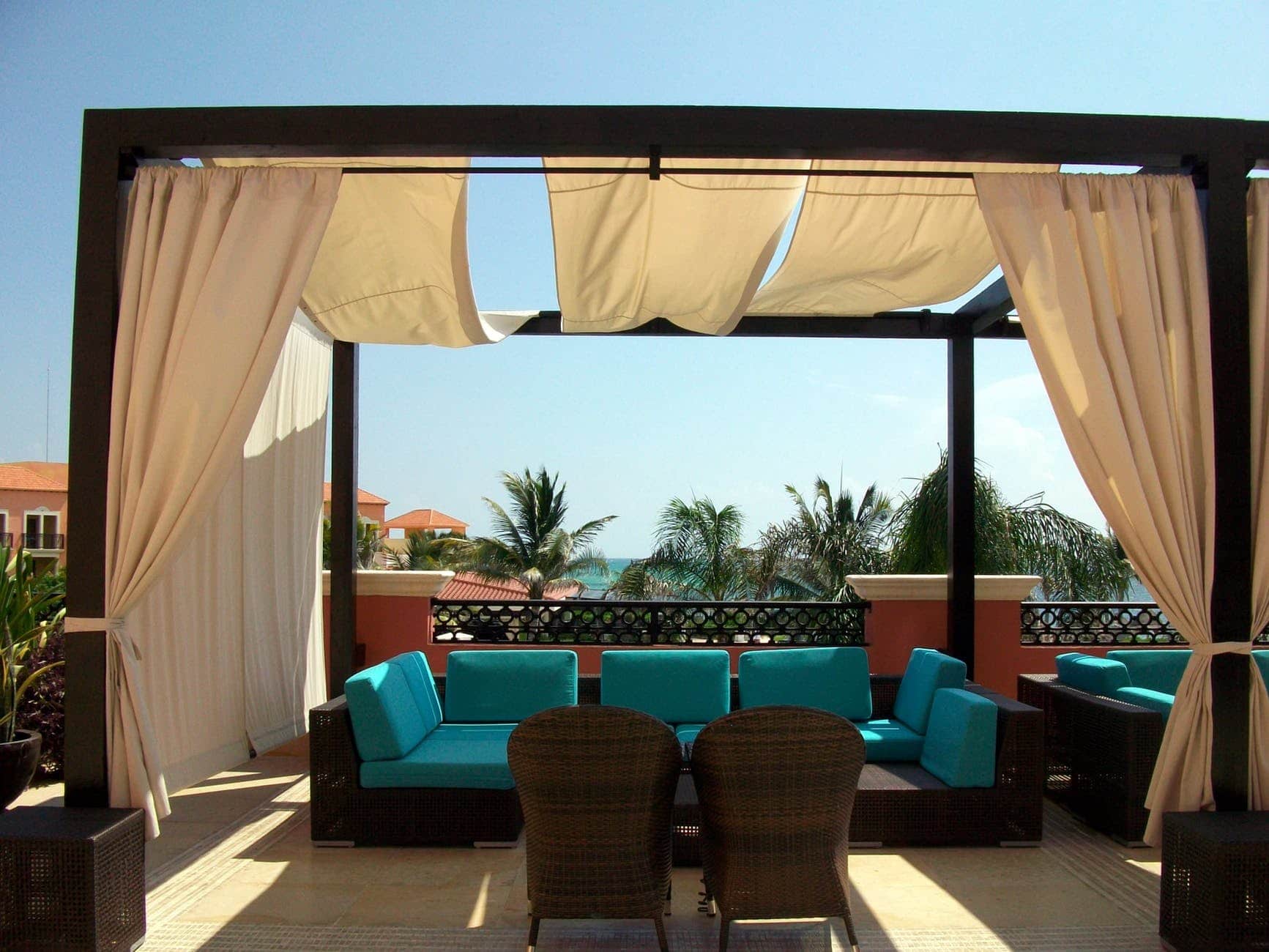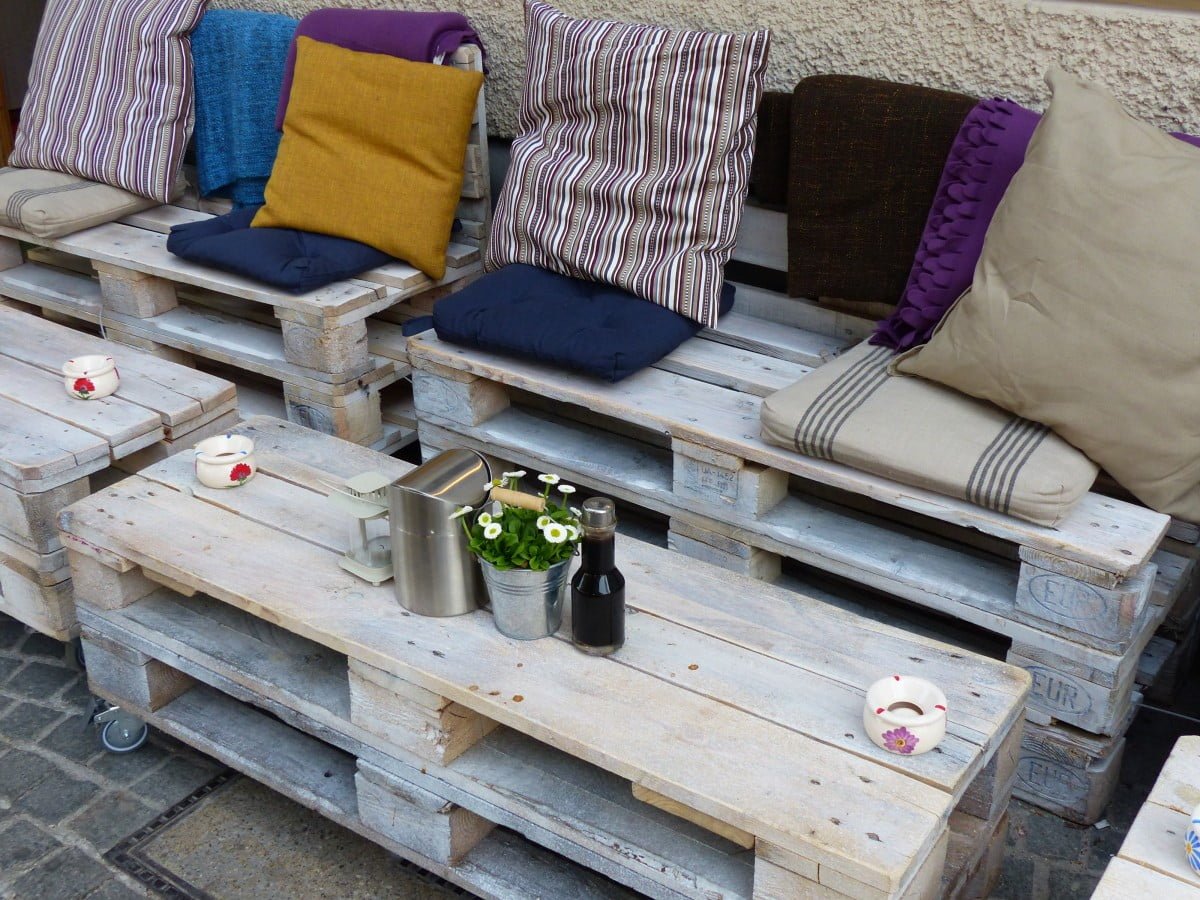
Pallet-style furniture can give a patio a relaxed, rustic appearance. The useful starting point is the layout: seating height, clear walking space, cushions and a table that is easy to reach. A photograph can inspire those choices, but it does not show whether the frame and connections are safe to build.
The five ideas below retain different arrangements and color schemes. For seating or a daybed, use a furniture plan with a specified structure and suitable materials. Do not assume that stacking shipping pallets creates a dependable seat simply because the stack feels solid while empty.
Choose materials and a buildable plan first
Use wood with a known history. Reject damaged, stained, moldy or contaminated pallets and avoid material whose previous contents are unknown. Sanding, washing or painting does not establish that contaminated wood is suitable for furniture. An ISPM 15 wood-packaging mark concerns phytosanitary treatment; it is not certification of a pallet’s cargo history or finished furniture strength.
A practical alternative is to use known lumber for the load-bearing frame and suitable reclaimed boards for decorative cladding. Follow the plan’s specifications for joints, fasteners and support. Check for exposed nails, splinters and damaged boards before use. Outdoor finishes can slow weathering, but they cannot repair weak timber or make every wood species rot-proof.
Measure the site and the intended cushions before committing to the frame dimensions. Leave room to get in and out of the seats and to move around the table. For a balcony or raised deck, confirm permitted loads and restrictions with the building owner or an appropriate professional; account for furniture, occupants and planters together.
1. A white-and-red balcony-style corner
Use two compact seats with a small table to create a conversation corner. White-painted timber and red cushions give the arrangement a strong contrast, while a black accent cushion can tie the pieces together. The same palette works on a ground-level patio without requiring a large furniture set.
Choose the finished seat height from the plan and cushion thickness rather than adding loose pallet layers until the height looks right. If you want a movable table, its frame, caster attachments and locking wheels need to suit the intended load and surface. Keep the table out of the walking route and never use an unrated table as extra seating.

2. A natural-wood terrace with green cushions
For a larger terrace, repeat a natural wood tone across the seats and table. Green cushions work with surrounding planting and make the arrangement feel less formal. Keeping the finish and cushion style consistent can make separate pieces look like one set.
Decide whether the table is for drinks or meals before choosing its height and legroom. A low lounge table is not automatically comfortable for dining. Select a smooth, cleanable top and follow the finish maker’s intended-use guidance. Use outdoor cushions that fit the support surface, with a dry storage place for periods when the furniture is not in use.

3. An outdoor living room against a wall
A wall or fence can provide a backdrop for two loungers and a small table. A light timber finish, bright cushions and a painted background create a defined sitting area without filling the whole yard. Keep the furniture structurally independent unless its plan specifically includes an appropriate wall connection.
Use wall-mounted planting only where the wall, anchors and brackets can support the full wet weight. Avoid placing unsecured pots or heavy decorative items above seats. A small freestanding plant stand can provide the same green accent with easier access for watering and maintenance.

4. A shaded daybed
A daybed needs a purpose-designed frame capable of supporting people across its whole surface. Four matching pallets double-stacked side by side are not a substitute for that design. Work from the desired mattress dimensions and leave clearance for entry, bedding and a small side table.
A dark finish with bright cushions gives this arrangement a distinct look. Choose a cushion or mattress intended for its exposure, and arrange storage so it can dry. Position shade to suit the time of day you use the bed. Keep umbrellas independently secured and avoid a site where furniture obstructs an exit or access route.

5. Facing benches for an outdoor café feel
Two facing rows of seats with a central table create a sociable layout for a longer patio. Plan the distance between benches around actual seated legroom and access at the ends. A small-scale arrangement may work better than reproducing a large photograph in a narrow space.
Repeat cushions or a simple color palette along both benches. Keep planters at the edges where they will not reduce the walking space. If guests will eat here, choose the seat and table heights together; a comfortable lounge arrangement can be awkward for meals.
Keep the finished furniture serviceable
Inspect the structure and connections as it weathers. Repair looseness, splitting or deterioration before further use. Follow the finish manufacturer’s preparation and renewal instructions, and keep cushions dry when stored. For other construction approaches, see our general DIY patio furniture ideas; the pallet layouts here remain a separate design choice.