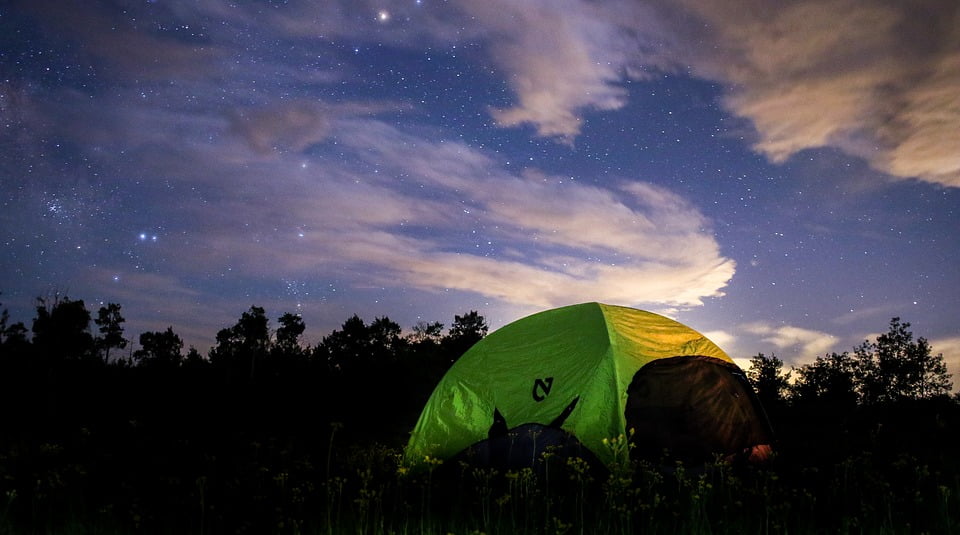
A backyard camping night can give children the fun of a tent and an evening outdoors with home close by. Keep the plan simple and flexible: moving indoors because of weather or an uncomfortable sleeper is part of the convenience, not a failed trip.
1. Use the camping gear you already have
Check the tent and sleeping equipment before the evening starts. Choose a level site clear of obvious hazards, low spots and damaged overhead branches. Keep away from pools, equipment and cooking areas. Use battery-powered lighting inside the tent.
Never use charcoal or fuel-burning cooking equipment in a tent. The Consumer Product Safety Commission warns that charcoal in enclosed spaces can cause fatal carbon-monoxide poisoning.
2. Set up camp together
Let children help with age-appropriate jobs while an adult follows the tent instructions. Keep guy lines and stakes out of walking routes where possible and make them visible. Put bedding in place and explain where shoes, lights and water will go.
Agree on supervision, bathroom access and how to wake an adult. Check the forecast and keep a clear route indoors. National Weather Service guidance calls for safe shelter when thunder is heard and waiting at least 30 minutes after the last thunder. A tent is not lightning shelter.
3. Take a short discovery walk
Walk around the neighborhood or a familiar nearby park with an adult. Bring water and choose a route that suits the youngest participant. Look for bird activity, interesting leaves or changes in the evening sky without touching unknown plants or wildlife.
A simple map or compass can become part of the game, but adults should remain responsible for the route. Stay on permitted paths and away from water edges and traffic.
4. Learn a small outdoor skill
Try identifying a familiar constellation, making a nature journal or following a short treasure map. Children can help plan the activity and explain what they noticed. Avoid tasting plants or handling unfamiliar insects.
A fire is optional. If one is permitted and conditions are suitable, a responsible adult should manage it with proper equipment and supervision. Do not assign children the job of building or tending a dinner fire. A no-fire evening with a ready-made snack can be just as enjoyable.
5. Share dinner and stories
Bring food out shortly before eating and return perishables to appropriate storage. Put entertainment screens aside if everyone is comfortable doing so, but keep an adult’s phone available for weather alerts and emergencies. Choose funny or gentle stories if scary ones would make sleeping harder.
End with a simple cleanup and a check that everyone is comfortable. The useful part of the staycation is time together, not proving that you can stay outdoors regardless of the conditions.