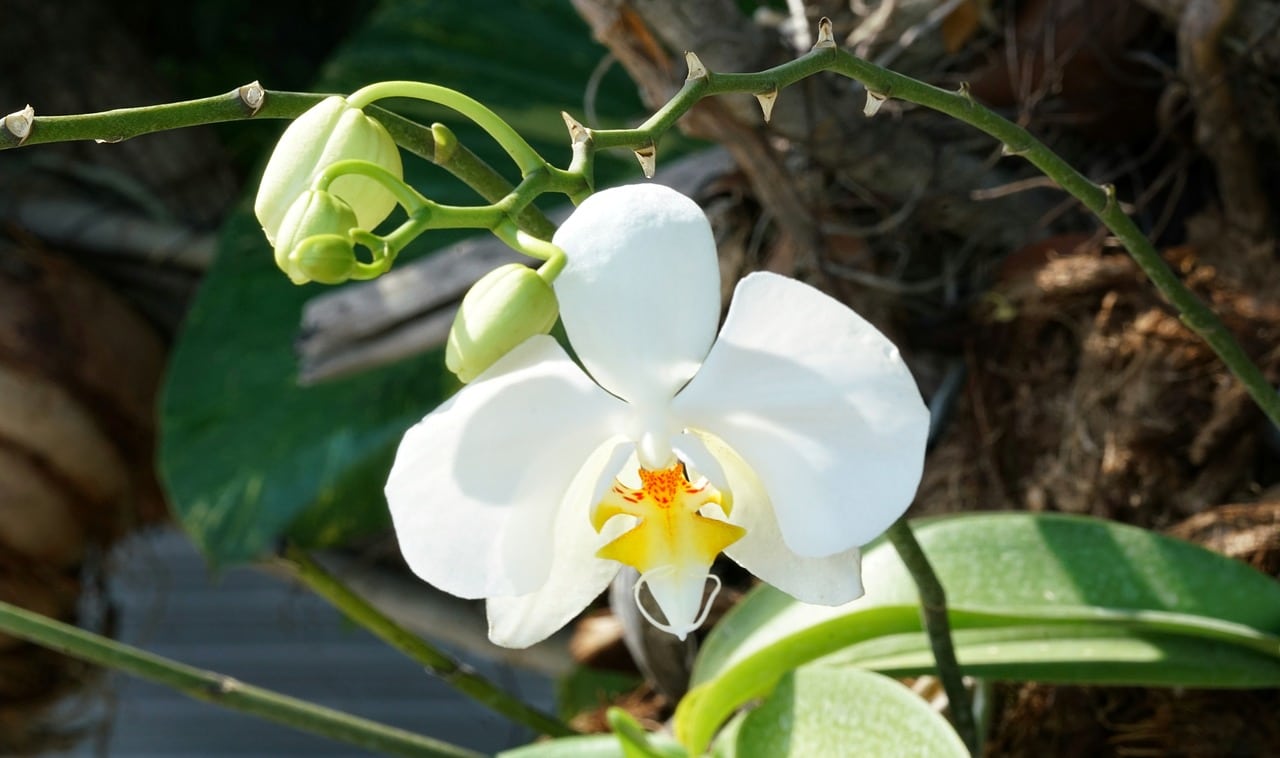
Choose orchid potting mix for the kind of orchid you have and the conditions in which you grow it. Many familiar houseplant orchids need substantial air around their roots, but orchids are a diverse group. A bag labeled “organic potting soil” is not automatically an appropriate substitute for orchid medium.
Identify the orchid before buying
Find the plant’s name on its label or ask a specialist grower to identify it. A moth orchid, or Phalaenopsis, does not establish a universal care rule for terrestrial orchids or every other genus. Start with guidance for that plant, then consider the pot size, room conditions and your watering habits.
A product’s reviews are secondary to that fit. Look for a clear ingredient list, particle grade and intended use, and inspect whether the material is sound rather than already decomposed.
Bark, moss and other components
The American Orchid Society’s repotting guidance describes several media and combinations. Bark-based mixes can include components such as charcoal, perlite and sphagnum. The balance and particle size affect how a mix behaves; one recipe is not right for every orchid.
Long-fiber sphagnum moss is not interchangeable with finely milled sphagnum peat. A plant in moss may need a different watering approach from one in a coarse bark mix. Do not keep the old watering calendar unchanged after switching media.

Image Source: Pixabay
Fine versus coarse mix
Consider the roots, container and drying conditions rather than choosing “fine” for every young plant and “medium” for every mature one. A specialist orchid supplier can help select a grade for your particular plant. Ask how the mix should be prepared before use; some ingredients require moistening or other preparation.
If mixing your own, use horticultural materials and a recipe recommended for the orchid and setting. Record the ingredients and proportions so you can assess the result. Do not add fertilizer or lime simply because another general potting-soil recipe contains them.
Water and drainage
Use a suitable container with drainage and avoid leaving it standing in water inside a decorative outer pot. Evaluate moisture within the medium, not just at its exposed surface. Pot material, air movement, light and temperature affect drying.
Follow the orchid’s requirements rather than a universal instruction to water immediately before or after complete drying. If roots decline, examine drainage, medium condition and watering together. More water or fertilizer is not an automatic cure.
When to replace the medium
Decomposing medium or a plant that has outgrown its container can be reasons to repot. Lack of flowers alone does not prove that fresh mix is needed. Check light and other care conditions, and use species-specific advice on timing and root handling.
Keep tools clean, handle roots carefully and use an appropriately sized pot. A much larger container is not automatically better. Take advice if the plant has substantial root loss or an uncertain disease problem before carrying out extensive cutting.
Match the rest of the care
Light and feeding needs also vary. Window direction alone cannot establish whether a spot is suitable: glazing, shade and distance from the window matter. Use the plant’s care guidance and fertilizer label rather than a fixed schedule for every orchid.
Inspect new and established plants for pests. Identify the problem before applying a treatment, and use only products labeled for the plant and pest. A good medium is one part of care, not a replacement for suitable light, watering and observation.