The Uxcell ABS 360-degree rotary sprinkler described here uses a rotating spray assembly on an H-shaped base. It is a portable design to evaluate for an open planting area where a circular pattern makes sense. The exact older model’s current manufacturer specifications were not verified, so the former weight, distance and application-rate claims should not be treated as measured performance.
What the design offers
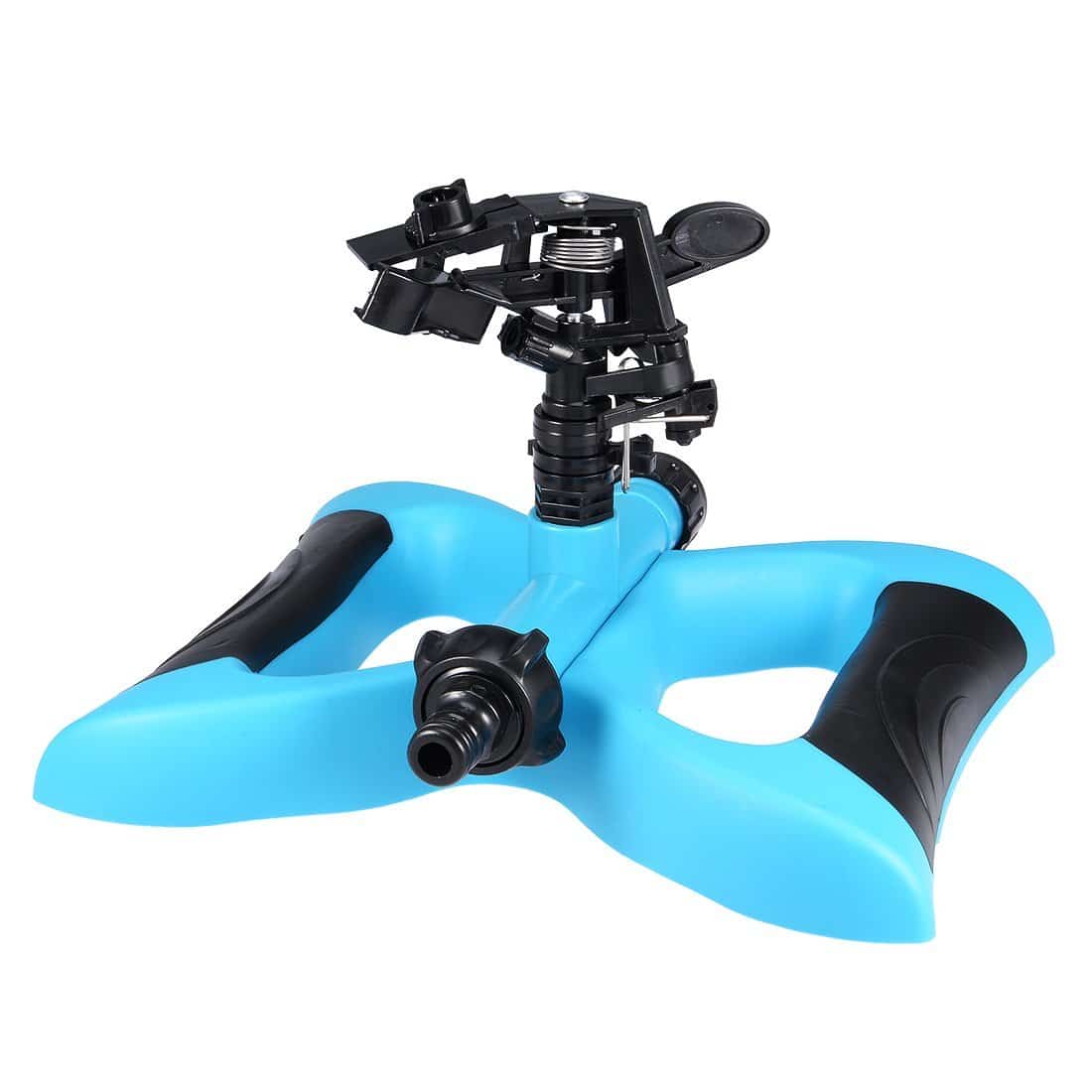
A rotary sprinkler moves its streams around the base instead of sweeping a row of jets back and forth. That can be convenient for a roughly circular area. It is less naturally suited to a narrow rectangle bordered by paving, where a broad circle may waste water outside the planting.
The ABS description identifies a plastic material, not a durability rating. Lightweight construction can make a sprinkler easy to carry between positions, while also making careful hose placement important. The H-shaped footprint may help support the unit, but no base shape guarantees that it will never tip or move.
Confirm the listing before comparing prices
Ask for an exact item number and matching instructions, especially if a marketplace listing combines several similar sprinklers. Check the hose connector, included adapters, permitted pressure and any stated coverage conditions. A photograph alone cannot establish those details.
The older article quoted a four-to-five-meter spray distance without resolving whether that meant radius, diameter or the conditions used to measure it. Do not use that ambiguous number to lay out a watering plan. Likewise, an old 9.6-ounce weight and a count of two favorable reviews are not enough to assess current stock or long-term reliability.
Try the pattern before committing to a long run
Set the base on firm, level ground with enough slack in the hose to prevent sideways pulling. Connect it according to the supplied instructions, then start the water and watch whether the rotating assembly moves freely. Turn the supply off before repositioning the unit or examining a leak.
Check where the water lands throughout a full rotation. Look for a dry center, gaps near the edge, spray striking obstacles and runoff onto hard surfaces. If you cannot fit the pattern to the space, try a different position or sprinkler type rather than relying on extra runtime.
Do not assume that all rotary sprinklers apply one inch of water per hour. Application varies with the equipment and operating conditions, and your plants may need a different amount depending on soil and recent rain. Measure and observe your own setup instead of using a generic rate as a schedule.
Care and practical limits
Keep the sprinkler out of mowing and walking routes. Inspect the base and inlet for cracks before reuse, and follow the actual instructions for cleaning blocked openings and draining before storage. Avoid enlarging nozzles or forcing moving parts as a shortcut to stronger spray.
This lawn-sprinkler description is not a basis for roof-cooling use. A roof installation involves different access, drainage and building considerations and should not be inferred from an unverified marketplace claim.
Is it suitable for your yard?
Consider it only after confirming that the actual unit’s circular pattern, fitting and operating requirements match the intended area. A small purchase price does not prove poor quality, and a higher-priced alternative does not automatically last longer. Look for clear product documentation and practical return terms rather than a confident rating unsupported by testing.
For a comparison of circular, oscillating and other designs, see our lawn sprinkler selection guide.