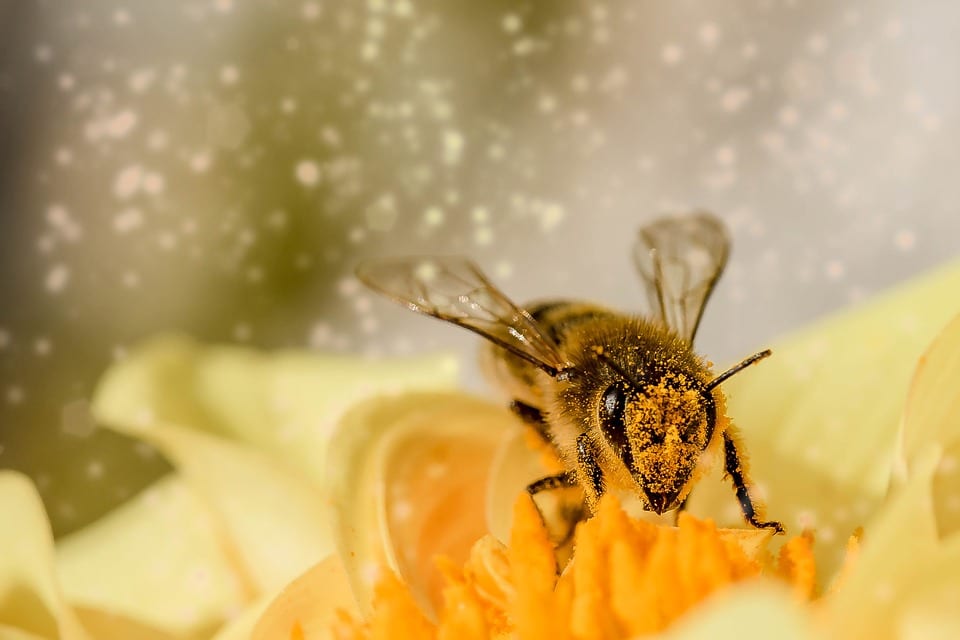
Bees matter because their flower visits help many plants produce seeds and fruit. Honey bees also provide honey and beeswax, but they are only one part of a much larger bee community. Native solitary bees and bumble bees make important contributions too.
What happens when a bee visits a flower?
As a bee collects food, pollen can move between flowers. Successful pollination allows fertilization in plants that need that transfer, contributing to seed or fruit production. The result depends on the plant, compatible pollen and the effectiveness of the visiting insect.
For a gardener, this distinction matters. A plant can flower abundantly and still set little fruit if its pollination requirements are not met. Pollination is one part of fruit production alongside weather, plant health and other growing conditions.
How bees contribute to our food
Many fruits, nuts and seed crops benefit from bee visits. However, it is misleading to say a fixed share of every dinner plate was produced by bees, or that all vegetables would disappear without them. Crops differ in their dependence on animal pollination; some are wind-pollinated or self-pollinating.
Likewise, the part we eat matters. Pollination used to produce seed for a leafy crop is different from pollination needed for an individual fruit. USDA’s discussion of native and managed bees explains why different pollinators matter to agriculture.
Honey bees and wild bees have different needs
Managed honey-bee colonies can be moved to flowering crops and provide products such as honey and wax. Many wild bees have very different nesting habits and do not live in a large honey-producing colony. Supporting bees therefore involves more than adding a hive.

Image Source: Pixabay
The USDA Forest Service’s Bee Basics introduces the variety of native bees. Nesting sites and a succession of appropriate flowers are important parts of their habitat.
What threatens bees?
Habitat loss, limited food resources, pesticide exposure, parasites and diseases can affect bees. The importance of each pressure varies by species and place. Honey-bee colony problems should not be treated as a population count for every wild bee.
USDA research on native bees in agricultural pollination considers both habitat and the challenges facing managed colonies. Avoid sweeping claims that every urban area is useless to bees or that every pesticide affects all bees in the same way.
Practical ways to help in your yard
- Choose regionally suitable flowers that bloom at different times.
- Preserve appropriate nesting habitat, such as some undisturbed ground or stems, where it fits the site.
- Identify a plant problem before treating it, and follow pesticide label restrictions that protect pollinators.
- Observe visiting insects without handling them or disturbing nests.
If a nest is beside a busy doorway or someone in the household has a serious sting allergy, seek qualified local advice. Protecting pollinators does not require accepting an unmanaged safety problem. Flowers and nesting habitat can be planned with everyday use of the yard in mind.