Start spring lawn care by letting saturated ground dry, identifying your grass type and checking what actually needs repair. A lawn emerging from winter does not automatically need aeration, fertilizer and reseeding on the same weekend. Work when the soil and grass can tolerate it, using a local schedule for your climate.
Keep traffic off wet ground
If footprints sink into the surface or equipment leaves ruts, postpone mowing, raking and aerating. Pushing a fork into waterlogged turf is not a reliable drainage repair. Walking and working on wet soil can make compaction worse.
Note where water collects and how long it remains after rain. Check whether runoff from a downspout, a low area or a blocked drainage route contributes. Recurring standing water needs its cause assessed; repeatedly punching holes or spreading a sand, loam and peat mixture does not establish that the drainage problem has been solved.
Maryland Extension’s lawn maintenance guidance explains why wet turf is vulnerable and why maintenance timing depends on the grass. Seek local advice for persistent drainage problems before changing grades or directing water elsewhere.
Clean up gently once the surface is firm
Remove sticks, litter and stones before mowing. Loosen matted leaves gently instead of vigorously raking soft turf. A light scattering of leaves and a thick wet mat are different situations; our guide to raking leaves helps explain that distinction.
Do not assume brown grass or a leafless shrub is dead. Some plants remain dormant well into spring. Compare recovery with the same species nearby, inspect for damage and obtain an identification before removing an uncertain plant.
Match mowing and repairs to the grass
Find out whether you have cool-season or warm-season turf. Their active growth periods differ, so one calendar date cannot guide every lawn. Begin mowing when growth warrants it, with a sharp blade and the recommended height for your species. Avoid scalping the lawn to remove its winter color.
For a bare patch, investigate shade, traffic, drainage or other damage before buying seed. Use grass suited to the site and a locally recommended establishment window. Check compatibility before combining seeding with a weed-prevention product; its label may require a waiting period.
Aerate only when it is needed
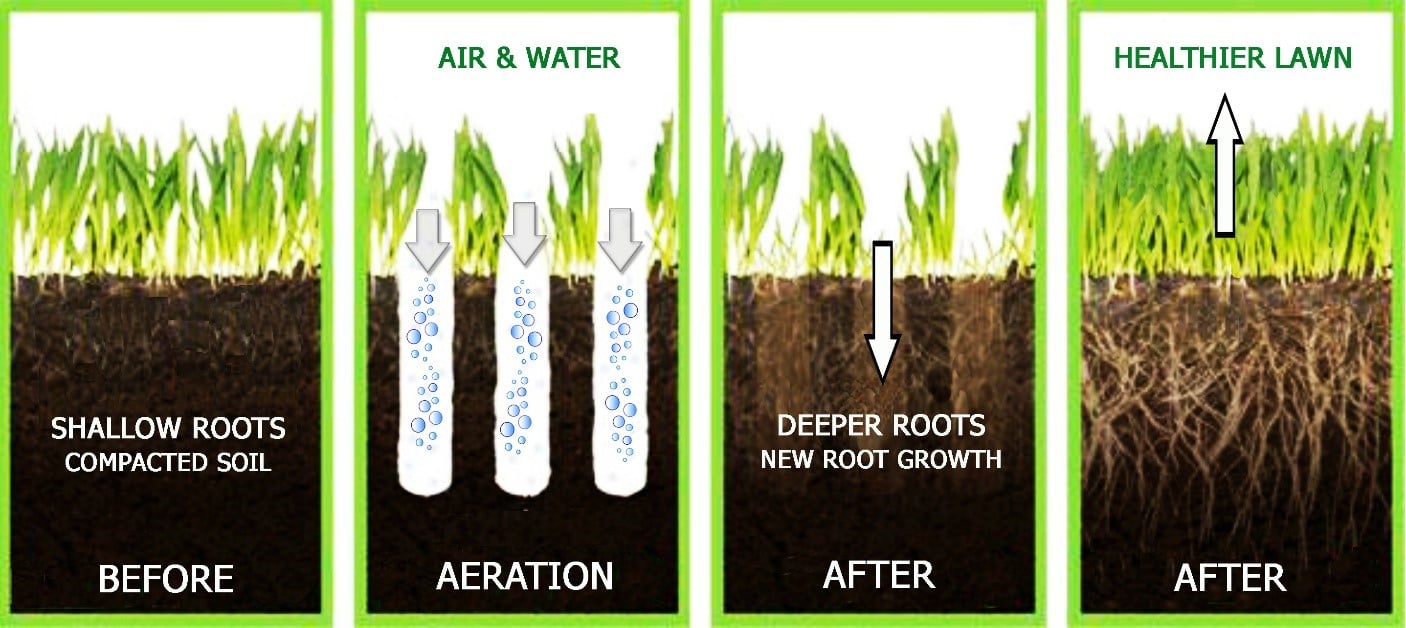
Core aeration removes plugs and can help a compacted lawn, but it is not an emergency treatment for saturated ground. Choose conditions that let the equipment extract cores without rutting the soil, and time the work so the grass can recover. Cool-season lawns are commonly aerated in late summer or early autumn; warm-season turf needs its own growing-season schedule.
Locate irrigation lines, shallow services and other obstacles before using equipment. If compaction is not the problem, aeration may add work without addressing the cause of poor growth. A professional assessment can be useful where the lawn repeatedly fails in the same place.
Fertilize from a plan, not a spring checklist
Use soil-test recommendations and local turf guidance to decide whether nutrients or pH adjustments are needed. Do not apply the same treatment automatically to both lawn and garden beds. Measure the area and follow product directions for rate, timing and watering.
Organic or natural on a bag does not mean harmless to children or pets. Store products securely and follow the label’s precautions and instructions for returning to the treated area. Keep fertilizer off pavement and out of drains.
Handle nearby shrubs separately
Pruning time depends on the species and its flowering habit. Cutting every shrub in early spring can remove flower buds already formed on older wood. Identify the plant before shaping it, and assess broken or hazardous branches separately. See Minnesota Extension’s pruning guidance for the distinction between plants that flower on old and new growth.
Keep a short record of wet areas, damaged patches and the work completed. Reassess as growth resumes. The aim is a lawn that suits the site and intended use, with each treatment tied to a specific need.
Featured image source: original credit.