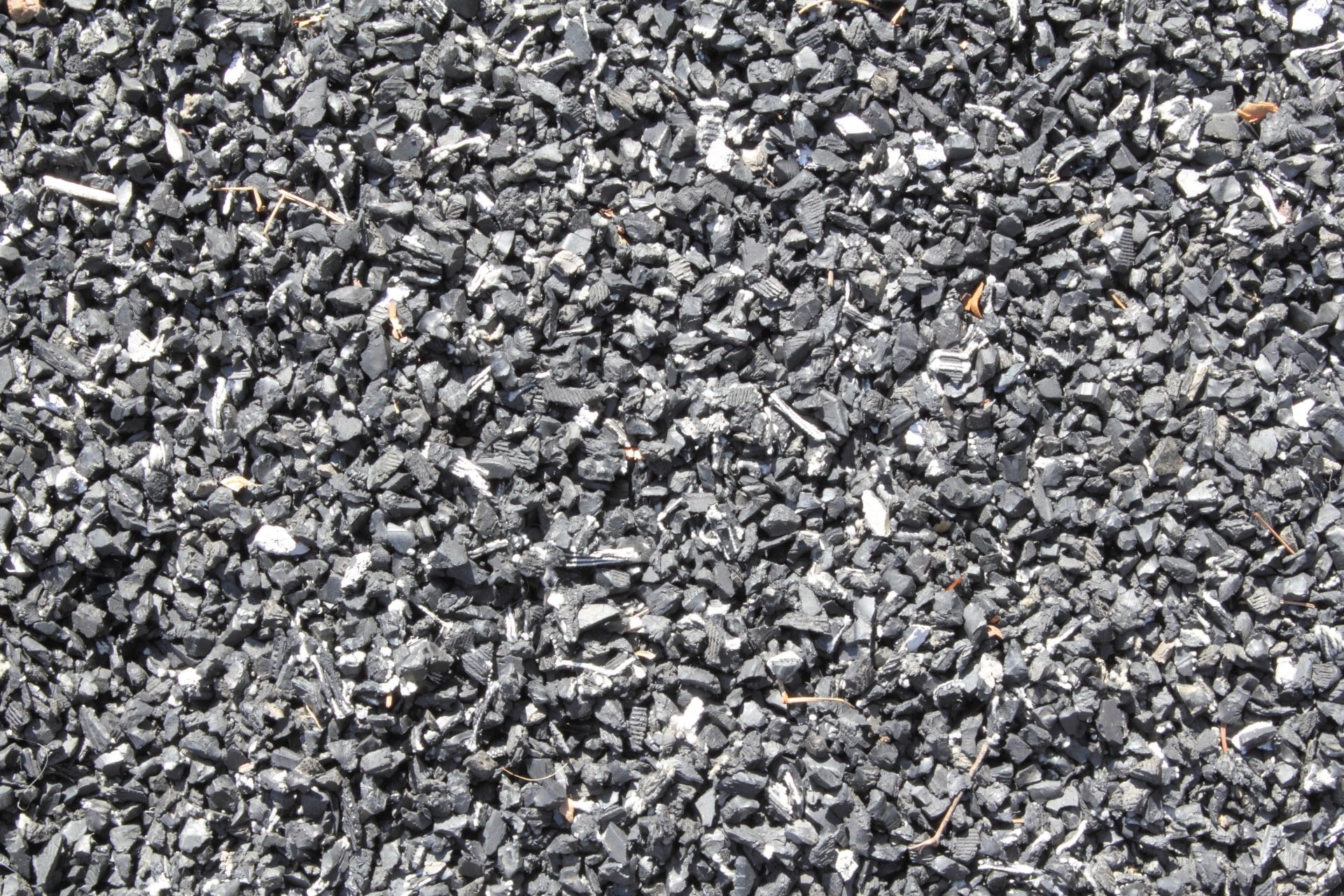
Rubber mulch is used as loose-fill surfacing around some play equipment and as a decorative ground covering. Those uses have different requirements. A bag sold for landscaping should not be assumed suitable for protecting children from falls, and a playground product is not automatically a good choice for a planting bed.
Start with the purpose of the space. Are you trying to cushion a play area, suppress weeds around shrubs, create a path or improve garden soil? Rubber does not perform all of those jobs equally well. This guide covers selection and installation planning; our rubber mulch safety guide examines the separate health and environmental questions.
Choose the application before the material
In a planting bed, compare rubber with organic mulch rather than judging by color alone. Organic materials can contribute organic matter as they break down; rubber is not a soil amendment. Rubber pieces can also become difficult to separate from soil when a bed is replanted or removed. Washington State University’s review of rubber mulch in home landscapes discusses reasons for caution about this use.
For a vegetable bed, choose a material with a clear horticultural purpose and suitability for the crop. There is little reason to introduce a persistent decorative material merely because it is marketed as recycled. A claim about keeping waste out of landfill does not answer what happens when you eventually need to remove it.
What to request for a playground
Ask for the exact product name, current test documentation, rated critical fall height, required installed and maintained depth, site preparation and maintenance instructions. The CPSC’s 2025 Public Playground Safety Handbook identifies ASTM F1292 impact testing and ASTM F3012 for loose-fill rubber. Its guidance also addresses accessibility, drainage, displacement and inspection.
The material, equipment and installation must work together. Do not substitute a generic bag-depth estimate for the documented requirements of the selected surfacing and play equipment. Public-playground guidance is useful background, but a home installation also needs the equipment manufacturer’s instructions and applicable local requirements. No surface prevents every injury.
Before ordering, ask the supplier to explain any unexplained certificate, the product it covers and whether it applies to the proposed use. “Soft,” “wire-free,” “non-toxic” or “EPA-approved” on a sales page is not a complete specification. Impact performance and chemical exposure are different questions.
Plan the whole installation
Make a drawing that includes the equipment’s required use area, access routes, boundaries, existing trees and water flow. Measure the actual area to be covered. Compare delivery quantities in consistent units and allow for the maintenance stock specified for the system.
Confirm the base preparation, drainage, edging and any separator layer with the surfacing supplier before excavation. Do not automatically install landscape fabric, tamp the rubber or place it over concrete because a generic mulch guide says to. The instructions should match the particular product and site. Locate utilities before digging and keep edging from creating a trip hazard.
If the site collects standing water, solve that problem before hiding it under new material. Keep receipts, batch information, instructions and test documents with the equipment records so future maintenance uses the same specification.
Maintenance is part of the purchase
Schedule inspections and keep a simple record of displaced material, exposed base, debris and replenishment. Areas with repeated foot movement may need particular attention. Do not assume rubber always stays in place or retains its protective performance indefinitely.
Check the surface before use during hot weather and follow the supplier’s heat and weather guidance. Remove sharp contamination and close an unsafe area until it is corrected. Color fading and a warranty against fading do not establish continued fall protection.
Compare lifetime costs
Request costs for preparation, delivery, installation, inspections, replacement material and eventual removal. Compare alternatives using the same area and performance needs. A higher purchase price might or might not be offset by maintenance savings; there is no reliable universal payback period.
For a play area, compare documented surfacing systems. For a garden bed, compare materials by plant needs and soil management. Keeping those decisions separate is more useful than treating rubber mulch as either the best solution everywhere or the same product in every bag.