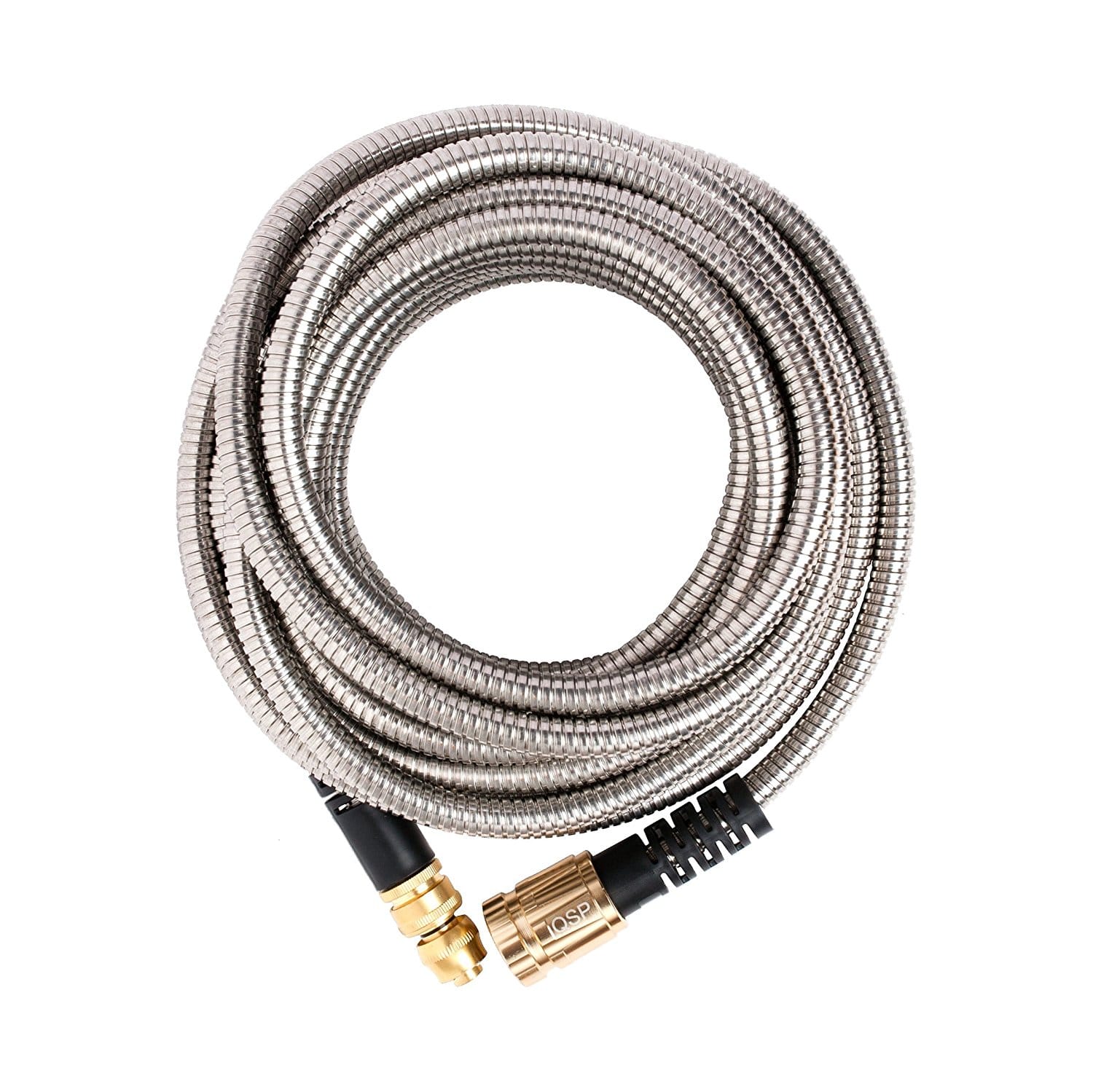
The QSP Metal Garden Hose is an older metal-covered hose listing whose exact specifications and current support need checking before purchase. A protective metal exterior may appeal if you dislike exposed flexible hose, but it does not establish leak-free fittings, unrestricted flow or resistance to every kind of damage.
This review evaluates the design and the questions a buyer should resolve. We have not independently tested this hose or verified a current QSP manufacturer manual. The older description referred to a 50-foot hose with brass fittings; confirm those details on the actual product rather than treating them as specifications for every listing.
What the metal cover tells you
A metal-covered garden hose has an exterior that can look very different from an ordinary rubber or vinyl hose. That exterior alone does not identify the material of the inner water passage, its pressure rating or its suitability for drinking water.
Do not rely on claims such as dog-proof, thorn-proof or impossible to kink without applicable test evidence. A crushed or damaged cover, a tight bend and a leaking connection are still reasons to stop using a hose and inspect it. Keep it away from vehicles, sharp edges and chewing animals.
A narrower bore does not create extra supply pressure
The earlier claim that a narrow interior increases useful water pressure was misleading. A restriction can reduce flow and increase pressure loss while water is moving. A forceful-looking spray at a nozzle is not evidence that more water reaches the garden each minute.
For filling a pool or running a sprinkler, ask for the actual inside diameter and usable flow at your supply pressure. Compare hoses of the same length with the same attachment. We do not have measurements supporting a claim that the QSP’s flow reduction is insignificant.
If you need a longer reach, first check whether the manufacturer permits joining sections and whether the combined length will meet your watering needs. Two connected hoses add another possible leak point. Do not assume two 50-foot hoses will perform like a single hose with a larger bore.
Weight, fittings and attachments
The old listing gave a weight of 5.85 pounds, but we could not confirm which package that measured or whether it included accessories. If carrying weight matters, ask for the exact model’s dry weight and consider the additional water held during use.
Large couplings may be easier to grip, but appearance does not prove seal quality. Check the washer, thread compatibility and hose-to-fitting joints. Fit attachments without cross-threading and inspect for leaks under ordinary use; overtightening is not a cure for a damaged fitting.
Confirm that the nozzle is removable and that any replacement matches the connection and pressure limits. A label saying brass does not establish that the whole coupling or water path is brass, nor that the hose is potable-water rated.
Sun exposure and storage
Water trapped in a sun-exposed garden hose can become hot enough to scald. This hazard is not limited to metal hoses; it is documented in research on thermal injuries from garden-hose water. Keep hot hose surfaces and the initial discharge away from children and animals, and check water temperature before contact.
After watering, close the faucet, release pressure, drain and store the hose without sharp bends. Follow the exact manufacturer’s storage limits if available. Do not assume a metal jacket protects trapped water from freezing or makes permanent pressurization acceptable.
Is it a good purchase?
Buy only if the seller can identify the product, document its operating limits and provide meaningful return and warranty terms. We could not verify the older promise of a full twelve-month replacement warranty. Untraceable customer quotations and old review counts cannot establish present reliability.
If model documentation remains unavailable, choose a hose with clearer specifications and support. Our garden hose buying guide explains the broader trade-offs in hose size and construction.