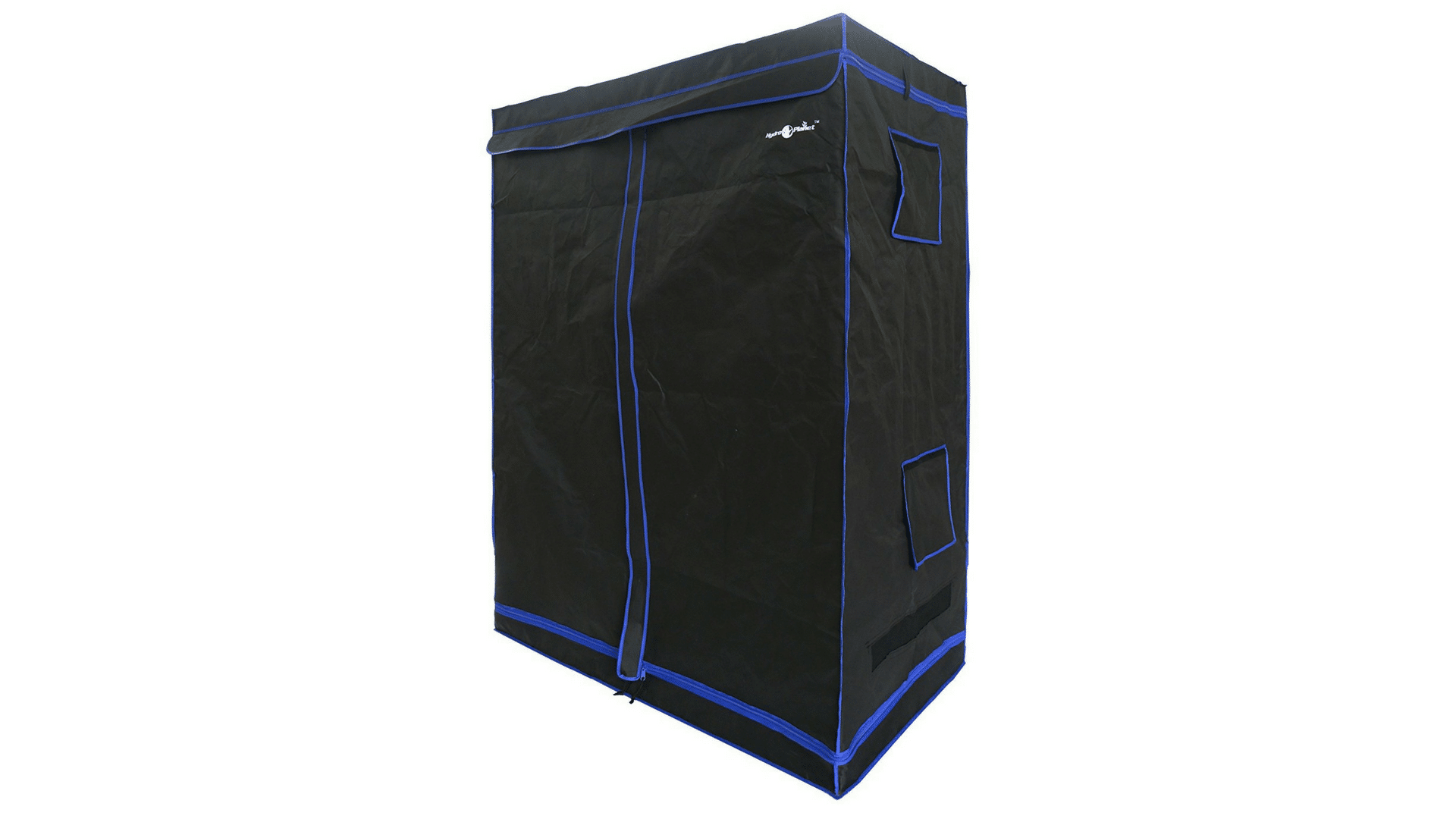
The archived Hydroplanet grow-tent listing discussed here did not preserve an exact model or size. That limits what can be verified about its capacity, included parts and current warranty. Do not buy solely on the old claims that the fabric is tear-proof, the lining is “100% reflective” or the frame can hold unspecified heavy equipment.
This is a buying and inspection guide for the Hydroplanet listing, not a hands-on test. The earlier customer quotations and review counts are not retained as proof of current performance. A similar-looking tent from another brand is not evidence for this one’s specifications.
Get the model and documentation first

Ask the seller for the model code, assembled dimensions, matching instruction booklet and complete package list. For a used tent, request photographs of the label, frame connectors, hanging bars, zippers, seams and floor tray. Confirm whether replacement parts remain available.
If the seller cannot document the hanging capacity, do not mount heavy equipment based on the appearance of the tubes. A reflective cover and metal frame are descriptions, not a structural rating. Missing components can make an apparently inexpensive tent unsuitable.
Fit the tent to the crop and equipment
Measure the containers and mature plant space, then allow for the light, ventilation and working access. Leave room to open the door fully and reach the rear plants. Check duct and cable opening sizes against the equipment you intend to use.
The room outside the tent also matters. Plan where warm, moist air will go and how you will inspect for leaks. A tent does not itself cool the room or provide oxygen, irrigation or a complete growing environment.
Do not use a universal light-distance rule
The previous advice to place plants eight to ten inches beneath any 1,000-watt light was not supportable. Wattage alone does not establish safe canopy clearance. Fixture type, output, dimming, canopy conditions and the crop’s needs all affect placement.
Follow the specific light manufacturer’s clearance and operating instructions, keeping the fixture clear of fabric and other materials as directed. For an introduction to selecting plant lighting, see University of Minnesota Extension’s indoor-plant lighting guidance. Do not use an old tent review as the operating manual for a light.
Inspect seams, zippers and the floor
Assemble the frame correctly before judging how the cover fits. Check for torn seams, stretched corners, damaged connectors and a zipper that catches repeatedly. Ask for repair or return options rather than forcing a badly fitting cover.
Assess unwanted light entry and escape with the tent installed in the intended room. The importance depends on your growing plan, but a reflective lining does not eliminate openings at seams, ducts or doors. Do not assume an unsupported “100%” claim is a measurement.
Check the tray and keep electrical connections away from possible spills. A fabric floor liner is not a substitute for planning what happens if watering equipment leaks.
When to choose another option
Look elsewhere if the unit cannot be identified, structural parts are missing, or the seller cannot provide compatible instructions. Compare the total cost after any replacement parts and separate equipment, and verify current return terms before payment.
If clear model documentation is available and the condition, dimensions and equipment limits fit your plan, you can assess that specific tent on those merits. Until then, its value and capacity remain unverified. The VIVOSUN review discusses a separate brand and should not be used to supply missing Hydroplanet specifications.