

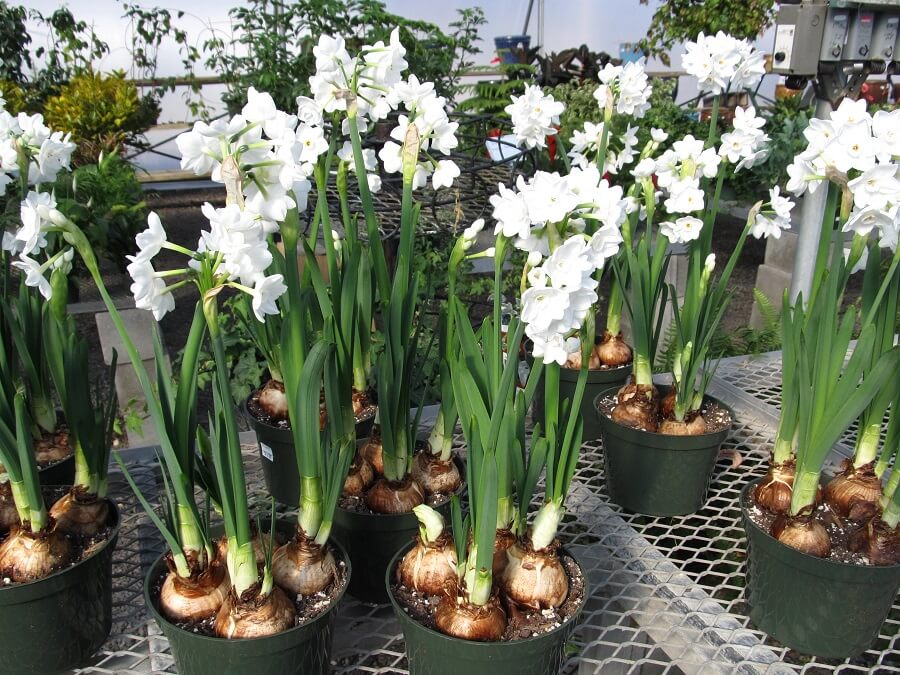
Paperwhites are fragrant narcissus bulbs that can bloom indoors without the cold treatment many spring bulbs need. Grow them in water supported by stones, or in potting mix. Outdoor planting is a separate choice: paperwhites need a mild climate and are not winter-hardy everywhere.
Planting paperwhites indoors in water
Choose firm bulbs and a clean, stable bowl. A transparent container makes the water level easy to see. Use washed stones or pebbles to support the bulbs, with their broad bases down and pointed noses up. Nestle them close together without forcing them against one another, then add stones around the lower part of each bulb.
Add water only to the base of the bulbs; do not submerge them. Check the level regularly as roots develop and replace water lost to evaporation. The stones support the display rather than feed it: the bulbs supply the reserves for this flowering cycle. Iowa State Extension explains this forcing method.
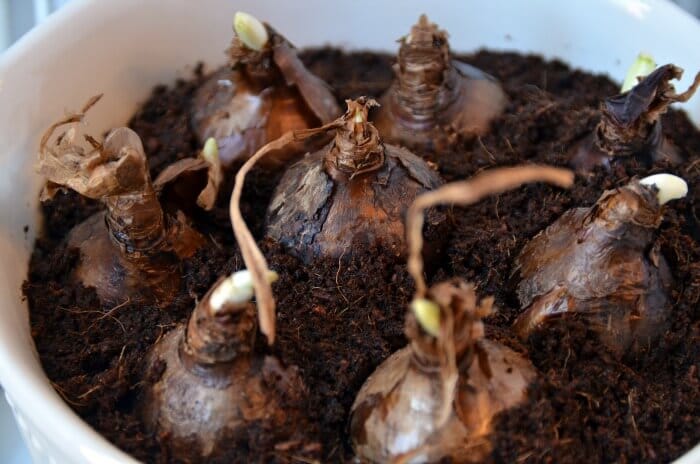
Planting in potting mix
For a soil-grown display, use a pot with drainage holes and fresh potting mix. Position the bulbs upright, filling around them while leaving their tips exposed. Water thoroughly and let excess water drain away; empty the saucer. Aim for moist mix, not a pot standing in water.
A decorative bowl without a hole can hold a smaller nursery pot. Take the inner pot out to water it, let it drain, and return it to the bowl. This keeps the decorative container useful without hiding a reservoir around the roots.
Light, flowering and support
Follow the bulb supplier’s forcing directions for the variety. Once shoots are growing, give them good light in a cool, bright position away from a heater. Rotate the container if stems lean toward the window. A discreet hoop or several stakes can support tall stems without tying them tightly.
Bloom time varies with the cultivar and growing conditions; do not promise flowers on an exact date. Starting several small pots at intervals is a practical way to spread the display. Fragrance also varies, so consider a small first planting if strong scents bother someone in the household.
Paperwhites do not need fertilizer to produce their first indoor flowers. University of Illinois Extension explains that the bulb already contains the resources for that display.
Can paperwhites grow outdoors?
They can grow outdoors in suitable mild regions, commonly USDA zone 8 and warmer, but check the particular variety and local winter conditions. A hardiness-zone rating is not a guarantee for an exposed container. In colder climates, treat paperwhites as an indoor seasonal display rather than planting them out expecting winter survival.
Choose a sunny site with freely draining soil. Avoid low areas that remain waterlogged. Plant during the locally appropriate bulb-planting season, following the supplier’s outdoor depth and spacing directions for that bulb size. Outdoor bulbs belong below the soil surface; their tips should not sit four inches above it. Indoor forcing instructions should not be used as outdoor planting-depth instructions.
Water after planting to settle the soil, then adjust to rainfall and soil moisture. Do not keep adding water to already saturated ground. If the site stays wet, choose a better-drained bed rather than expecting a little material in the planting hole to solve the problem.
What to do after flowering
Remove faded flowers, but leave healthy green leaves to replenish the bulb. Do not tie or cut the foliage while it is still green. Allow it to yellow naturally before removing it.
Forcing uses the bulb’s reserves. Water-grown paperwhites are usually discarded after flowering, especially in cold climates; repeating the same indoor display is unreliable. In a suitable mild climate you can try planting sound bulbs outdoors, but recovery and another bloom are not guaranteed the next season. Growing them in soil does not guarantee annual reblooming either.
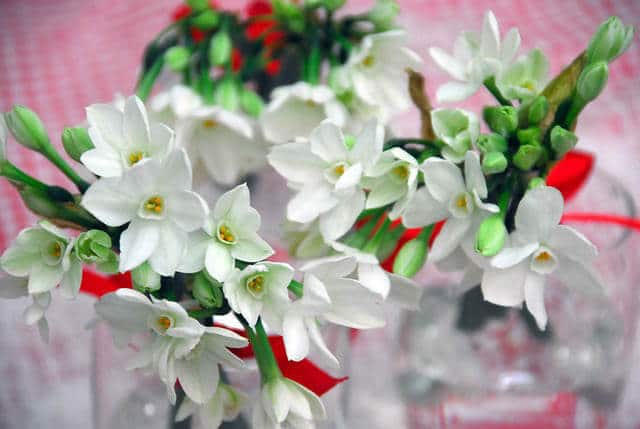
If you cut flowers for a vase, use a clean container and keep the arrangement out of hot sun. Keep bulbs and plant material away from children and pets that might eat them; narcissus bulbs are not edible onions.
For a manageable routine alongside other plants, use a beginner gardener’s maintenance checklist to record watering checks and the end of flowering.