An outdoor kitchen can be a simple preparation cart beside a permitted grill or a permanent installation with counters, water and storage. Start with how you cook, the space available and the appliance instructions. Cold winters do not rule it out, but weather exposure, winterization and maintenance belong in the design from the beginning.
Plan the cooking area before the decoration

List the essentials separately from optional features. Include installation, utilities, drainage, covers and ongoing care in the budget, not just the grill and cabinets. Check local requirements with the relevant building authority and use qualified trades for gas, electrical and plumbing work. Image credit: Texas Custom Patios on Flickr.
U.S. Fire Administration guidance calls for grills to be outdoors and away from combustible surroundings. Appliance clearances and enclosure restrictions govern where cooking equipment belongs. A decorative photograph is not an installation plan, and opening the sides of a tent does not make it an approved grill shelter.
1. A patio kitchen with a separate dining zone
Place preparation and serving areas where they are convenient to the table, while keeping diners and passing children out of the cooking route. Match colors or cabinet finishes to the patio furniture if you want a coordinated look. Do not wrap a grill or oven in wood simply to match a wooden deck; its approved installation determines the surrounding construction.
2. A rustic retreat near the garden
Stone textures, simple seating and a view into the garden can create a rustic setting. Keep tree branches, leaf litter and stored firewood clear of hot equipment. A remote corner may increase the cost of utilities and make carrying food less convenient. A preparation table and separate compliant grill may meet your needs without extending every indoor-kitchen service.
3. A compact run beside the house
A straight counter can suit a small space, but closeness to the indoor kitchen is only one consideration. Check doors, windows, vents, siding and the equipment’s clearance requirements before fixing the layout. Use an appliance designed and approved for built-in installation if enclosing it; a freestanding grill should not be boxed in by assumption.
4. Metal cabinets softened by planting
Outdoor-rated cabinets can provide a clean-lined base for pots and planting nearby. Select materials for the local exposure, including salt air where relevant. Paint is a finish, not a repair for structural corrosion. Keep plants outside hot zones and leave access for cleaning and service rather than hanging foliage over cooking equipment.
5. A rooftop concept, subject to professional checks
A roof terrace may offer a view, but it is not an automatically easy place to install a kitchen. Obtain the necessary structural, fire, access and utility assessments before selecting heavy equipment or masonry. Wind exposure and moving supplies to the roof also affect everyday use. Start with the building’s restrictions rather than a shopping list.
6. A flower-lined preparation area
Use separate planters to bring color to a serving counter or nearby seating. Choose containers that drain appropriately and can be watered without soaking cabinets or food surfaces. Sink use does not automatically irrigate plants safely; do not direct wastewater into a planter as an improvised watering system. Keep edible herbs clearly identified and distinct from ornamentals.
7. Terracotta colors and masonry textures
Warm earth colors can give a kitchen a Mediterranean or traditional character. You can create that palette with selected finishes without building every element from terracotta. Any oven or fireplace still needs an approved design, suitable support and the required separation from combustible materials. Decorative brickwork is not proof that an improvised furnace is safe.
8. Shade for dining and preparation
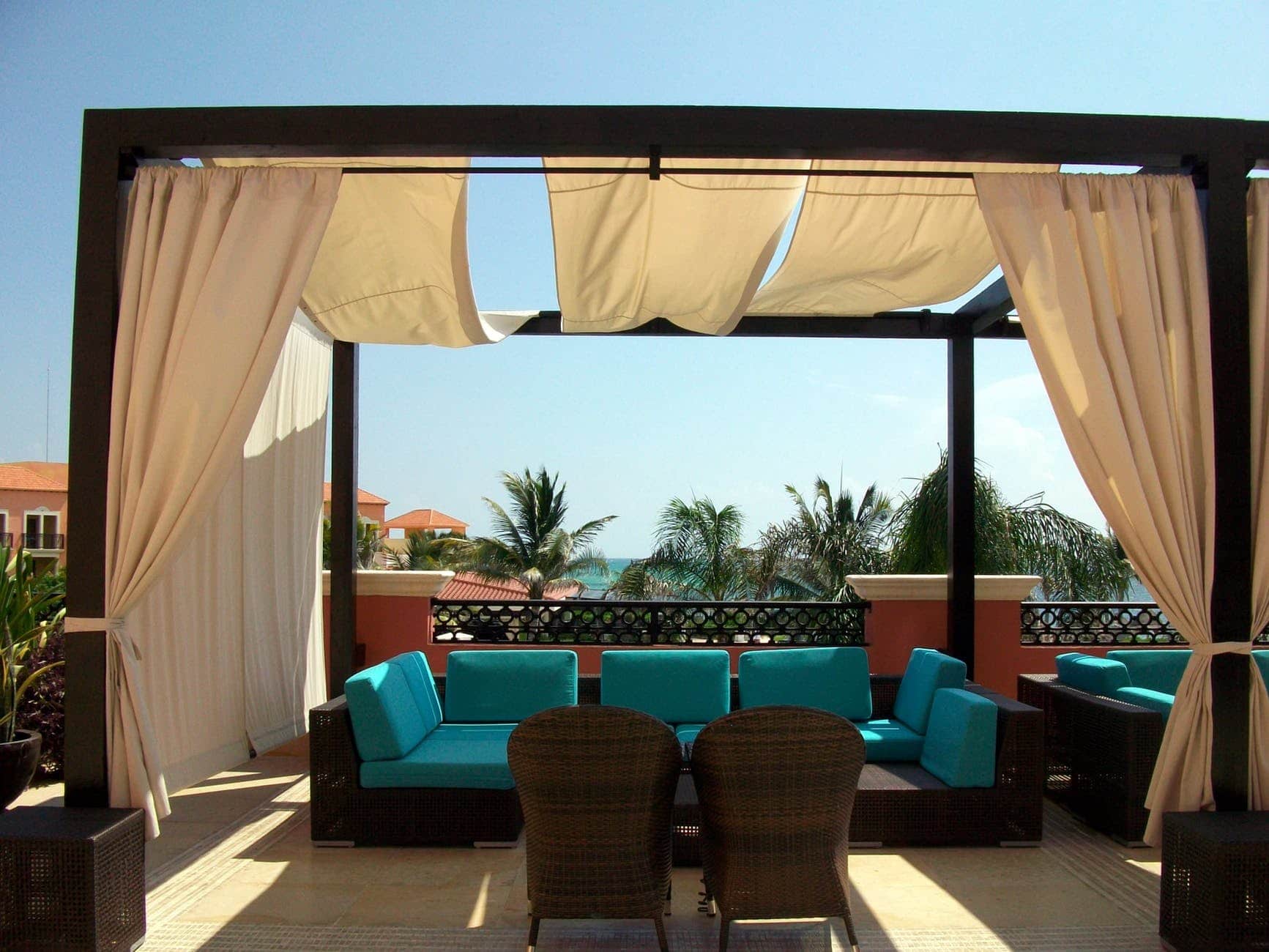
Put shade where people sit or prepare cold food, while keeping cooking equipment in a location its instructions permit. Do not improvise a fabric tent above a grill. A permanent covered cooking installation needs a design that addresses the particular appliance, clearances and any ventilation requirements; a generic patio canopy is not equivalent.
9. Reclaimed accents away from heat and food contact
Old shutters or doors may work as decorative accents in a protected noncooking area if their condition and coatings are suitable. Check for decay, loose parts and unknown finishes. Use cleanable, appropriate materials for food preparation and do not make fuel storage part of a decorative wooden surround around hot equipment.
10. A modest DIY preparation station
A stable outdoor worktable with room for trays and utensils can improve a cookout without a permanent kitchen. Keep it separate from the grill’s approved stand and clearances. Building a brick platform or surrounding a portable appliance with cabinets changes its installation; use manufacturer-approved arrangements rather than assuming bricks solve every heat problem.
11. A kitchen beside the vegetable garden
A nearby growing area can make harvesting enjoyable and provide a view from the table. Preserve access for watering, carrying tools and tending beds without crossing the hot cooking zone. Provide a clean place to wash and prepare produce; proximity to the garden does not mean food can skip ordinary cleaning.
Test the layout before committing
Mark the proposed counters and seating on the ground and walk through carrying a tray. Check door swings, serving routes, cleanup access and where waste will go. Decide what must be protected or disconnected for winter. If you are considering a movable setup, our portable charcoal grill guide explains the tradeoffs, including the time needed for cooling before storage.
Choose the smallest layout that supports your actual routine, then add optional features when their use is clear. That produces a more workable kitchen than fitting every decorative idea into one space.