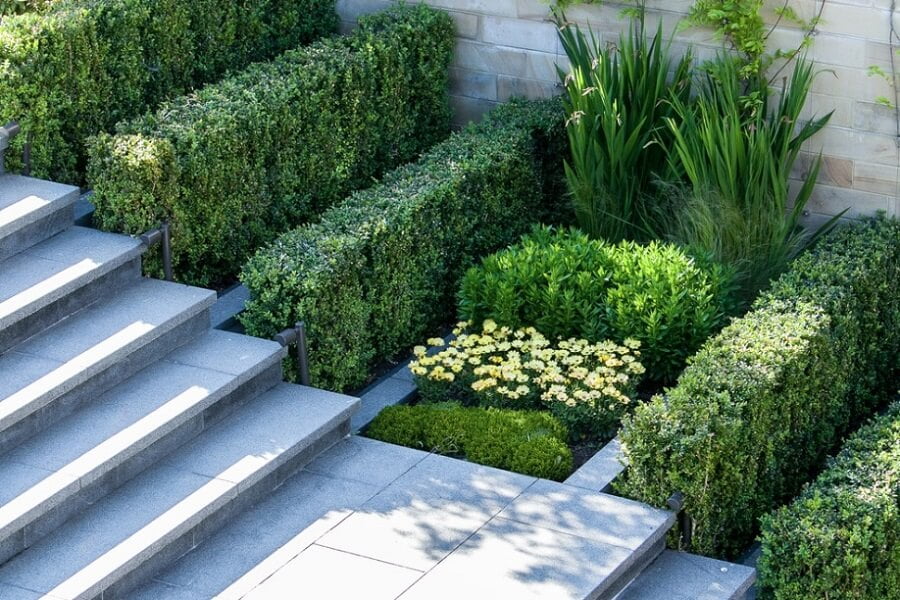
Modern landscaping often relies on a few strong plant shapes repeated through a simple layout. Grassy mounds, upright leaves and bold foliage can all work, but these seven plants have very different climate and watering needs. Choose for your site first, then use shape and repetition to connect the design.
Before buying, measure the planting space, observe summer sunlight and check winter temperatures and drainage. A plant that works outdoors in a warm coastal garden may need a container and indoor winter protection elsewhere. Do not put shade-loving hostas into the same exposed, dry bed as sun-loving succulents simply because their colors look good together.
1. Blue fescue for low, fine-textured edging

Festuca glauca forms compact clumps of narrow blue-gray leaves. Repeating several along a path or in front of a larger architectural plant creates a clear edge without the look of a clipped hedge. Cultivars such as ‘Elijah Blue’ are chosen for their foliage color.
Give it sun and well-drained soil, checking local performance where summers are hot and humid. Blue fescue is not an evergreen solution in every climate, and older clumps can need renewal. Avoid crowding it beneath plants that will eventually shade it out. The NC State plant profile describes its growing requirements and limitations.
2. Yucca for a strong upright accent

Yucca’s pointed leaves make a useful contrast with rounded shrubs and fine grasses. Choose the species carefully: hardy garden yuccas and the tender plants commonly sold for indoor use are not interchangeable.
Yucca filamentosa, described by NC State Extension, is one option for a sunny, well-drained outdoor position. Check its mature spread, including offsets, before placing it in a narrow bed. Keep sharp leaf tips away from seating, play areas and the edge of a walkway. One well-positioned specimen can provide enough emphasis without filling every corner with spiky foliage.
3. ‘Abiqua Drinking Gourd’ hosta for shade

This hosta offers a different kind of structure: broad, blue-green leaves with a distinctive cupped surface. Its rounded mound can soften the base of a wall or create a repeating pattern beside a shaded route.
Use a sheltered position with moisture-retentive but draining soil, rather than treating it as a drought plant. Allow space for the mature clump and remember that the foliage is seasonal. Slugs, snails and browsing animals can affect the finished appearance. The Conservation Garden Park profile is a useful starting point for matching this cultivar to a site.
4. Kangaroo paw for sculptural flowers

Kangaroo paws bring upright flower stems above strappy foliage. Their unusual blooms can be an effective focal point against a plain wall or among quieter foliage plants. The Australian National Botanic Gardens describes these plants from southwestern Australia; they should not all be treated as interchangeable tropical plants.
Choose a named species or cultivar with locally suitable hardiness and size. A sunny position and suitable drainage matter, but winter wet and frost tolerance vary. In a colder garden, a movable container may be more realistic than a permanent border planting. Leave access for removing spent stems instead of burying the plant among dense shrubs.
5. New Zealand flax for broad, blade-like leaves

Phormium provides upright or arching leaves, with cultivars offering green, bronze or striped foliage. A single clump can anchor a planting composition, especially where its color repeats a nearby fence or planter.
Check the cultivar’s eventual leaf height and spread, not just a dramatic photograph of its flower stalks. Large forms can overwhelm a small entrance. Hardiness also depends on the selection and growing conditions; it is not suitable for every cold-winter garden. See NC State’s Phormium tenax profile for species information, then confirm the details of the plant you are purchasing.
6. Aeonium for rosettes in a sheltered space

Aeoniums create rosettes that look particularly clear against gravel or a simple container. They vary from relatively compact plants to branching shrubs, so select by mature habit rather than assuming every aeonium stays low.
These are generally choices for frost-free planting or containers that can be protected. Use a freely draining growing medium and adjust watering to the plant’s growth and conditions, allowing excess water to escape. A shallow root system is not a reason to keep the pot constantly wet. The RHS profile of Aeonium undulatum illustrates how substantial a rosette-forming species can become.
7. Monstera for a warm, sheltered foliage feature

Monstera deliciosa has large leaves that develop splits and holes as the plant matures. It is a climbing tropical plant, not a compact shrub for an exposed temperate border. Provide room and appropriate support for its climbing habit.
In climates with frost, use it as a houseplant or a seasonal container plant brought into suitable conditions before cold weather. Outdoors in a warm region, choose a protected location with filtered light and check local suitability. The NC State profile covers its growth habit and care. Its appearance alone does not make it a good choice for a windy, sunny entrance.
Build a coherent planting plan
Pick one or two structural plants that suit the site, then repeat a compatible supporting plant. Draw each at mature size so paths and windows remain clear. In a mixed-light garden, use separate sun and shade planting areas while repeating colors or container materials to connect them.
A restrained palette can look modern without requiring all seven plants. The best selection is one you can grow well through the whole year, with a realistic plan for seasonal gaps, pruning and winter protection.